Finally we wake up. The possibility that China's technological advances, its low production costs and the extent of its state aid could endanger leading sectors of European industry – and not just manufacturing without strategic value – is raising alarm bells across the Union.
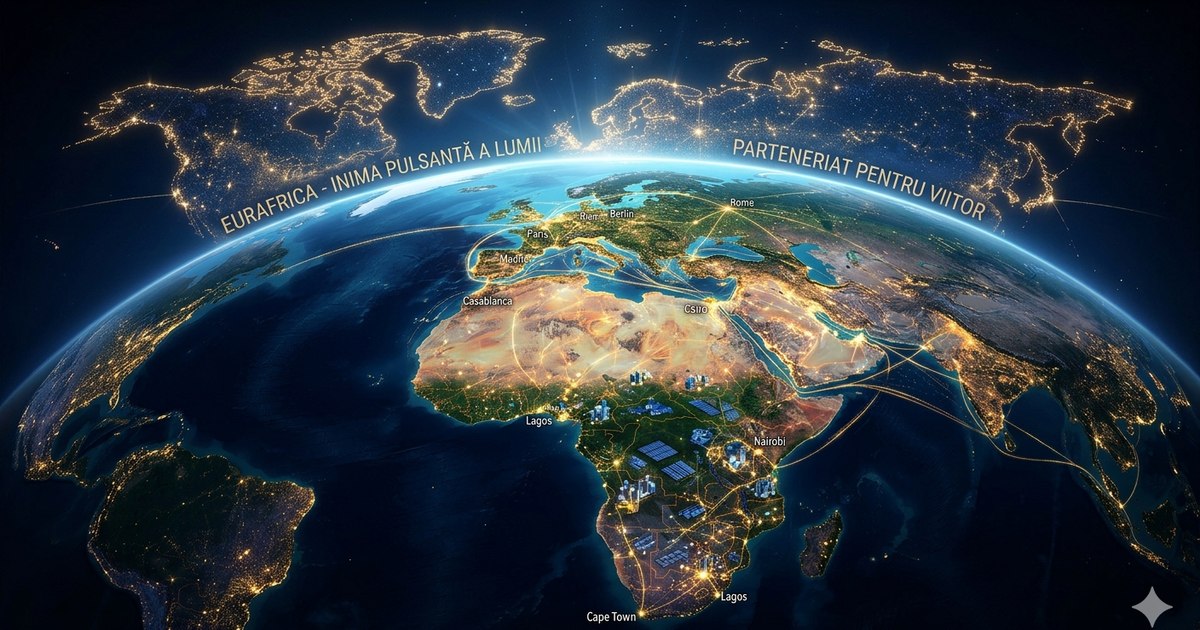
PHOTO: Image generated by Artificial Intelligence
The nature of the measures to be taken and not just their necessity are being discussed now, but it is not enough just to wake up and defend ourselves. We must move from the defensive to the offensive, stop thinking only about protecting ourselves from Chinese overproduction, but impose a balance of power on Beijing that forces it to negotiate and revise its policies.
This will not be without risk. In the opening battle, the Chinese will resort to the retaliatory measures they are already threatening us with, but we have two essential assets.
The first is our scale. The Union is not the most populous entity in the world. It's not the largest either, but with our roughly 450 million people and soon many more, our purchasing power and savings rates, we're a market that China (and the United States, for that matter) simply can't live without. If access to the European market were even partially closed to them, the Chinese industry would have great difficulty in finding other equally profitable markets.
This puts us in a position to demand a global renegotiation of our trade relations. With the only condition that our determination and unity leave no room for doubt, we can enter into a confrontation, because the Chinese are forced to make a compromise that is even more necessary for their economy than for ours.
And then there is Africa. It will reach two and a half billion inhabitants in 2050. Like Asia in the last century, it is the emerging power of this century, and there first, from the Maghreb to South Africa, from Senegal to Kenya, our balance of power with China will be established.
Either we let Chinese industry gain such strength in Africa that we will soon have no means to deal with it in Europe, or we oppose a Euro-African front to China's industrial colonialism.
Either we let Chinese industry continue to make Africa its exclusive territory, securing unassailable dominant positions in every sector, or we propose win-win co-development to Africa through industrial partnerships in both mass production and key sectors.
The Mediterranean is not a sea. It is a lake whose shores complement each other perfectly. In the south, Africa needs investment to develop its industry, reduce its unemployment by providing jobs to a youth that today has no choice but to go to Europe, increase its tax revenues, equip itself with the infrastructures it lacks and slow down and then stop its brain drain.
In the north, Europe needs to find elsewhere than in China cheaper labor than its own, to find real means of stemming the political crisis into which illegal immigration is throwing it, and to secure new markets for its capital and exports, to strengthen its industries against those of China.
Europe's future is Africa, just as Africa's future is Europe.
French, English and Portuguese, we have common languages. African diasporas are numerous in Europe and could quickly constitute a natural link between our continents. The financial and environmental cost of transport between Africa and Europe is infinitely lower than between Europe and Asia. And then, geography tells us: united and not separated by the Mediterranean Sea, Africa and Europe will constitute a continuous whole, the beating heart of the world and, if we want it, the first economic power of the future.