The slum barber who became a “doctor of the impossible”. He succeeded in surgeries difficult to conceive

A barber from a modest family became a true father of surgery. His name was Amboise Pare, and from the slums he came, thanks to a hard-to-explain talent, to operate the great aristocrats of the time and even the kings of France. He was considered a true “doctor of the devil” because of his skill.
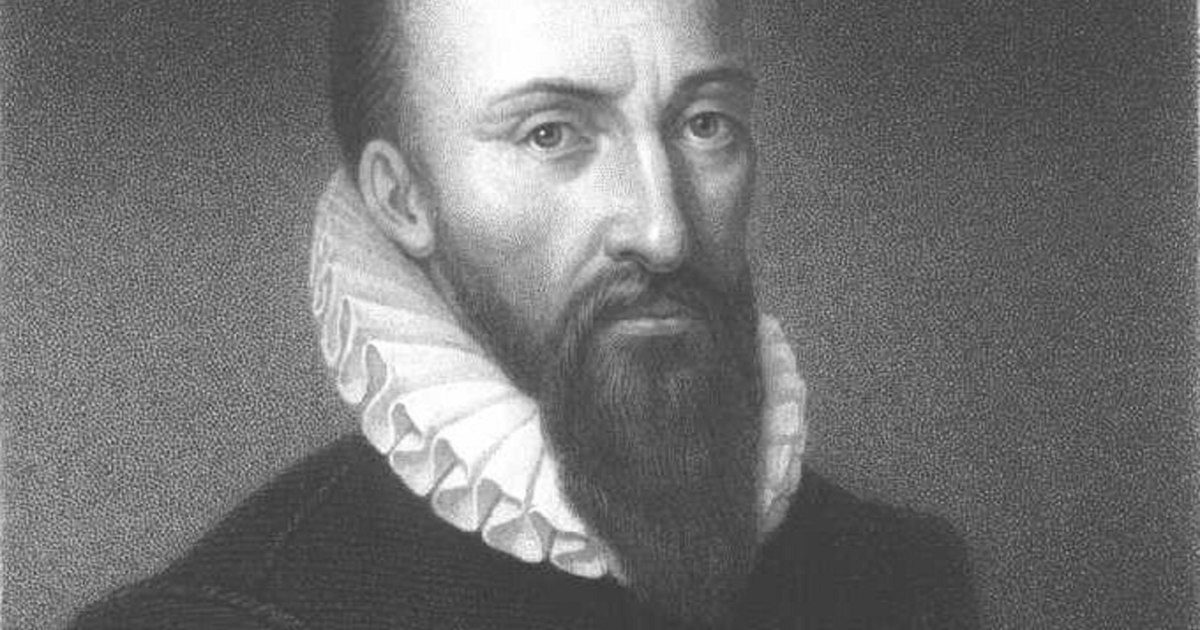
Amboise Pare, the famous French surgeon PHOTO wikipedia
Throughout history there have been people who were ahead of their time. True geniuses in various fields of activity, who laid the foundations of today's sciences. Among them is Ambroise Paré, a barber who revolutionized surgery and everything known about wound treatment and trauma in general. In fact, in the history of European medicine, few people have had such a profound influence as Ambroise Paré.
Considered by many historians as the “father of modern surgery”, Paré transformed this branch of medicine from a brutal and empirical experience into a discipline based on observation, experience and humanism. In an age when doctors still relied on Galen's ancient theories and medical superstitions, he introduced gentler, more effective and more rational methods of treating wounds and trauma. In short, he turned medicine into a science. Ambroise Paré was, however, a happy example of a brilliant scientist who was recognized during his lifetime for his skill. From removing the masses and shaving beards in the slums, Paré became a royal physician, managing to practice his profession in the most noble conditions, being also the author of some fundamental works. He is famous in history for some absolutely phenomenal interventions, becoming known as “the devil's doctor” or “the doctor of the impossible”.
The son of a slum barber and a rough internship at the Hotel Dieu
Ambroise Paré was born around 1510 in Bourg-Hersent, near Laval, France, one of Europe's most powerful medieval kingdoms. He came from a modest family. His father came from a guild of barber-surgeons, a professional category that was equivalent to the later felcers, far below that of the doctors of the time. Moreover, in the 16th century there was a rigid separation between guilds and professions. Medieval or Renaissance physicians (such as those of the 16th century), trained in universities, who studied Latin texts and prescribed treatments, were considered true specialists.
Barber-surgeons, like Ambroise's father, were considered craftsmen rather than scientists. They generally did the work of today's nurses, suturing wounds, removing masses or stopping bleeding. And the incomes were different. Doctors of the time earned a lot, were usually employed by aristocrats or worked in rich cities, while healers or barber-surgeons operated mostly in slums and villages, for the common people. Ambroise had loved his father's craft from an early age. He had a special talent and he wanted more. That means more than one table removed and a few leeches placed on a patient. He avidly studied human anatomy, mostly through practical observations. At 17, he was already a child prodigy. He was admitted to the Hôtel Dieu in Paris, a hospital for the common people, founded in the 7th century. For three years, Ambroise “made his hand” in the hell of the Hôtel Dieu.
And this in the conditions where it was effectively a fight for the survival of the sick. There were no hygienic conditions and norms, and patients, regardless of age and gender, were crowded into a few rooms. The operations were done on the spot, without too many utensils and especially without basic hygiene measures. Indeed, Ambroise learned surgery in the most crowded and harsh place for a barber-surgeon. But he had a remarkable talent. The patients he treated miraculously survived, even under those conditions. This is how he ended up being accepted at the University of Paris, which allowed him to attend anatomy and surgery courses at the Faculty of Medicine. He became a barber-surgeon with proper papers after passing the necessary exams.
Surgery learned in the trenches and becoming a medical genius
After the exam, Ambroise was immediately sent to the front. There was a great need for felceri. The university doctors had to treat aristocrats, kings and rich people. For the common soldiers and even for the officers, the felcers were only good. He was sent to the Italian campaigns initiated by King Francis I. Direct contact with Italian wars and gunshot wounds would forever change his perspective on surgery. In his era, bullet wounds were believed to be “poisoned” by gunpowder and had to be treated by cauterization with hot oil.
The procedure caused great suffering and often worsened the patient's condition. Paré was from a different dough. He also learned the method, but sought to improve it. The opportunity arose. During a battle, Paré ran out of oil and improvised a mixture of egg yolk, rose oil and turpentine. To his surprise, soldiers treated in this way recovered better than those burned with hot oil. This method became one of the great revolutions of European surgery. For the first time, a surgeon was abandoning a traditional method based solely on direct observation. Paré thus demonstrated that practical experience could correct old theories, anticipating the principles of modern evidence-based medicine. Moreover, he introduced a humanitarian dimension rarely seen in medieval medicine: the patient should not be tortured unnecessarily in the name of treatment. On the contrary, the treatment was supposed to ease his suffering.
Poland grants one million euros for the modernization of the Mother and Child Institute in Chisinau
Also in the military campaigns, Ambroise learned other and other techniques. It was far beyond what the doctors of the time knew and could do. He was effectively a genius. Paré effectively left the doctors of the day speechless when he introduced the ligature of arteries during amputations. Until then, bleeding was stopped by cauterization with a hot iron, an extremely painful and often fatal method. Paré used threads to tie off blood vessels, reducing the mortality and suffering of the sick. And this in the conditions where the wounds caused by the arquebus or cannons often required amputations. Well, this technique of Ambroise is the basis of modern vascular surgery and represents one of the most important medical innovations of the Renaissance.
“I bandaged him, God healed him”
Military surgery and, in fact, his feats, which effectively shocked the scientific world of the time, propelled Ambroise Paré into the elite of society. Paré did not know Latin and did not have the classical education of the scholars of the time, a fact that often earned him the scorn of the medical elites. However, the practical experience gained in hospitals and on the battlefields made him one of the most innovative men of his age. However, the most famous doctor of his time had an incident. More precisely, he saved the life of one of the most important people in France and in Europe at that time. Briefly, Ambroise Paré treated François de Lorraine, Duke of Guise, who had suffered a catastrophic facial wound during the siege of Boulogne in 1544. The tip of a spear pierced the duke's cheek and lodged in the back of the neck. The duke's doctors, among the best in France, did not even dare to approach the wound.
It was a very delicate matter. Any wrong move would have killed the duke. Ambroise approached confidently, he had seen such a thing before in his life, and in a few seconds, with only the help of his fingers, he extracted the spearhead from her cheek. Moreover, it quickly stopped the bleeding and sutured it perfectly. His success made him a royal surgeon. He served four kings of France: Henry II, Francis II, Charles IX and Henry III. His fame grew enormously after trying to save Henry II, mortally wounded in a tournament in 1559. Even though the king died, the fact that Paré kept him alive for nearly 48 hours, long enough to pass down a life-threatening wound, cemented his reputation as France's greatest surgeon. Ambroise was also extremely modest. His words have become almost a symbol of medical ethics. “I bandaged him, God healed him”specified the brilliant French doctor.
A symbol of medical ethics
His activity was not limited to military surgery or only to the case studies specific to his noble patients. Paré invented and perfected numerous surgical instruments, studied fractures, head trauma and the anatomy of the human body. He also made mechanical prostheses for amputated limbs and artificial eyes, showing a remarkable interest in the functional recovery of patients. At a time when disability was often considered a social condemnation, he tried to give back to people the ability to live as normally as possible. Ambroise Paré changed mentalities. Mainly, he renounced the elitism specific to the medical sciences of the time. On the contrary, he dedicated himself to the introduction of medicine into the world of ordinary people.
The hospital that was looking for doctors in Bulgaria wants to give up surgeons. Administrator: “It was an idea, I didn't accept it”
He wanted everyone to have access to knowledge and proper treatment. More precisely, he produced medical treatises in French, not Latin, so that his experience could be understood by all those who practiced medicine at the grassroots level, that is, like himself and his father, these barber-surgeons. His works circulated throughout Europe and influenced generations of surgeons. At the same time, in an era marked by prejudice and deep social class differences, Ambroise introduced the idea of a doctor without borders and without religion. That is, he treated any patient, regardless of camp, rank or creed. “I'm not asking you whether you're Catholic or Protestant, rich or poor. I'm asking you what your disease is.” stated Ambroise Paré. His legacy continues to this day. The principles of antisepsis, hemorrhage control, reconstructive surgery, and modern war medicine find their roots in his innovations.