The year 2025 will remain in the collective memory as a period marked by uncertainty, internal tensions and major conflicts on the international stage, in a context where the post-war global order seems more fragile than ever, writes the British newspaper The Times.
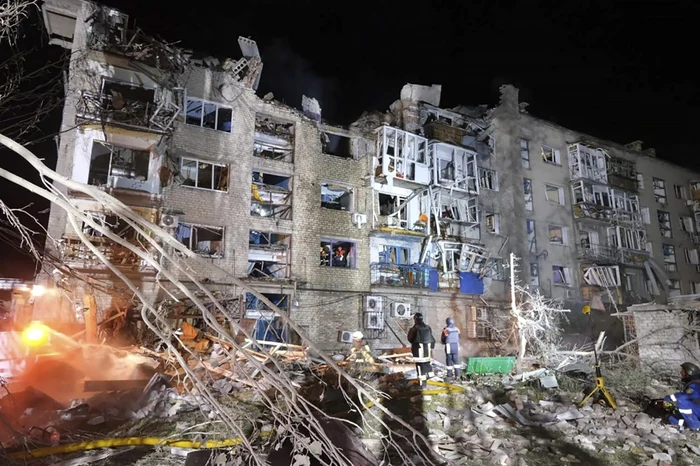
The year 2025, marked by wars and destruction/PHOTO: AFP
Few moments in recent decades have called into question, to such an extent, the stability of alliances, the functioning of global trade, the solidity of democratic institutions, and even the inviolability of international borders. The wars in Ukraine and Gaza, the civil conflict in Sudan, but also natural disasters – from floods to other climate catastrophes – have caused the death and suffering of millions of people.
Despite this grim picture, Western leaders should not abandon efforts to rebuild alliances and deter aggressors, British columnists emphasize. The cost of peace is high, but withdrawal from international affairs would be even more dangerous.
Trump, a factor of global instability
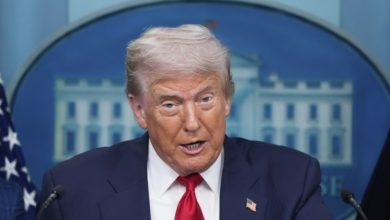
Returning to the White House for a second term, Donald Trump quickly entered a spiral of controversial decisions: he signed executive orders on a conveyor belt, attacked his political opponents, launched diplomatic initiatives to stop the wars in Ukraine and Gaza, made territorial claims on Canada and Greenland, and ordered strikes on Iranian nuclear targets.
His agenda has often been contradictory, and sudden changes in direction have irritated traditional US allies. However, in certain situations, these unpredictable moves have unlocked cases that were previously considered hopeless.
The strongest global impact, however, was the commercial decisions. The increase in tariffs on a wide range of imports – including from allied countries – triggered major economic turbulence. Some measures forced European states to accept hasty negotiations and concessions, others were perceived as deeply political and punitive.
The threat of 100 percent tariffs on Chinese imports was followed by a tough response from Beijing, which raised the possibility of blocking exports of rare metals critical to American industry. Global financial markets reacted nervously, with medium-sized economies such as Britain's taking a hit, while China emerged from the showdown with increased confidence in its global standing.
Political instability on all continents
The year 2025 brought convulsions to other parts of the world as well. In France, President Emmanuel Macron tried to break the political deadlock in the National Assembly by appointing and later re-appointing Sébastien Lecornu as prime minister, but failed to restore stability. In Germany, Friedrich Merz replaced Olaf Scholz as chancellor, but the German economy continued to stagnate.
In Asia and Africa, the changes were even more dramatic: student uprisings led to the fall of the government in Nepal, youth played a decisive role in the overthrow of power in Madagascar and post-election protests in Tanzania, and in South Korea President Yoon Suk Yeol was arrested after massive demonstrations sparked by his attempt to impose martial law.
Militarily, India and Pakistan clashed in May, and border clashes broke out between Cambodia and Thailand in July. A symbolic contrast was offered by the Vatican, where, in May, the conclave elected a new pope – the American Leo XIV.
Ukraine and Gaza, between hope and uncertainty
The war in Ukraine continued to grind European security. Trump's Alaska summit with Russian President Vladimir Putin produced limited results and accusations that the US leader was manipulated by the Kremlin. The earlier public spat with President Volodymyr Zelenskiy and a peace plan perceived as favorable to Moscow alarmed NATO allies and led to emergency summits in the US and Europe.
In Gaza, Trump succeeded in getting an end to Israeli bombing, the release of hostages and the resumption of humanitarian aid, but without advancing a lasting peace plan.
“There were some timid signs of hope at the end of the year, however, for both Gaza and Ukraine. If these hold true, 2026 could be a safer year, despite the major shocks that marked 2025,” concludes The Times editorial.