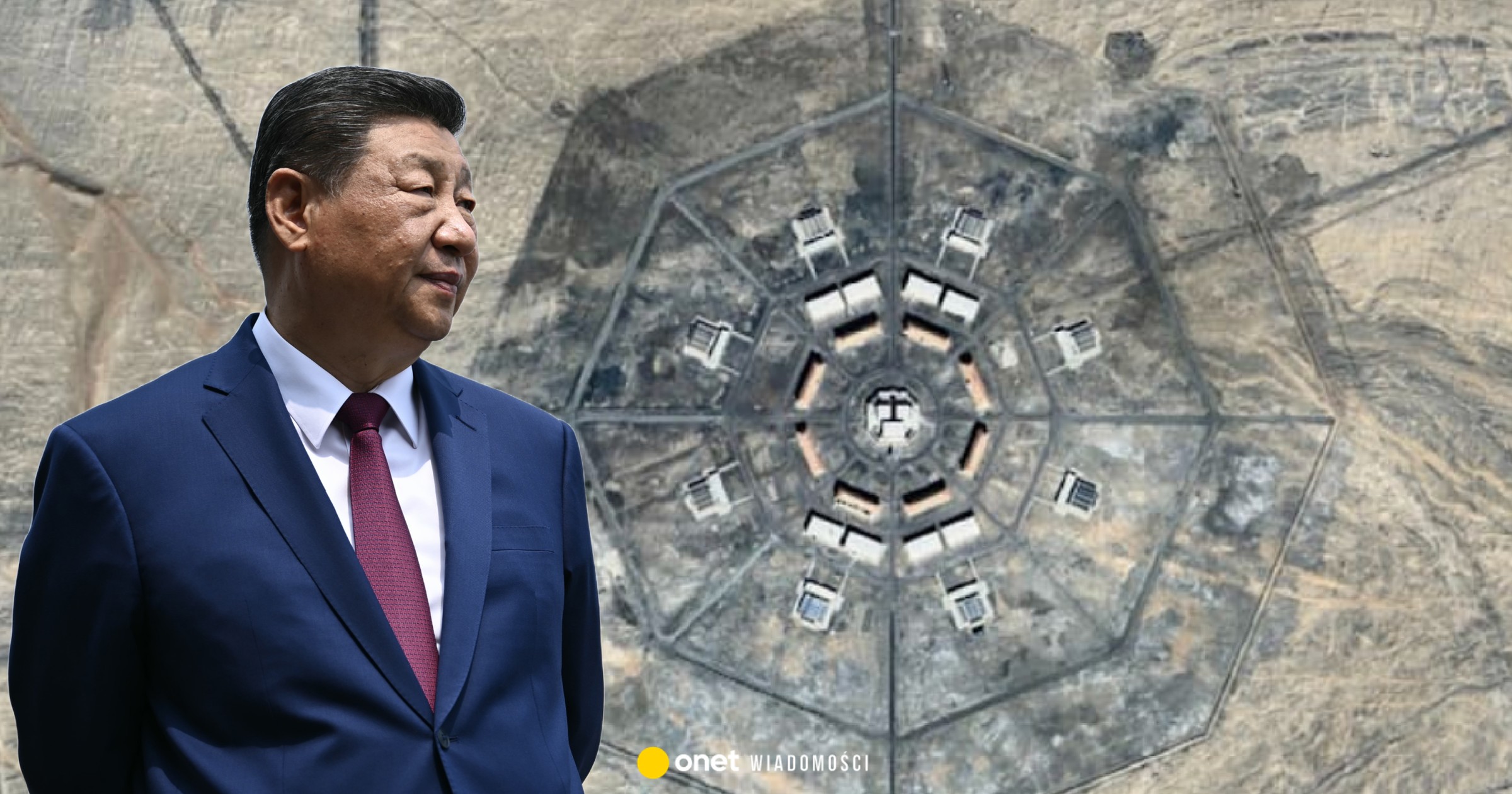
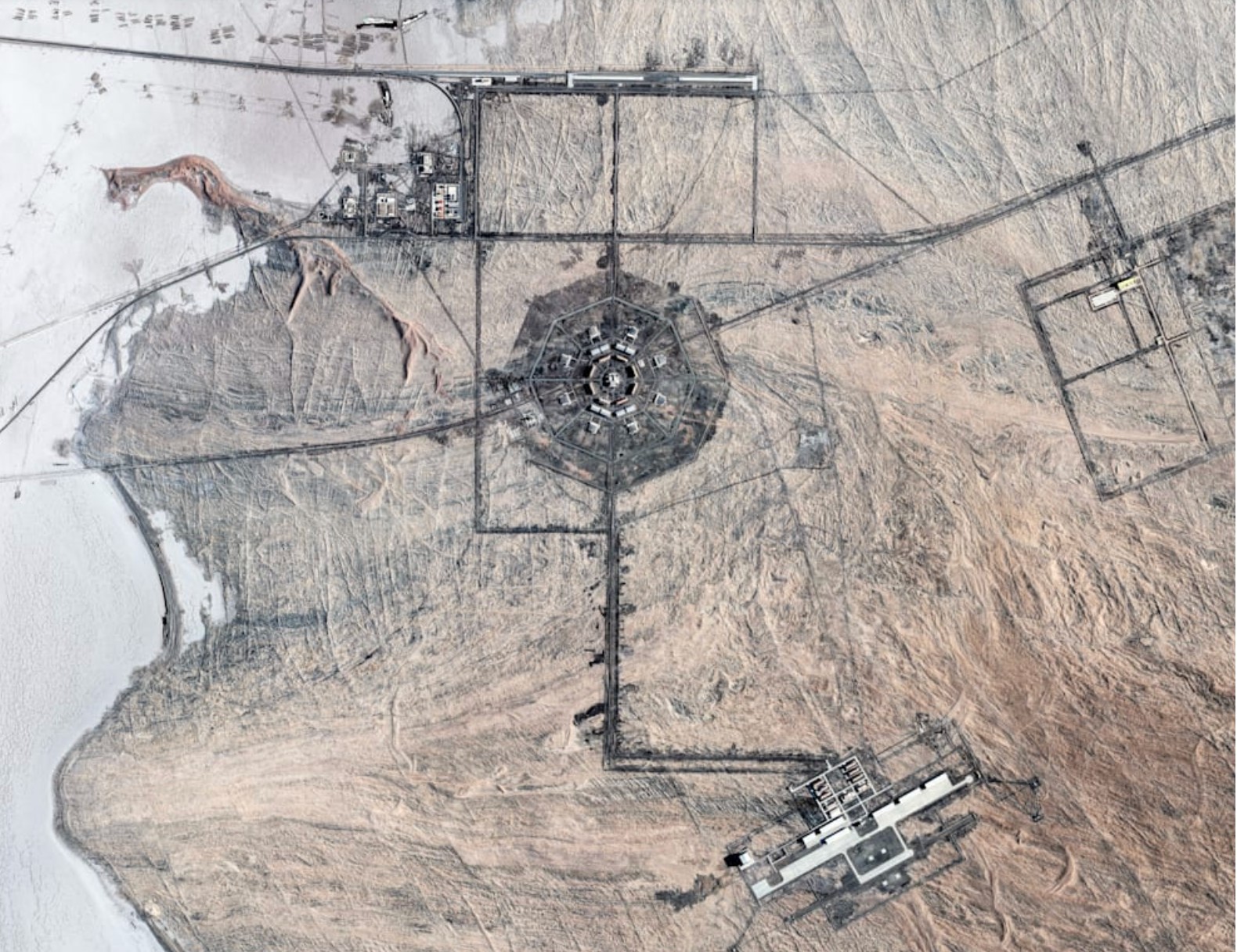
The facility is very impressive, located completely in a remote area in the middle of the desert and is considered one of the largest military undertakings in recent years.
According to the analysis of satellite images, an extensive nuclear complex is being built in northwestern China, which, according to many security experts, is primarily intended to secure China's nuclear arsenal.
One scenario attracts particular attention: everything indicates that the facilities were designed so that even after a possible first nuclear strike by the United States, China would retain the ability to carry out nuclear retaliation.
Case? The most frequently considered conflict scenario between China and the US is the dispute over Taiwan. It's no surprise, then, that building a nuclear giant in the desert is attracting much more attention than Beijing would like to admit.
The complex is located near a huge field of missile silos in the Hami region of Xinjiang, where 110 nuclear missile silos are spread over an area of approximately 800 square kilometers.
The scale of the entire undertaking is impressive.
Satellite photos show an extensive network of over 80 potential missile launchers, bunkers, communications centers, airports, railway connections and fortified warehouses.
This area is only a fraction of the nuclear baseGoogle Earth/Google Earth Engine
The central element of the complex are two large octagonal structures that have been built southwest of Hami in recent years. Roads and technical installations branch off from them, leading to numerous concrete platforms located in vast areas of the desert.
“Parking lot” for nuclear missiles
According to many analysts, these platforms can perform various functions. They can serve as positions for mobile intercontinental ballistic missiles, air defense systems or electronic warfare devices.
Additionally, the presence of satellite dishes, communication towers and underground connections suggest that the facility will play a key role in the communication, command and control systems of Chinese strategic forces.
The newly discovered infrastructure indicates a significant strengthening of China's deterrence capabilitiesReuters/BILD
Reuters reports on recent military activity in the area. The latest satellite photos show large military vehicles, tent camps and probably camouflaged rocket launchers. Some positions appear to be already equipped with anti-aircraft systems.
However, the fact remains that the scale of construction works has not been officially disclosed yet.
“Credible deterrence”
Security experts see the project as another element of a broad modernization of China's nuclear forces under Chinese leader Xi Jinping.
The aim of the project is to strengthen the so-called second-strike capability, i.e. the ability to carry out effective retaliation even after an earlier nuclear attack by the enemy. This capability is the foundation of China's traditional nuclear doctrine, known as “minimal but credible deterrence.”
The article continues below the video
Although the Middle Kingdom has not only land-based missiles, but also nuclear-armed submarines and aircraft capable of carrying nuclear weapons, it is the huge silo fields in Xinjiang and Gansu that constitute the core of its strategic nuclear arsenal.
The importance of protecting these installations is additionally growing due to the increasing tensions between China and the United States, including over the issue of Taiwan.
Is China preparing to attack Taiwan?
Beijing officially maintains its policy of “no first use” of nuclear weapons. Nevertheless, some Western diplomats and analysts fear that in the event of a conflict over Taiwan, China could use nuclear deterrence or even open threats to use nuclear weapons to discourage other countries from military intervention.
China's expansion of its nuclear potential has been under close observation for years. According to data from the US Department of Defense China is expanding its nuclear arsenal faster than any other nuclear-armed state.
Although the pace of production of new nuclear warheads has recently slowed down, the Pentagon assumes that by 2030, China may have about a thousand ready-to-use nuclear warheads. It is also estimated that around one hundred intercontinental ballistic missiles are already deployed in China's three largest silo fields.
I’m Ashley Davis as an editor, I’m committed to upholding the highest standards of integrity and accuracy in every piece we publish. My work is driven by curiosity, a passion for truth, and a belief that journalism plays a crucial role in shaping public discourse. I strive to tell stories that not only inform but also inspire action and conversation.