Can you call the chancellor Pinocchio? Germany has a problem with freedom of speech

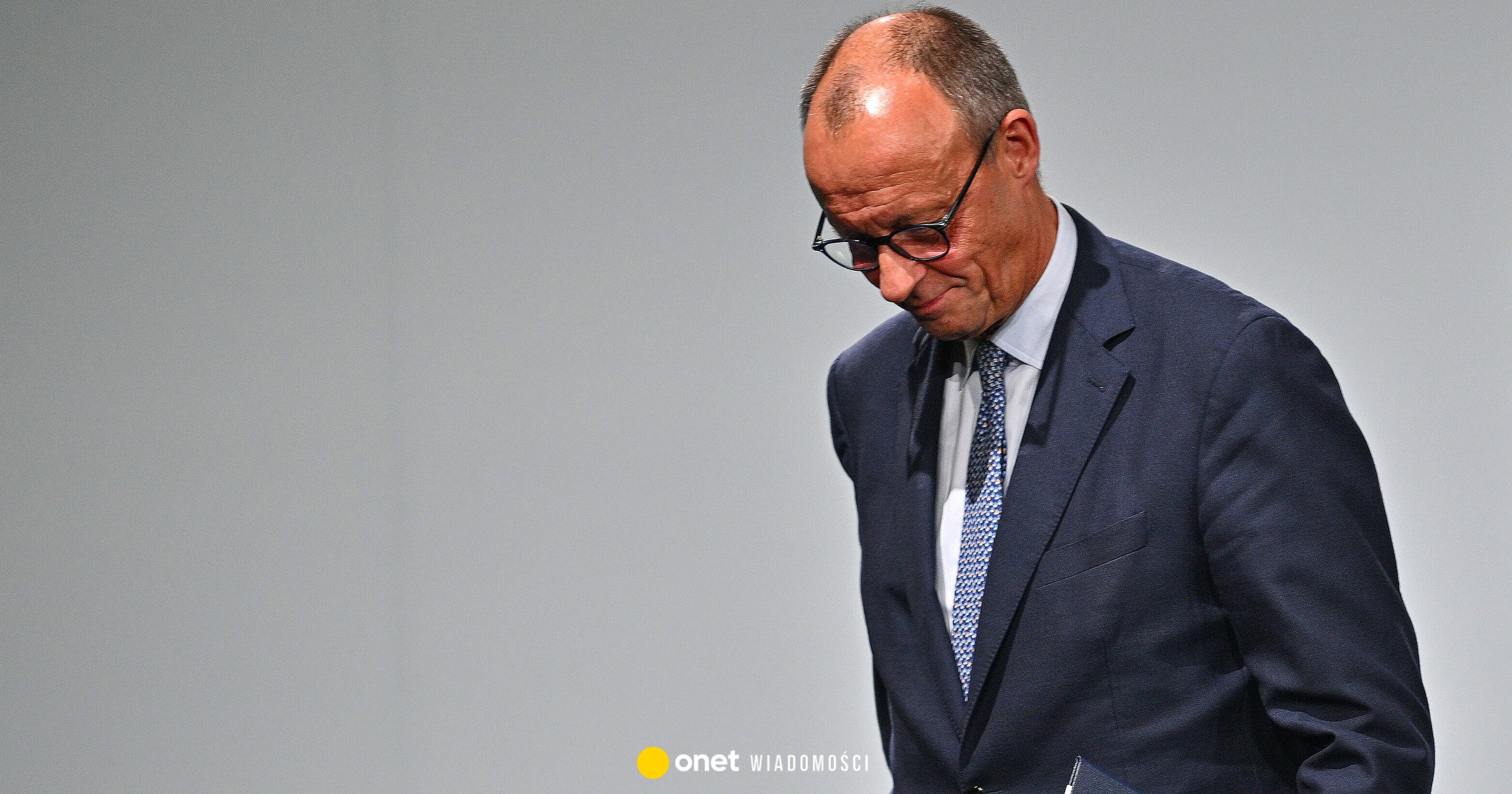
Is it permissible to call the chancellor Pinocchio? This question has occupied Germany ever since it came to light that the police were investigating a pensioner from Heilbronn. All because he commented on Friedrich Merz's visit to the city on Facebook with the words “Pinocchio comes to HN”, adding an emoticon with a long nose.
There was a suspicion of insulting a politician. The amendment to the regulations of 2021 provides, in accordance with paragraph 188 of the Penal Code, a penalty of up to three years' imprisonment or a fine.
First the good news: according to all the lawyers quoted by the media, there was no crime of defamation.
— This falls within the limits of freedom of expression and is protected by Art. 5 of the Basic Law – explained lawyer Moritz Ott in an interview with “Heilbronner Stimme”
“I consider the term Pinocchio to be a value judgment, not a (false) statement of facts,” reassured his colleague Michael Rath-Glawatz.
According to the “Tagesschau” program, even the legal editorial staff of public television did not see any grounds for conviction: – The pensioner most likely did not commit a crime with this comment.
The prosecutor's office in Heilbronn finally expressed the same opinion: it discontinued the proceedings, finding that it was a manifestation of permissible criticism of the authorities, covered by freedom of speech.
Overzealous policemen make a mockery of the state
And now the bad news: the fact that this issue had to be seriously discussed at all is a wake-up call. It reminds us of the spring of 2020, when, during the pandemic, lawyers, politicians, police and media argued in detail whether it was allowed to read a book on a park bench.
When things that should be absolutely obvious in a liberal state of law, which common sense immediately recognizes as permissible – when such matters are criminalized, presented as a scandal and arouse uncertainty, something fundamental is beginning to shake: trust in the system.
The Pinocchio case, which accidentally came to light, sheds surprising light on… the state of freedom of speech in the Federal Republic of Germany. Unlike the case of a pensioner from Franconia who posted a drawing of Robert Habeck on the Internet with the inscription “Professional idiot”, here the notification did not come from the politician himself.
This time it came from the police, specifically from the social media team of the Heilbronn police station. The police posted official information on Facebook about the introduction of a no-fly zone due to the chancellor's visit, which led to… unintentionally caused a real festival of folk humor: “Over Heilbronn, birds fly on their backs so as not to see this poverty”, “Did Münchhausen fly away on a cannonball again?”, “Oh no, exactly where I was supposed to fly by helicopter to work.”
The policemen, instead of dealing with real problems – and there is no shortage of them in “Heilbronks” – went through all these joke replies under their stiff post, to find content “bordering on insult” and forward it to the prosecutor's office. A police spokesman presented this mechanism as mandatory: – If we have reasonable suspicion that a crime has been committed, we must continue to act.
Therefore, reporting the Pinocchio case was inevitable. This insight into the neo-Kafkaesque reality of 2026 says a lot about the damage caused by the tightening of Section 188 in Germany – combined with the Digital Services Act, which obliged EU countries to fight incitement and hate speech.

Puppets depicting Pinocchio. Illustrative photoAbrilla / Shutterstock
Both provisions reveal their full force in everyday legal practice – leading to overzealousness any word that could be considered an insult to majesty or undermining the legitimacy of the statefor peace of mind it is reported to law enforcement authorities.
Such actions by the state apparatus are a feature of authoritarian regimes. It stands there in clear contradiction with that guaranteed in Art. 5 of the Constitution – freedom of speechwhich – as the Federal Constitutional Court ruled in 2024 – “arises precisely from the need for special protection of criticism of the government.”
This is how citizens are intimidated
But is reporting to law enforcement just a trifle, since it only expresses a “suspicion” and is ultimately decided by an independent court? Even apart from the fact that judges, especially in lower instances, are increasingly succumbing to the restrictive spirit of the times: who downplays state abuses as in the cases of Pinocchio and “The Fool”, he doesn't understand their intimidating effect.
Someone who finds a notice of initiation of criminal proceedings in their mailbox or is visited by the police at dawn experiences existential fear. He needs a lawyer, he must prepare for a trial, social stigmatization, and in the worst case, a verdict. No one takes such a risk lightly – especially if they are not protected by wealth or position. A pensioner from Heilbronn, barely suspected in a case over a harmless post about Pinocchio, deleted the post after being reported – and explained to police that his comment “was not intended to offend any specific person.”
It was the CDU and SPD coalition that pushed through the tightening of paragraph 188 in 2021. If these parties continue to ignore the dangerous tendency towards authoritarianism they have triggered, they will lose the right to present themselves as defenders of the liberal state of law.