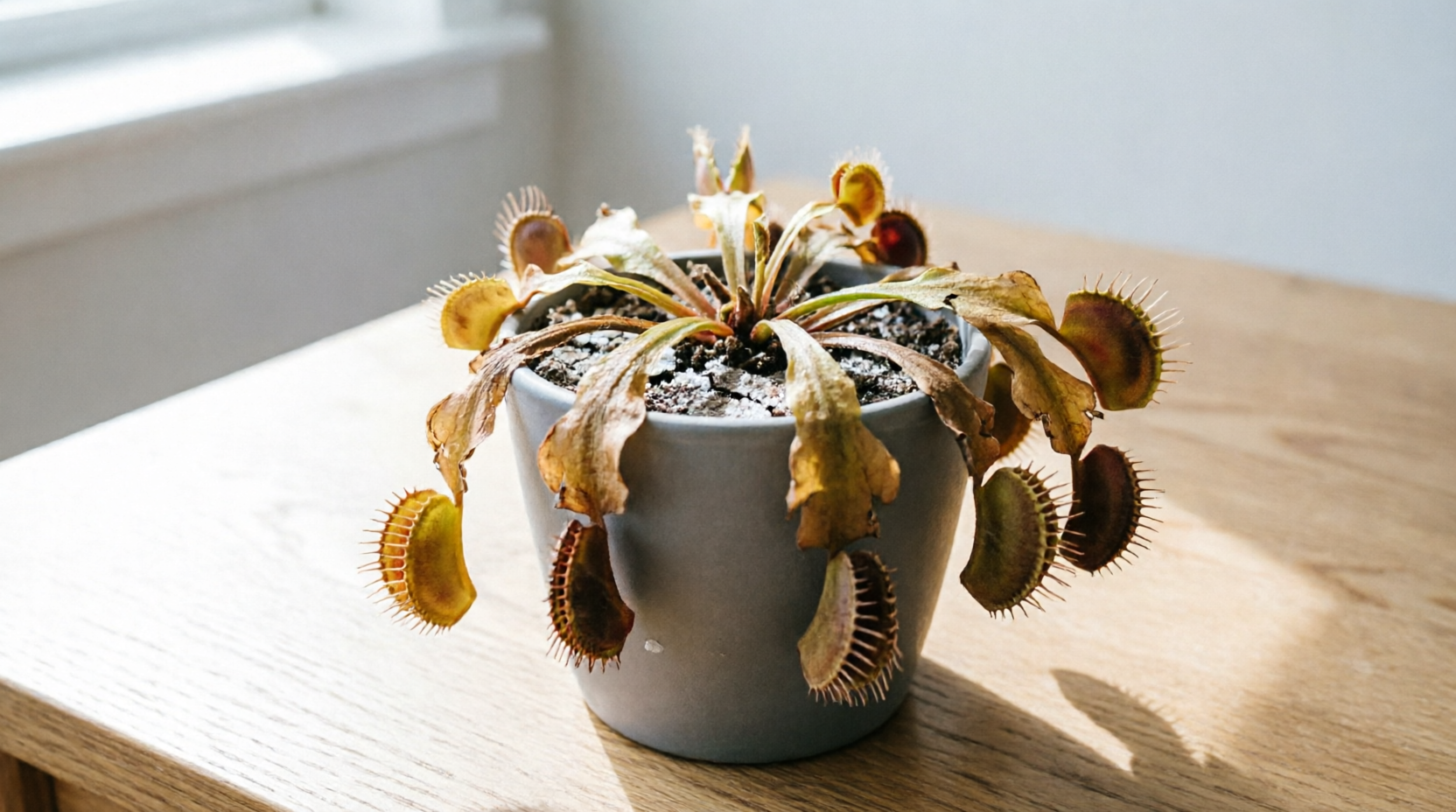
The Venus flytrap needs special conditions – without them, its traps will become small and dark (or even disappear altogether), the leaves will be limp and dull, and the plant will stop growing. An expert from the Zen channel “Exotica – an encyclopedia of house plants” told us what conditions this exotic “pet” needs and what conditions to create.
Mistake #1: Lack of lighting
The flycatcher needs sun and as much sun as possible. The best option is direct sunlight on a south window or a powerful phytolamp. If the plant does not have enough light, the leaves become elongated, the traps become smaller, and the color fades.
In the heat of summer, be sure to take the pot with the flytrap outside or at least onto the balcony.
Mistake #2: Tap water
You can water the flytrap only with distilled water or clean rainwater. Salts in tap water quickly accumulate in the soil: the roots become sick and the plant weakens.
Mistake #3: Inappropriate substrate
For the flycatcher you need very acidic, low-mineral peat without fertilizers. If you plant it in soil for indoor plants, a universal mixture, ordinary soil or “fat” soil, it will not last long. The whole secret in the physiology of the flytrap is that the standard nutrient soil for it is… destructive.
Mistake #4: Lack of peace
In winter, the Venus flytrap needs rest. At low temperatures, growth begins to slow down and some leaves fall off. However, in reality the plant does not suffer – it goes dormant, which prevents its depletion. Without regular rest, the flycatcher will suffer.
Mistake #5: Tropical Humidity
The flycatcher needs fresh air and an average level of humidity. If you give it a “bath” under glass, the plant will begin to rot and turn black.
And a couple more important notes: you don’t need to endlessly feed the flytrap with mosquitoes, flies and pieces of meat – just as you don’t need to constantly play with the traps, closing them with your finger.