The daring action of Ukraine and Western sanctions spoiled the combat abilities of the Putin's army

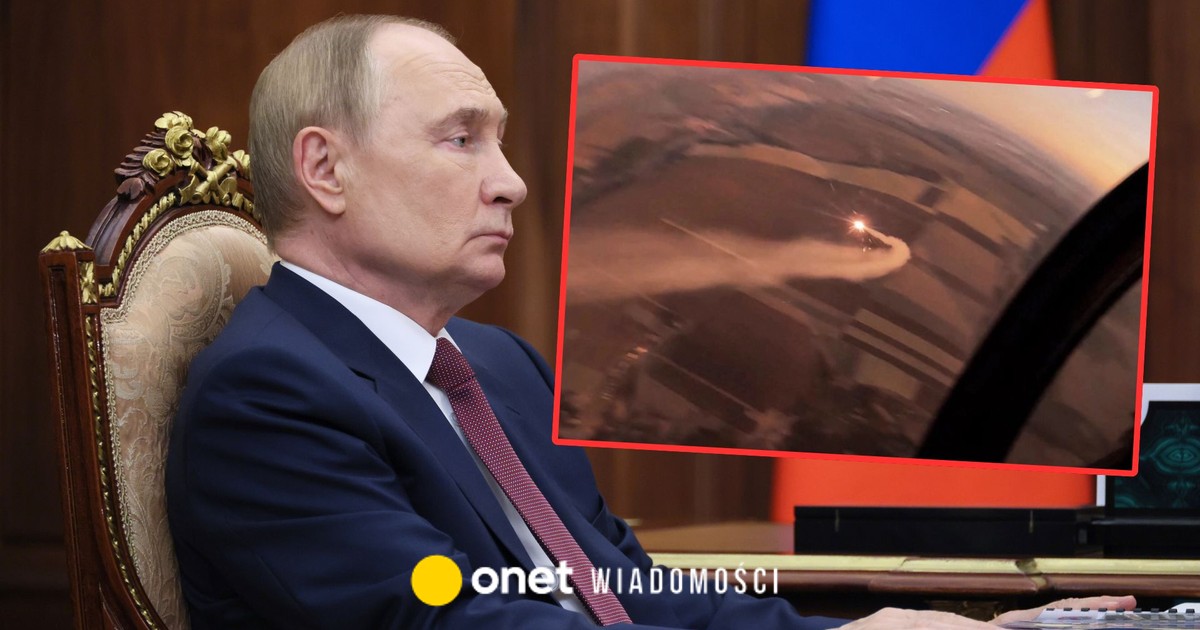
Analysis of data of the Ukrainian Air Force and information platforms carried out by Kyiv Post indicates that the fleet of Russian bombers has less efficient aircraft, and Russian bullet manufacturers seem to provide fewer missiles to military airports. In addition, Ukrainian long -range drones are attacking Russian rocket factories.
Quoting sources in the Ukrainian armed forces (SBU), the National Intelligence Agency, the Safety Research Group announced on Tuesday that in April and May the fleet of Russia's heavy bombers was able to launch an average of 33 maneuvering missiles during night mass attacks, and in June this number fell to an average of 19 maneuvering missiles.
The report linked the weakening of Russian rocket attacks on the houses and enterprises of Ukrainian civilians with the reckless operation of the SBU “Pajęczyna” from June 1, under which Ukrainians attacked the Russian fleet of heavy bombers.
Ukrainian operators piloting FPV drones hidden in civil trucks and fired near four main Russian air bases destroyed or damaged 41 aircraft of the Russian air force on Earth, as showed by recordings from attacks. The Ukrainian armed forces claim that one -third of the fleet of heavy bombers in all Russian Air Force has been immobilized.
Among the types of bombers hit during unexpected drone attacks in Russia were the subdzal Tu-95MS turboprop bombers (the name according to NATO is “bear”, or bear), supersonic Tu-160 (“Blackjack”, or Czarny Peter) and the tu-21m (“Backfire”, “Backfire”, Literally reverse ignition).
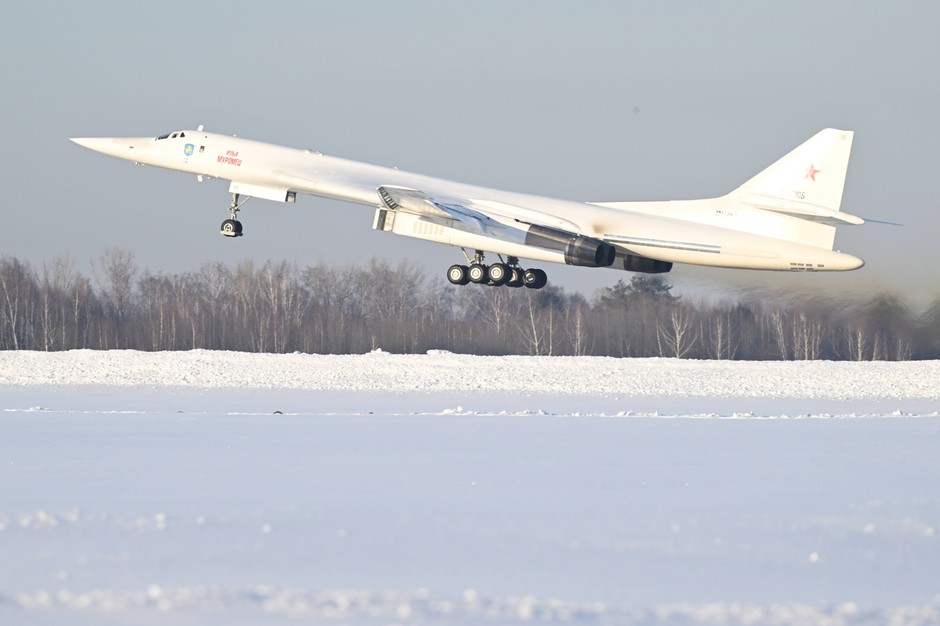
Tupolew Tu-160 m strategic bomb aircraftDmitriy Azarov/Sputnik/Kremlin Pool/PAP
According to this report, the losses of the fleet of Russian bombers caused by the operation of “Spider” are largely responsible for a 42 % decrease in the number of maneuvering missiles fired by the Kremlin towards Ukraine.
Other sources, in turn, say that although the number of shells fired during Russia's night attacks on the houses and enterprises of Ukrainian civilians actually decreases, the reasons for this state of affairs are probably more complex than just a deficit of bombers.
Russian attacks in numbers
Despite the success of the “spider” surgery, some of Russia's biggest attacks on Ukraine took place in weeks immediately after its completion: 479 drones and 20 missiles on June 8-9 this year, over 200 drones and 41 maneuvering missiles fired from the air (together with 20 other types of missiles) 29 June and 539 drones and 11 Maneuvering missiles shot from the air On July 3-4.
However, the firepower of Russia used against Ukraine in 2024 was even greater. The most severe individual attack of the whole war probably took place on August 26-27, 2024 and included 127 missiles, of which about 70 percent. They constituted maneuvering missiles, and 30 percent ballistic missiles.
In August 2024, Russian bombers, according to data from open sources, probably fired 80–90 maneuvering missiles towards goals in Ukraine. In November 2024, during Russian attacks probably aimed at destroying the power network of Ukraine (which failed), 80-90 maneuvering missiles were re -launted.
According to Kyiv Post, in July 2025, the last full month of attacks, this number amounted to about 30 maneuvering missiles fired from the air. Even three months earlier, on March 6-7, during the hardest Russian rocket attacks on Ukraine this month, Russian bombers dropped 35 maneuvering missiles.
Continued article under video material
The downward trend remained in August 2025. During the last significant attack of Russian air weapons on Ukraine, on the night of August 18-19, Russian bombers fired only five KH-101 maneuvering missiles, but the planners of the attack from the Kremlin strengthened it with five ballistical bullets with heads of up to 800 kg, fired from the ground, and 230 fired from the ground, and 230 kg Drons, some of which transferred 50-90 kg heads, and the others were used as bait.
Ukrainian air defense units later informed about the shooting down of two ballistic missiles and four maneuvering missiles and over 80 percent. drones. The weapon that reached its goals seriously damaged energy infrastructure in the cities of Krzemieńczuk and Poltawa. The Russians also hit the sums, Dnieper, Odessa and Kyiv. According to reports, eight civilians were killed and 21 were injured.
The latest Russian attack, which took place on the night of August 19-20, was less ambitious and less deadly: two Ballistic shells of the Earth-Earth (one shot), 91 drones (61 shot down) and the lack of maneuvering missiles fired from the bombers, as Ukrainian Air Force said on Wednesday.
Missing components and Ukrainian raids
Published reports of the Ukrainian military intelligence suggest that the Russian arms industry probably assembles from 30 to 50 maneuvering bullets fired from the air for the Russian Air Force per month. They also confirmed that a serious obstacle to increasing production is limited access to the key high -class military electronics produced outside Russia.
According to the Ukrainian Military Intelligence Agency, the Hur most often produced by Russia KH-59 maneuvering shell contains dozens of advanced components sold by American companies, as well as several from Europe (Swiss Mtechnology and Dutch NXP Semiconductors). The applicable sanctions limited, but did not eliminate Russia's access to these key parts.
The most advanced Russian maneuvering shell fired from the air, KH-101, in the current version contains at least 138 special electronic components of military class, mainly produced in the US, as well as in Taiwan, China, the Netherlands and Japan. Taiwan imposed limited bans on exports of potential double -use components to Russia, China did not do this.
According to open sources, Ukraine attacked Russian factories maneuvering at least twice: on May 28-29, 2025 and August 11, 2025.
According to some reports, the first attack on the Raduga Design Office in the Moscow region was the largest massive attack of Ukrainian drones during the war, in which nearly 300 machines were shot towards the factory itself or into aerial space in other parts of Russia as “a jam”.
The official statements of the Russian authorities stated that all drones were shot down and did not cause any damage. However, independent press reports and local social media indicated that there were most likely hits and fires in the workshops and buildings of the assembly line. Estimates about the number of hits ranged from 10 to 20 aircraft.
On August 11, 10-15 long -range drones hit the Institute of Instrument Budden in Arzamas in the NiżnonowoGrodzki region. The factory produces components for maneuvering missiles KH-101, KH-32 and KH-59 and military electronics for aircraft. At least three drones hit the plant. Fire and damage to the structure were reported. The representatives of the plant claim that all drones were shot down and the attack did not affect production.