“I see a historical similarity.” A Norwegian historian warns against geopolitical domination. “It's already happening”

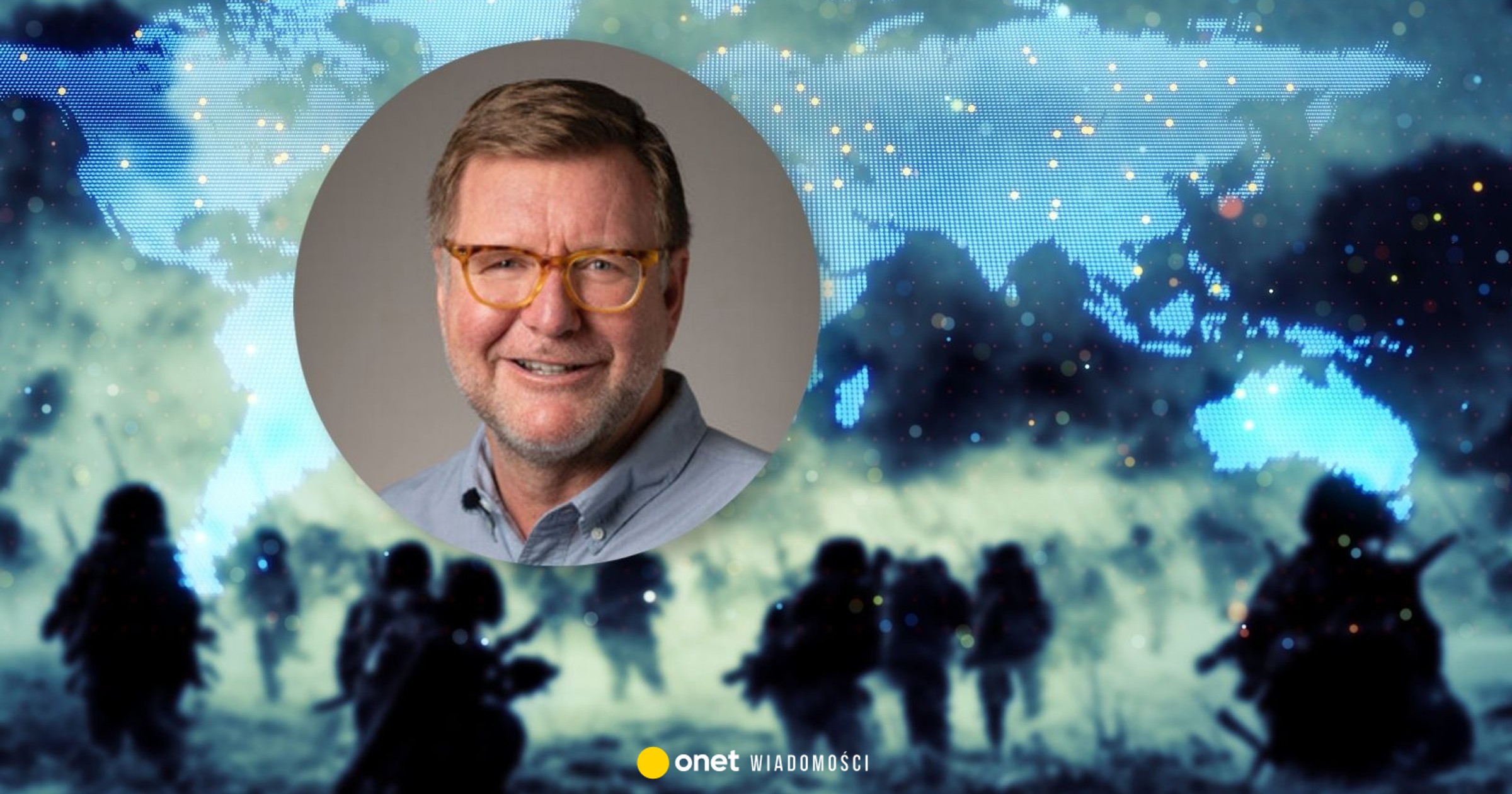
Odd Arne Westad — is one of the leading experts on the Cold War. He held the Department of International History at the London School of Economics, was professor of international relations and global history at Harvard University, and currently teaches global and international history at Yale University. The Norwegian is currently conducting research on the “coming storm”, a chain of crises threatening the outbreak of world war.
Boris Pofalla: The world is becoming more and more divided into regional blocs. What does this mean?
Odd Arne Westad: Yes, that's what we're seeing. The US is trying to dominate its region more strongly. China pursues similar goals in East Asia. Russia has similar plans for Eastern Europe. The world is increasingly divided into regional blocs of powers. And that's where I see a real historical parallel – and a warning.
This doesn't sound very optimistic.
This is why I consider my warnings important. I'm a historian and I don't usually make future predictions. But in the current situation, it seemed necessary to describe the historical parallels before we continue down this dangerous path.
The title of your new book is “The Coming Storm.” Is this what we are dealing with now?
I don't think I can predict exactly when it will happen. However, I can warn you about its potential consequences. Unfortunately, human history shows that crises such as those I write about in the book are very likely.
So the key questions are: how will we weather this storm? How will we try to deal with it when it comes? And how will we prevent its worst effects?
In my research, as well as in my teaching, I have noticed some striking similarities between the human inability to prepare for extreme weather and our inability to think through history and prepare for human-made disasters.
These phenomena have appeared in various forms throughout human history and are reappearing again. I think we're doing pretty poorly on both of those issues.
Is this because people generally find it difficult to predict complex processes? Or maybe today's situation is unique on a historical scale?
I tend to lean towards the first option. We all have great difficulty drawing conclusions about the present and the future from historical experiences. When I was working on this book, sometimes I half-jokingly, half-seriously said:
the only thing history really teaches us is that people fail to learn from it. And unfortunately there is a lot of truth in this.
Yet history remains the only thing we can turn to if we want to understand the human experience. So if we want to learn anything at all, we need to look at past situations that have similarities to our present.
While it's clear that we haven't handled this very well in the past, I believe it's more important than ever to take historical constellations like ours seriously – precisely to recognize warning signs in time and prevent worst-case scenarios.
“The conflict would very quickly turn into a war between superpowers.”
In your book, you describe various current conflicts and possible future crises between great powers – in particular between China and the United States. Is there anything that is particularly bothering you right now?
I usually sleep pretty well, despite all these topics. But if there is one thing that worries me more than anything else, it is the situation in East Asia – that is, in the immediate vicinity of China, the most important emerging power that I deal with in this book.
I am particularly concerned about Taiwan because an armed conflict around Taiwan would be an absolute disaster. But I'm also worried about the Korean Peninsula. Korea is one of those issues that has gone unresolved for too long – both in terms of North Korea's nuclear program and the relationship between North and South Korea. Then, of course, there is the South China Sea.
You write something like this: If China believed that the United States would intervene if Taiwan was invaded, it would have many good military reasons to strike first.
That's how it is. And that's why I see similarities with the situation before World War I. When great powers are convinced that war will come anyway, there are strong military incentives to take preventive measures so as not to find themselves in an unfavorable strategic situation.
Even if the United States had been initially politically hesitant to commit fully to the war, military logic alone would likely have led to its direct involvement in the conflict. That's why I see a similarity to the summer of 1914. Then other countries were drawn into the war by the decisions of the great powers.
This would mean that the logic of escalation becomes almost inevitable. The People's Republic of China has claimed Taiwan since its founding — and the United States would likely intervene on the island's side. This really resembles Europe before 1914.
Yes, and there are historical examples of this. Particularly clear is Germany's decision in the summer of 1914 to invade neutral Belgium. This is why the European War became a world war – because Great Britain was drawn into it. The German leadership then believed that they would be able to defeat France more quickly if they marched through Belgium. From a military point of view, it made sense.
At the same time, entering Belgium was almost the only action that was likely to force Britain to enter the war, because London had guaranteed Belgium's neutrality. The military requirement to quickly take offensive action became more important than trying to limit the conflict. This is what worries me today about Taiwan.
If China follows this logic, it would need to significantly expand its armed forces—especially its navy, missile arsenal, and perhaps also its nuclear capabilities. And that's what's already happening.
Globally, China's armed forces are not yet at the level of the United States. However, in the conflict in the immediate vicinity of China's borders, both sides are quickly approaching some kind of balance.
China would have a pretty good chance of successfully waging a war over Taiwan today — even with the U.S. involved in the conflict. The key question, of course, is: what comes next? Would such a war become global? Could it escalate to nuclear conflict?
China still lags significantly behind the United States in these areas. However, as we saw in 1914, the hope for quick military success can crowd out long-term strategic thinking. The United States itself has not been free from such misjudgments in recent times – in the Middle East, for example.
In crisis situations, states often act with short-term goals in mind and hope to force an advantage with speed and determination, even when the longer-term strategic assessment actually counts against them. This is my biggest concern with Taiwan.
Geopolitical dominoes
Let's move on to Russia's invasion of Ukraine. There, too, there is a risk of direct confrontation between the great powers. What do you see as the biggest risk from this war right now?
In my opinion, the biggest risk is that this war could coincide with other crises – in the Middle East or East Asia, for example – and lead to a real global crisis.
This is my biggest concern regarding Ukraine. Not the war itself, even if we are likely to see even more intense attacks and further escalation. This is about the possibility that several crises will suddenly start to affect each other.
For this reason, I come to the conclusion that today it would be extremely important to stop the ongoing wars, or at least achieve a ceasefire. Not because, by themselves, these wars would automatically trigger a world war, but because their combination, under unfavorable circumstances, could trigger a crisis whose consequences no one would be able to control.
So you're describing a kind of geopolitical domino effect.
Yes. Phenomena that we today perceive as relatively separate can suddenly become interconnected. This applies especially to the Middle East. The belief that what is happening there is limited only to that region may no longer be valid. Exactly the same was said before 1914 about the Balkans.
You are considered one of the most important historians of the Cold War. In hindsight, the Cold War appears to be an almost stable order—though, of course, it was full of dangerous moments. Why do these decades seem almost predictable from today's perspective?
The international system of the Cold War was structurally very different from today's. As I argue in the book, the modern world is much more complex – not least because it is multipolar and characterized by technological and economic tensions that did not exist during the Cold War. It is this complexity that makes the present difficult to predict.
Of course, there were extremely dangerous moments during the Cold War. However, the world order at that time was much more bipolar and therefore in many respects more predictable.
We have lost this form of predictability. I believe it is difficult to restore it – unless the great powers collectively recognize the dangers of the current situation and actually learn the lessons from history.
You also warn against choosing inappropriate historical analogies.
Yes. This is one of the reasons why I deal so intensively with historical comparisons. Of course, some Cold War conflicts continue today – I'm talking about Korea and elements of Russian revanchism under Putin.
However, these conflicts no longer define the entire international system. And this is not a purely academic issue. If we choose the wrong historical analogies, we also have a poorer understanding of current threats—and may make the wrong decisions.
Your comparison with the pre-1914 world is particularly interesting because there was also a phase of extreme economic integration back then. Germany has built its prosperity largely on globalization and international integration. Are we currently in a crisis of this model?
I think many countries – including Germany – are starting to realize that the globalization phase as we knew it until about 10 years ago is over. And it will not return in this form. This does not mean the end of global trade or international financial relations. However, these relations are increasingly subordinated to geopolitical interests. Great powers are increasingly trying to control economic ties to their advantage.
Interestingly, this resembles the situation before World War I. Then the anti-globalization movement also started from the dominant power, Britain. For decades, London has promoted free trade. However, as Germany's economy became so strong that Britain saw it as a threat to its advantage, attitudes changed. We see a similar situation today in the United States in relation to China.