
Donald Trump chases allies. The Kremlin's most loyal client may fall into his disgrace

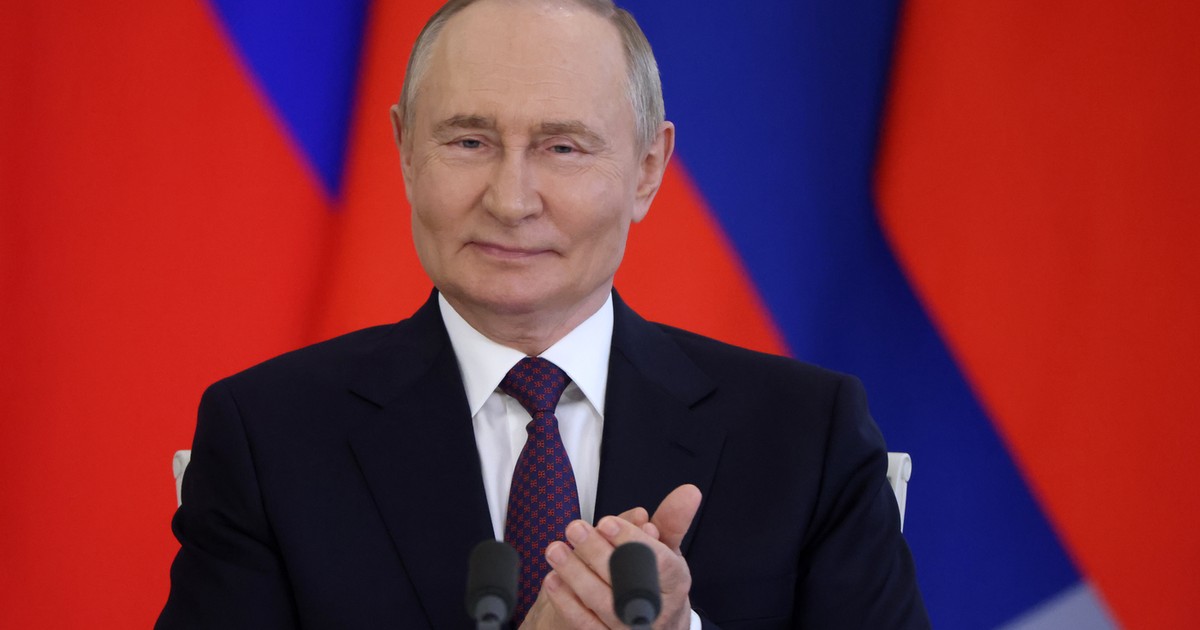
Reports on the course of the Thursday telephone conversation of European heads of states and governments with Donald Trump after the peak in Paris dedicated to Ukraine are consistent as to the overall tone. In the “confrontational” atmosphere, as the Reuters agency described, or during the “turbulent conversation”, as the newspaper “Bild” put it, Trump rebuked Europeans.
He demanded that the continent stop buying Russian oil, because in this way he co -finances the war in Ukraine. Thus, the US president raised an irritable issue. In fact, the EU fails to stop the flow of several billion euros a year to Moscow.
For the Kremlin, this is welcome in the ineptitude of Europeans. The war consumes huge sums of money that Russia is not able to earn easily. According to estimates of the Stockholm Institute of Pokój Research (SIPRI), last year the war with a neighbor cost the Kremlin $ 140 billion. (almost PLN 509 billion).
This amount was not generated by the productivity of Russian enterprises, but by selling almost inexhaustible resources of the country. Despite the constant appeals to other countries, so that they do not buy Russian energy anymore, the West remains one of Moscow's most loyal customers.
From the beginning of full invasion in February 2022, Western countries have been trying to hinder Russian raw materials to prevent war financing. In July, the European Union adopted its 18th Package of Sanctions. It aims to further impede oil exports and eliminate trade gaps through third countries.
However, the global market is inventive and the oil is craving, which Russia is now ready to offer at lower prices. In this way, oil still goes to global markets. Only that with each subsequent package of sanctions of her paths they become more and more complicated and unpredictable.
The Finnish center of energy and clean air research (Crea) calculated that only in July 2025 Russia earned EUR 18.1 billion (76 billion 882 million) on the sale of fossil fuels, i.e. coal, gas, oil and refined products, such as diesel and kerosene. This is one -third less than before the war. However, even after three and a half years of the war, the EU remains the fourth largest recipient of Russian energy, after China, India and Turkey: Only in July it was purchased for EUR 1.3 billion (5 billion 522 million PLN).
The Kremlin's most loyal client
The most loyal customer of the European Union countries are Hungary, which purchased oil and gas for half a billion euros (PLN 2 billion 124 million). To the irritation of Ukraine, the pipeline, which they are transported, runs through its territory. The second largest European gas recipient is France, which in July bought liquid gas for 239 million euros (1 billion 15 million PLN). It is completely legal because To this day, no LNG sanctions have been introduced to Russia. They are to enter into force only in 2027.
However, Slovakia, Belgium and Spain also paid Russia in July almost EUR 400 million (1 billion 699 million PLN). In this way, the European Union purchased almost 10 percent. Russian fossil fuels.
For Trump, this is proof of ineptitude. In the end, the United States set a good example in this field. Washington suspended the import of crude oil, natural gas, liquefied natural gas and coal from Russia as early as April 2022, less than two months after the war began.
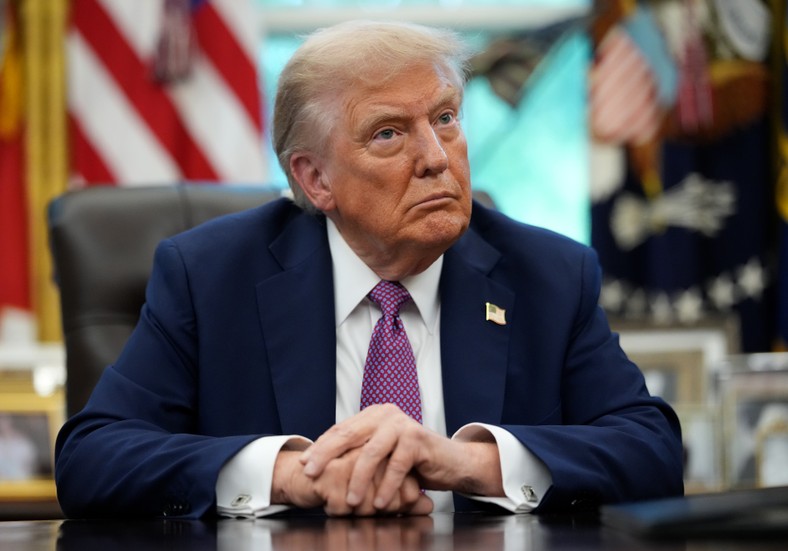
US President Donald Trump in the Oval Office of the White House, September 5, 2025.
However, this step was not as difficult for the United States as for Europe. North America is rich in raw materials, and the United States is much less dependent on imports from Russia. While for Europe The stake is your own energy security.
Europe, except for Slovakia and Hungary, no longer buys directly in Moscow, but indirectly. Türkiye, China, and above all India have become an important “laundry” of Russian oil. Russia, looking for new markets, gave generous discounts. Especially India noticed their chance: in 2024 they bought Russian oil for $ 53 billion. (PLN 192 million 692), while in 2021 it was still 2.3 billion (PLN 8 billion 362 million). This means an increase of 2,200 percent.
Playing hide and seek
At the same time, the export of refined petroleum products from India to Europe has increased rapidly. According to research conducted by Bloomberg, in January 2022 India delivered 35,000 to the EU. Fuel barrels. In August 2025 It was already 242 thousand. barrels a day.
18. The sanction package aims to prevent Russian oil to enter Europe in circular roads. From January 21, 2026, European companies will not be able to buy fuels made of Russian oil – even if they were previously processed in other countries, such as India. If India currently export diesel oil to Europe, They must prove that Russian oil was not used for this.
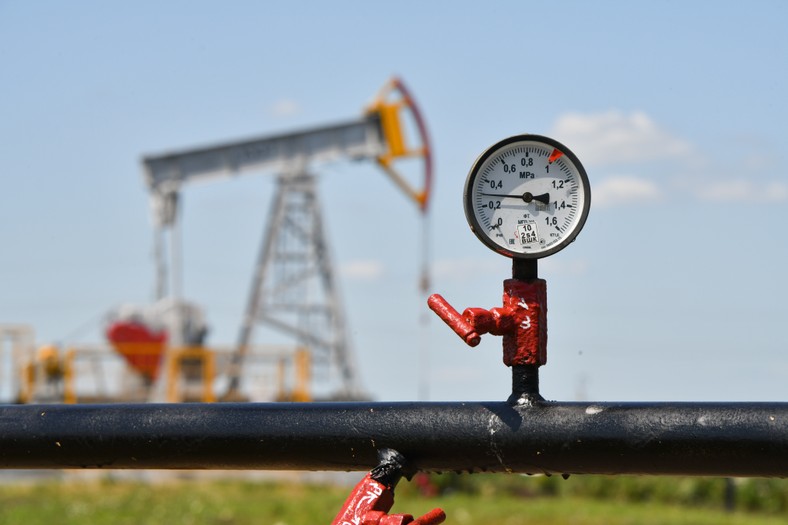
Crude oil production in the Republic of Tatarstan in Russia, July 14, 2025.
The packet of sanctions also contains penalty measures to Indian refineries. In addition, 105 Russian “shadow fleet” ships will be placed on the black list.
The game of hide and seek will continue. There are already sophisticated tactics of avoiding sanctions. For example, the so -called “Ship-to-Ship” transfers, in which tankers with Russian oil meet with other ships on the high sea and pump the load. This is to hide a real source of origin.
The losses for Russia are small
In addition, Russian oil is often mixed with other species to hide its origin. Cheap Russian oil is so lucrative for many countries that in the future such fraudulent maneuvers should be expected – also in Europe. The losses for the Russian war of the war are real, but small.
The Ukrainian “School of Economics” based in Kiev came to a sobering conclusion: from the beginning of the war Russia's revenues from the sale of oil and gas were subject to greater fluctuations, but did not fall significantly. Also in 2024, Russia earned a total of $ 235 billion. (854 billion 390 million PLN) on the export of oil and gas. This is much more than $ 140 billion. (PLN 508 billion 998 million), which Moscow spent last year on her war.
The EU covered almost one -fifth of the war of the warwhich, according to Crea, bought energy from fossil fuels worth almost $ 27 billion in Russia last year. (PLN 98 billion 164 million). Add to this import of energy from third countries, such as India, which also supply the Kremlin's money, but are difficult to estimate, the EU probably belongs to the main sponsors of the war.


