Reorganization and investments of Ikea in Poland. Jakub Jankowski about the future of the company

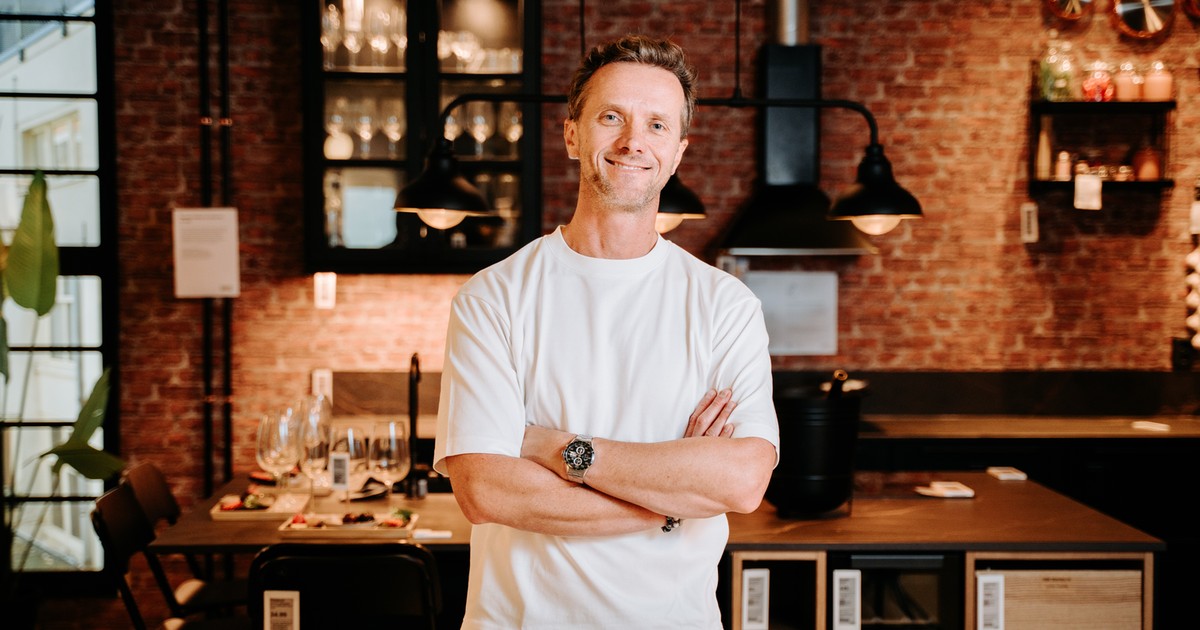
Sonia Sobczyk-Grygiel, journalist of Business Insider Polska: You have just announced a wave employment reduction. To what extent is this related to the uncertain geopolitical situation, conflict in the Middle East, etc.?
President of Inter IKEA Group Jakub Jankowski: Current organizational changes are not directly related to specific geopolitical events. Instead, these changes reflect our decision to focus resources on the areas that matter most to customers: the right product range, low prices and high-quality customer service.
With clear goals and fewer priorities, a simplified organizational structure will allow us to make faster decisions and lower costs, which will increase our ability to offer lower prices to customers. This will help us stay true to our vision and ensure Ikea remains competitive for many years to come.
People have less money, so we have to cut costs
However, we are in a hot moment in geopolitical terms – the conflict in the Middle East is causing a fuel crisis, which translates into an increase in inflation and, in the next step, probably interest rates. All this will hit consumption. How does Ikea approach these challenges?
As for the year-on-year growth index, we are still above 100. We would probably like to grow more, but – considering the current challenges – such results are a reason for optimism for us – we believe that things will be better when the situation calms down.
However, we are already seeing the effects of inflation – people have less and less money in their wallets. This means that we have to reduce costs quite significantly to be able to ensure lower prices for our products.
Although many of our customers are not looking for the cheapest furniture, but also slightly higher-end ones. Therefore, we try to provide an offer also for this group.
Read also: A giant investor is betting on Poland. Government: thousands of jobs will be created [WYWIAD]
So how afraid are you of the effects of the conflict in the Middle East?
On the one hand, we are aware that fuel and transport costs are rising and supply chains are lengthening. It affects us. For example, the customer index in the US is the lowest in 50 years, and in the largest EU market – Germany – the condition of consumers is also deteriorating.
Meanwhile, Germany is the largest market in the world for Ikea, followed by the United States.
More of the material below the photo
Ikea cuts costs and reduces employment
|
IKEA / Inter IKEA
However, on the other hand, it is in Ikea's DNA that we cope best in times of crisis. Previous crises – such as the financial one in 2008 – were times of growth for us.
Will we succeed this time too? The market has changed significantly – we have many competitors in various sales channels. This requires us to be flexible and take a new approach, e.g. inventing new store formats or in the area of online trading. The latter option is very popular in Poland.
We see, for example, that customers often want to have access to smaller stores than our traditional large format. So we recently opened a smaller store in Bielsko-Biała, which is very popular.
We also pay a lot of attention to introducing new products or changing existing ones to make them affordable.
So, in the current circumstances, the price criterion is the key to success?
Yes. Affordable price is one of the key criteria for us, in addition to form, function, quality and sustainability.
A particularly serious challenge is to combine cost reduction – necessary to offer lower prices – with attention to sustainability. For example, biological adhesives, the use of which reduces the carbon footprint of our activities, are still quite expensive because they are not yet widely used.
The European Union should reduce bureaucracy
Let's move on to the level of the European Union – how do you perceive such European Commission initiatives as “Made in Europe” or… promotion of the so-called local content in Poland. It helps or hinders you in running your business.
Generally, as Ikea, we support unrestricted trade – the fewer restrictions on international exchange, the better for us. Therefore, we are very pleased with the EU's activity in concluding further free trade agreements.
Nevertheless, about 70 percent our production comes from Europe and I do not expect any significant changes in this area.
When it comes to the EU, as a European and a Pole, I am concerned about how slowly the requirements for business change here and how slow the fight against bureaucracy is. When traveling to Asia, to China, I see how much easier and faster things can be done there.
We believe that business can do a lot to change Europe for the better in this respect.
An example is the goals in the area of sustainable development. We approach this issue very similarly to the European Union. However, we would like to implement them in a slightly different way – often faster, easier and less bureaucratic.
However, China is not only about impressive efficiency, technological development, etc. They also have a darker side when it comes to, for example, limiting civil rights or respecting workers' rights.
I will refer to the issue of workers' rights – in all the factories in China where I have been over the last three or four years, we have exactly the same standards as in Poland, Sweden or Germany.
There have been significant improvements in this respect over the last 20 years. Is it enough? It's hard to say, but you can certainly find disturbing cases. However, when someone came from Western Europe to Poland in the 1990s, they probably asked themselves similar questions about working conditions. Since then, however, we have made significant improvements in this respect.
What other solutions could be transferred from China to Europe to make business life easier?
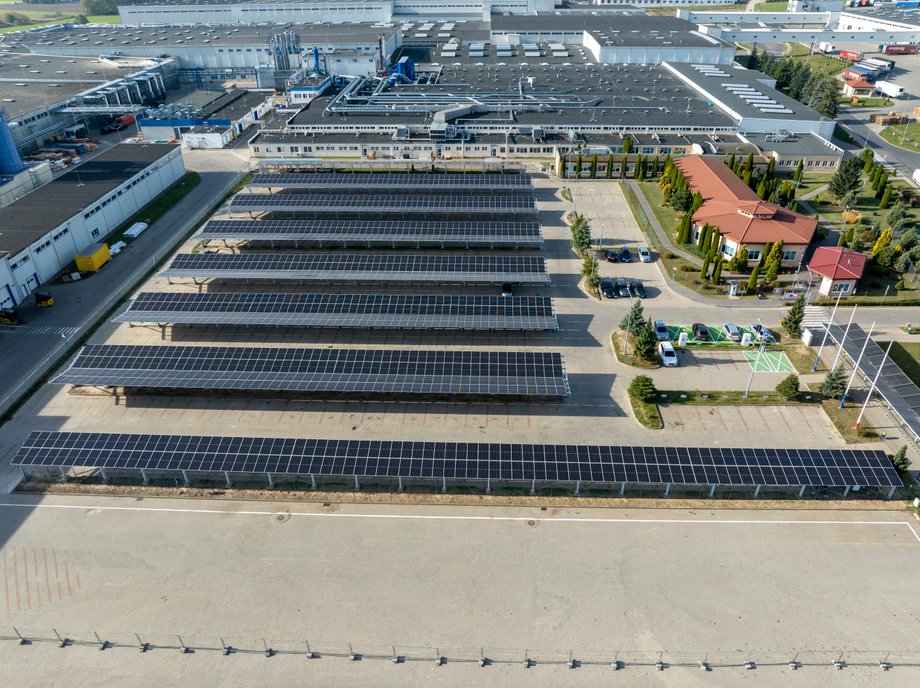
In Poland, we would like to invest a lot in photovoltaics, but due to too small investments in the power grid, we cannot implement these plans. In China we do not encounter such barriers.
Another solution that we are testing very intensively in China is energy storage. We would also expect facilitations in this area in Poland.
It is certainly much easier to introduce various innovations there – due to less bureaucracy. Very often, it is enough to provide one piece of information only once. Meanwhile, in Poland – as a manufacturer of e.g. chipboard – we have to submit one document four times at subsequent stages.
Poland can become one of the leaders of the circular economy in Europe
What else is a challenge for you on the Polish market?
Ikea started cooperation with Poland 65 years ago. Since then, he has been doing it successfully. Recently, Poland entered the top ten of our markets in the world.
We have invested a lot here in various factories and this process is ongoing. For example, this year we started building a factory in Zbąszynek near Poznań worth EUR 70 million. It will process furniture waste.
Generally, we are very interested in the issue of waste processing in Poland, recycling, and the circular economy (Circular Economy).
We gladly take over wooden waste, transform it into chipboard, and then make furniture from it.
It seems to me that in Poland there is a lack of awareness of how much potential there is in the circular economy area. We have almost 40 million inhabitants, so naturally there is a lot of waste that can be reused.
Today, furniture waste is often not segregated and ends up incinerated, instead of creating added value for the Polish industry.
More of the material below the photo
IKEA shares the European Commission's goals when it comes to climate goals
|
IKEA / Inter IKEA
What facilities do you expect in this area?
We care primarily about clear, consistent and long-term stable regulations that will support the development of recycling and the circular economy. This includes: o simplifying procedures related to waste classification so that valuable secondary raw materials are treated as a resource and not an administrative problem.
We also see the need for better and more uniform rules for waste segregation, including bulky and furniture waste, as well as incentives for local governments and residents to collect it selectively.
Financial instruments are also important – reliefs, subsidies and investment support – that would encourage companies to invest in modern technologies for recycling and reusing materials. We believe that thanks to the cooperation of business, administration and local governments, Poland can become one of the leaders of circular economy in Europe, and we, as Ikea, want to be an active part of this change.
What other challenges would you mention?
The shrinking employee pool is a challenge for us. Hence, we invest heavily in robotization, which necessitates further training of employees.
We believe that schools should educate in the area of using artificial intelligence, etc. The role of business is to connect young employees – who have these competences – with older ones who, thanks to this cooperation, will also acquire them.
A serious challenge in Poland, as I have already said, is also access to cheap, emission-free energy.
We started with geopolitics and I will come back to it at the end – how big a problem is it for foreign investors that Poland is located so close to Russia?
I do not have the impression that this is a reason for the lack of investment in the Vistula region. As Ikea, we are closely monitoring the situation, but – as I mentioned a moment ago – we have decided to make a large investment near Poznań. We believe that the situation will calm down.
Interviewed by Sonia Sobczyk-Grygiel, journalist of Business Insider Polska