The year of Friedrich Merz. Five reasons to be concerned [OPINIA]

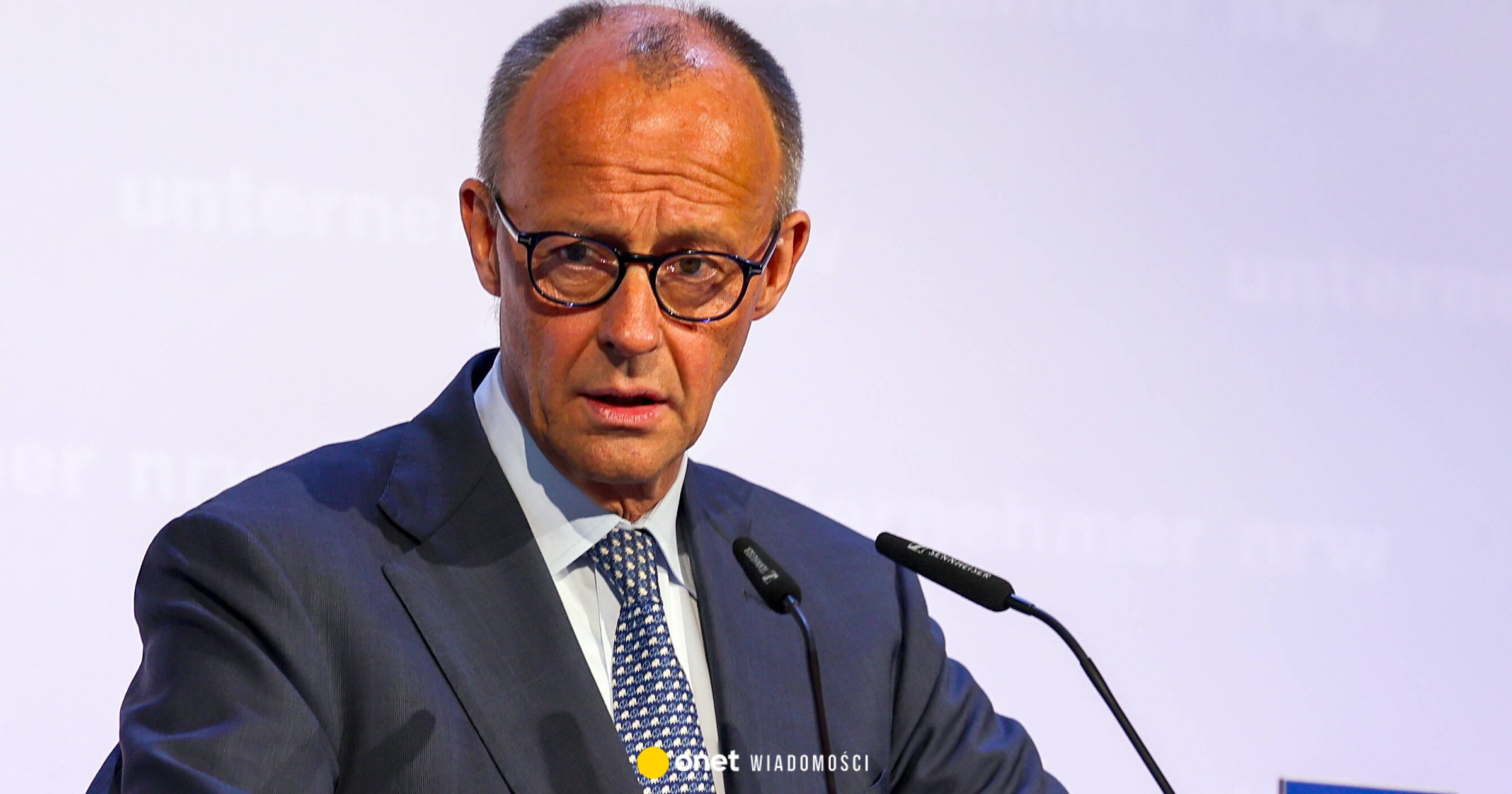
A lost year for Germany? Chancellor Merz was not up to the task? One thing is certain: a wave of criticism is rising in Berlin against Friedrich Merz, who took office almost exactly a year ago and headed the coalition government formed by the Christian Democratic Union (CDU) and the Social Democratic Party of Germany (SPD).
What's worse: Germany's European partners are starting to worry. So there are at least five reasons to be concerned about the policies of the politically weakened chancellor, who is threatened primarily by the growing popularity of the far right.
Merz is not a leader
As the winner of the parliamentary elections of February 23, 2025, in which the CDU obtained 28.5 percent. votes, and the far-right party Alternative for Germany (AfD) led by Alice Weidel – 20.8 percent, Friedrich Merz came to power promising to restore Germany's proper political position.
From the beginning, he tried to break with the policies of his social democratic predecessor Olaf Scholz (2021–2025), who was hampered in the international arena by his lack of charisma and relative inability to make decisions. The problem is that Merz's own leadership is also currently in question.
Donald Trump's reluctance was aroused by his recent comments about the humiliation of the United States by Iran. In turn, his short-tempered nature and tendency to behave more like a corporate CEO than a politician (he was the head of the American investment company BlackRock for a long time) made many of his supporters lose faith in his ability to lead an unstable government coalition. When asked about this in the context of the 2029 elections, Merz only said that “it is impossible to guarantee anything today.”
And social dissatisfaction translates into poll increases for the AfD and declines for the CDU.
Freidrich MerzClemens Bilan / PAP
Merz has no economic strategy
What is Germany's economic strategy when its iconic automotive sector has just suffered another blow and Donald Trump is threatening to impose additional tariffs of 25 percent?
In 2026, Germany entered its seventh consecutive year of economic stagnation with no end in sight. Worse still, the government did not implement the reforms promised in the election campaign. “Friedrich Merz cannot continue like this. His one-year government seems exhausted, and voters are increasingly tired,” read an excerpt from an article published this week in the British weekly “The Economist.”
Budget cuts and reforms of the tax, health insurance and pension systems planned by the coalition government are still suspended. As a result, there is a lack of investments that would stimulate economic growth. “There is no comprehensive plan for concrete reforms that could boost growth and competitiveness. This delay creates an existential threat to the country's position as an industrial power,” top German businessmen recently warned.
In what direction will Merz “The European” go?
There are two ways to evaluate Friedrich Merz as a “European”. In terms of rhetoric, the Chancellor has undoubtedly gone further than any of his predecessors in confronting the United States. But the question remains about real actions, i.e. about European industrial projects on which the future of the European defense industry depends.
“When it comes to strategic priorities and public procurement policy, the situation remains largely in the hands of nation states. Friedrich Merz is, in fact, continuing the course set by Scholz, who announced a sharp increase in defense spending after Russia's invasion of Ukraine,” notes the British “Guardian.”
However, two issues remain unclear: to what extent is Berlin willing to buy European products? And what will Germany's future military power look like: will it be based on cooperation with European partners or will it have features of imperial policy?
Will Merz bow under the pressure of the AfD?
This is the main criticism from left-wing and center parties: at the European level, the German CDU pursues a policy of ad hoc coalitions with far-right parties. “In Germany, an alliance of right-wing groups is common. We see it every day,” laments French MEP Manon Aubry from the left-wing France Untamed.
How true is this? Swiss scientist Gilbert Casasus claims that “for several weeks I have been wondering whether the German grand coalition between the conservatives and social democrats will survive. For the SPD, it is an existential issue: stay in it and lose support, or leave it and risk a coalition between the CDU/CSU and the AfD?”
As a reminder, AfD is the second largest political party in Germany. Regional elections will be held in Mecklenburg-Vorpommern and Saxony-Anhalt in September. A possible AfD victory could pave the way for the formation of regional governments led by the far-right party, giving it control over key areas such as education, law enforcement and regional intelligence services.
Officially, the CDU (Christian Democratic Union) has always refused to cooperate with both the radical left Die Linke (GUE/NGL) and the AfD. For how long?
Merz is defenseless in the face of Trump
“Who will replace Merz?” “Is the Merz government on the verge of collapse?” These are just some of the recent headlines in the German press, while only 15 percent respondents in a recent Forsa survey said they were satisfied with his work. However, Donald Trump, who has never liked Germany (even though his paternal family comes from there), has it in his sights. The US president believes that the chancellor “has no idea what he is talking about.”
Trump recently said, for example, that “it's no wonder Germany is doing so poorly, both economically and in other areas.”
And this is not the first time recently that Germany has been targeted by the MAGA (Make America Great Again) movement. In February 2025, in the middle of the election campaign, Vice President JD Vance refused to greet the conservative candidate, preferring instead to show up with his AfD opponent, Alice Weidel.