Fabulous archaeological discoveries in northern Romania. Among the most important Getic Cities are investigated with the help of Americans

After 45 years, systematic archaeological researches will be resumed in one of the most valuable archaeological sites regarding the history of ghettos on the territory of Romania. The fascinating history of the Thracian cities will be rediscovered with the help of American and Romanian specialists.
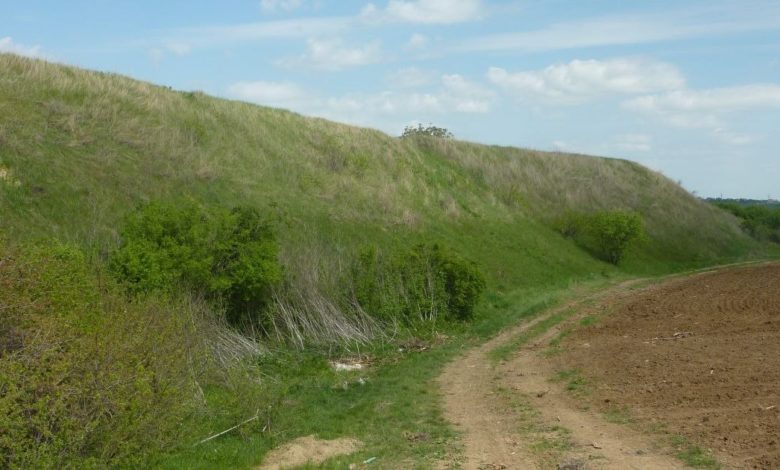
The Earth Wave of the Fortress of Stâncești PHOTO Alexandru Berzovan
In Botoșani county, 5 kilometers from the county residence, lost in the middle of the corn chains, there is one of the most important archaeological sites in Romania, related to the history of the ghettos. This is a large complex, consisting mainly of two large cities, stretched over 80 hectares. The cities discovered and archaeologically researched precisely in the 1970s, here being discovered an impressive treasure. The specialists from that time have managed to research only 10% of the surface of this impressive Thracian-Getic complex. After 1990, a good part of the land was relocated, and the cities were filled with corn and other agricultural crops. For three decades he did not do any systematic research of the cities. After 45 years, through the efforts of a Romanian researcher, in collaboration with a scientific team from the United States, the big traco-gothic cities in Stâncești will begin to reveal their secrets again. Wide research is scheduled and the preliminary discoveries indicate spectacular discoveries.
The northern barbarous lands and their impressive vestiges
The Thracian-Gothic cities in Stâncești are about 5 kilometers from Botosani, on the territory of Mihai Eminescu commune. Only the huge waves of land are preserved, part of the cities being covered by the forests from Ipotești. One of the waves of defense can be seen from the main road, Botosani-Suceava, near Agafton. The cities were discovered in the 1950s, by a teacher from Mihai Eminescu commune. In 1960, the archaeological objective attracted the attention of the reputed archaeologists from Iasi and Marilena Florescu. They carried out systematic research in Stâncești in Stâncești for a decade. Even under these conditions, this vast object, by the means of that time, was researched only in a proportion of 10%. From the point of view of those researches it was found that the cities stretched over 80 hectares, that they were two interconnected cities, equipped with a wave of land and most likely palisade.
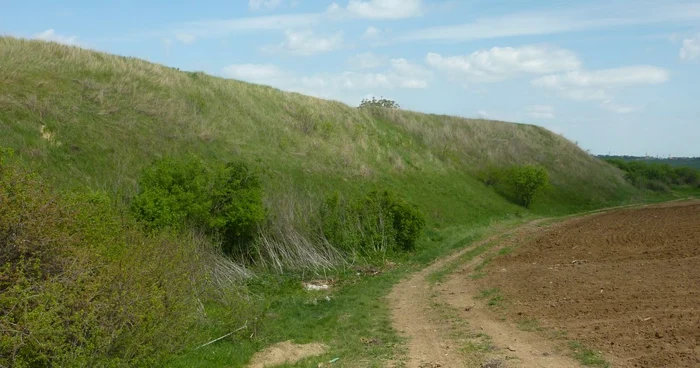
The ground wave of one of the fortress photo Cosmin Zamfirache
It is assumed that they were erected in the 6th century BC, that is, 2500 years ago, in the context of Scythian invasions in the North-Pontic steppes in the areas occupied by the Thracian-Gothic tribes. Inside the living complex, over 82 homes were identified, most of the clay bordeaux on the structure of the walnuts. Under the floor of a home was found an impressive treasure.
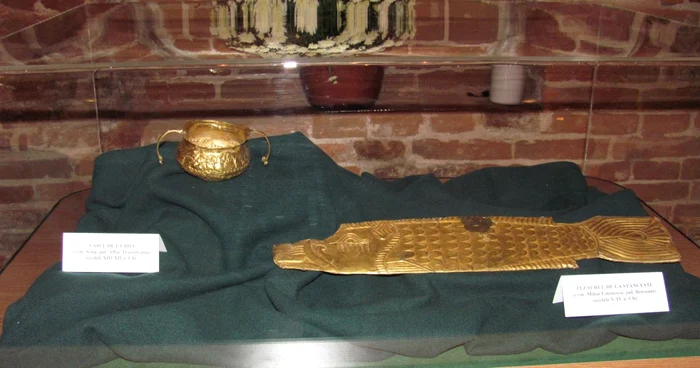
Treasury from Stâncești Photo Archive
These are eight pieces, three of them in gold, which would represent Scythian harness. The most interesting is an application with a bizarre symbolism, representing a fantastic animal with wild boar, fish body and bird tail. It was probably a prey taken by a warrior get from a ride from the Scythian elite. From the research conducted in the 1970s it turned out that these cities were inhabited for three centuries. After that they were abandoned or destroyed. The reasons are not known, at the moment.
Archaeological treasure buried in corn chains
After 1990, with Law 18/1991, the agricultural lands taken abusively during the communist period were returned to the owners or followers. This is how the cities, although one of the most valuable sites regarding the Thracian period in Romania, were actually filled with agricultural crops. No decision-maker asked the problem of protecting that site, not being financed archaeological researches in the area. The story of the cities seemed to be concluded and their destiny sealed among the furrows. Only through the efforts of the specialists from the County Museum of History in Botosani, their story remained known and promoted as a cultural and archaeological necessity.
After 45 years the Americans come
However, the researchers did not abandon this very important site. This is the case of the doctor in history Alexandru Berzovan, a scientific researcher at the Institute of Archeology in Iași. Berzovan is a specialist recognized in the archeology of the second iron age, his scientific activity being rewarded with the prize of excellence of the Iasi Branch in 2018, but also with the prestigious “Vasile Pârvan” prize in 2024.
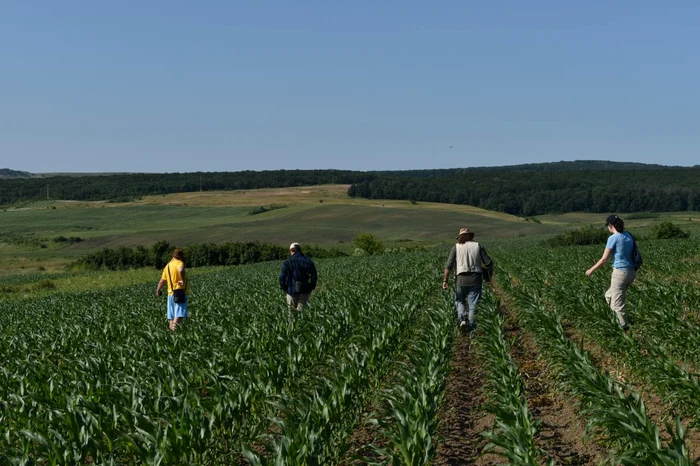
Land research with American specialists Photo Alexandru Berzovan
Passionate and very involved in deciphering the history of the Thracians, Alexandru Berzovan is part of an international team that, after 45 years, resumed research to the Getic Cities in Stâncești. Recently, Alexandru Berzovan next to an American research team made up of top world specialists, carried out extensive field research in Stâncești. From the Collective, besides the Romanian specialist, professor Owen Doonan, from California State University, the doctoral student, from the University of Pennsylvania, and Dr. Nicole Rose, from Northern Arizona University, are part. Professor Doonan, the team leader, is a renowned archaeologist at the interactional level, archaeological construction coordinator in Israel, Italy, Turkey, but also other Mediterranean areas. In addition, Doonan is a member of the prestigious “Explorers Club” from which personalities such as Jean Jacques Cousteau and Neil Armstrong belong.
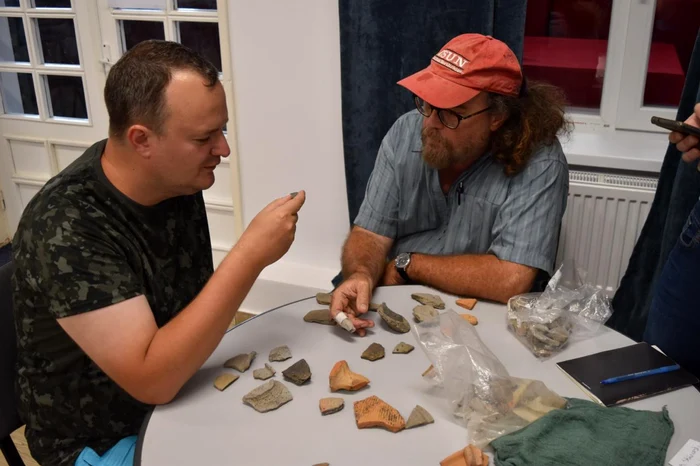
Alexandru Berzovan and Owen Doonan Photo Alexandru Berzovan
“The research from Stâncești takes place within a large -scale project coordinated by the American professor. The resumption of archaeological research is carried out within a large -scale project, entitled” Fortifications of the Iron Age in the Black Sea region “, coordinated by Professor Owen Doonan and his collaborators. The project aims to analyze the evolution of local companies from the East-European, Anatolian and Caucasian space, by carrying out distinct regional archaeological studies in Romania, Turkey and Georgia ”says the specialist Alexandru Berzovan. At the same time, the Tracologist from Iasi also emphasizes the importance of this archaeological site for understanding the history of the Thracians.
“The Gothic fortress from Stâncești is one of the most relevant archaeological objectives of the early period of the second iron era in the Romanian space. The discoveries made here-including the famous treasure-are essential for understanding the complex cultural-historical phenomena that have shaped the Carpathian-Danube space during this period. On the stage of history ”adds Berzovan.
“Recent discoveries are particularly spectacular”
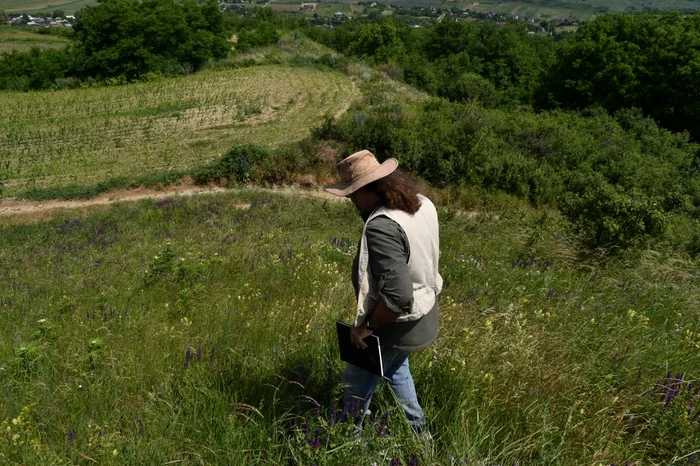
Research conducted from the end of June and early July of this year have revealed little known or even previously unknown. There are spectacular discoveries and the area has a huge potential. Numerous settlements, smaller cities and even tumular necropolis have been identified.
“This year, the surface researches carried out in the microzone of the Stâncești had the purpose of reconstructing the local landscape. Far from being an isolated point, the fortress from Stâncești represented the epicenter of an extended habitatational system, consisting of smaller cities and numerous settlements, surrounded by tumular necropolis. Memory for local communities.says Alexandru Berzovan. As the specialist from Iasi shows, next year they will start systematic, invasive archaeological research in Stâncești.
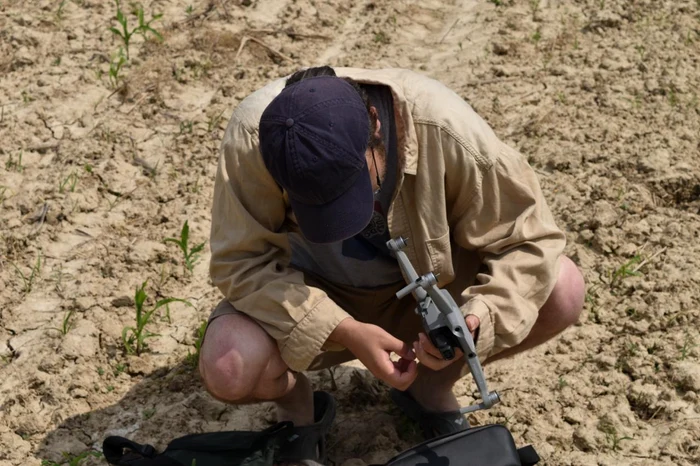
Research at Stâncești PHOTO Alexandru Berzovan
“Starting next year, the team aims to resume invasive systematic archaeological researches in the fortress in Stâncești. In parallel, land research and drone air scans will continue, to reconstruct and understand the ancient landscape as best. -microscopic and chemical on ceramics, pollen and archeozoological analyzes-will contribute to a better understanding of how the communities in the second iron age have adapted to the natural environment and the available resources ”concludes Berzovan. It will probably be one of the most spectacular archaeological research.