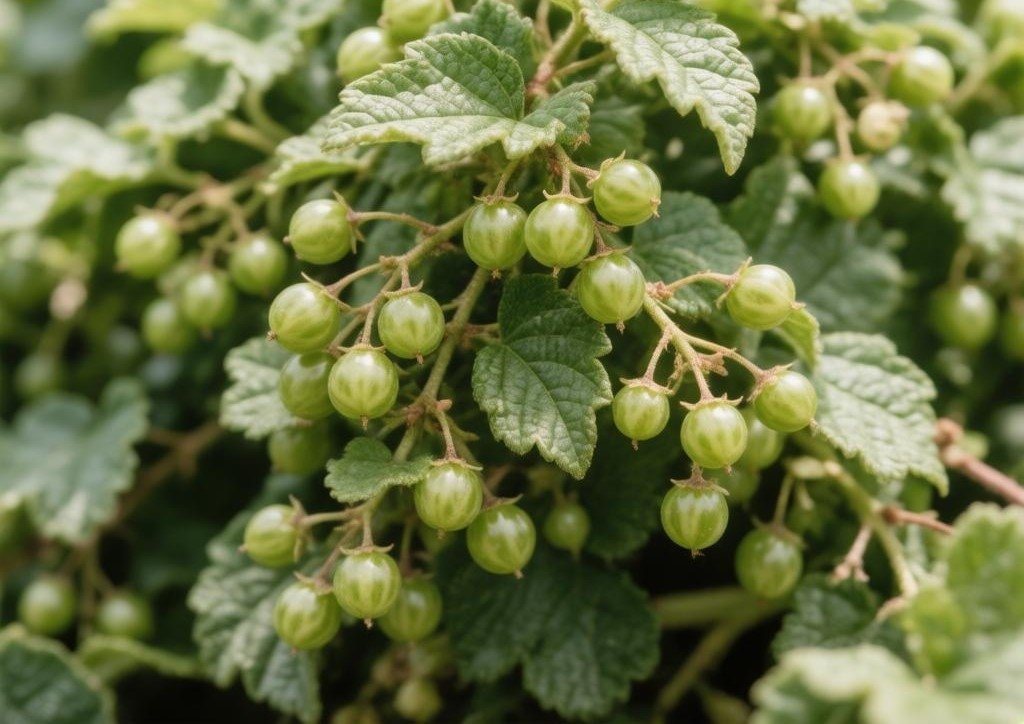
Gooseberries are a great addition to your garden if you choose the right varieties. Many summer residents refuse this crop because of the thorns, but modern breeders have developed thornless varieties with excellent taste. Such bushes do not scratch your hands when harvesting and require minimal care. The plant adapts well to the climate of the middle zone and pleases with stable fruiting year after year.
Variety “Consul” (also known as “Senator”) completely devoid of thorns. The berries have a dark burgundy hue and a pleasant, refreshing taste. They are excellent for fresh consumption and processing. The bushes are compact and medium dense, which makes it easier to access the fruits and care for the plant.
“Malachite” will delight lovers of classic green gooseberries. Large emerald berries are covered with a thin waxy coating and have a dessert taste with a slight sourness. The variety is resistant to powdery mildew, which reduces the need for chemical treatments. The fruits hang on the branches for a long time, without falling off even after full ripening.
Suitable for those who appreciate sweetness “Russian Yellow”. The amber-colored berries taste like honey or grapes. They are large, with thick skin, which allows the harvest to be stored for several days without loss of quality. The bushes are erect, powerful, and easily tolerate winter frosts and spring temperature changes.
“Cooperator” stands out for its high productivity and large fruit. Dark cherry fruits have thin skin and a delicate aroma. The taste is sweet, almost without acid, which makes this variety ideal for baby food and homemade preparations. The plant requires regular pruning to maintain the shape of the crown.
Caring for thornless gooseberries is simple. It is enough to regularly water the bushes during dry periods, mulch the tree trunk and carry out annual sanitary pruning. In the spring, nitrogen fertilizers are applied to promote shoot growth, and in the summer, potassium-phosphorus fertilizers are applied to improve the taste of the berries. If these rules are followed, each bush will delight you with an abundant harvest of healthy and tasty fruits.
Question and answer:
When is the best time to plant thornless gooseberries?
The optimal time for planting is autumn, a month before the soil freezes. Spring planting is also possible, but requires more thorough watering in the first month after planting.
Do I need to cover gooseberries for the winter?
Most modern varieties are frost-resistant and do not require shelter in the middle zone. In the first year, young seedlings can be lightly covered with earth or covered with spruce branches.
How often to water gooseberries in summer?
In hot weather, water once a week, pouring 10–15 liters of water under the bush. Watering is especially important during the period of formation of ovaries and filling of berries.