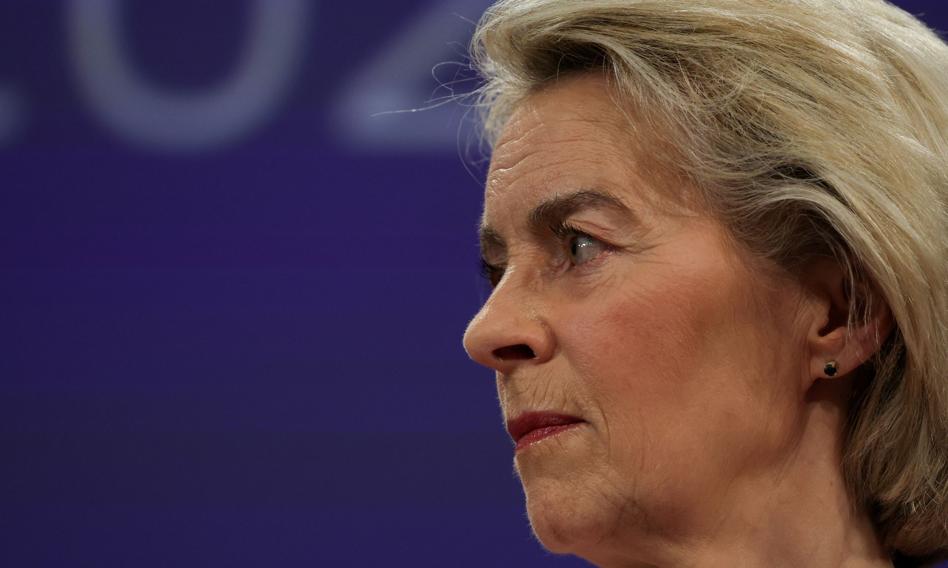
Entrepreneurs must immediately feel the benefits of the trade agreement with Mercosur, said EC President Ursula von der Leyen on Thursday. The agreement enters into force on May 1. The EC estimates that by 2040, annual EU exports to South America will increase by 39%, reaching EUR 50 billion.
The agreement, which was opposed by, among others, France and Poland, will be applied provisionally. This transitional procedure was decided by the European Commission, which wants to open the markets of South American countries as quickly as possible to European industrial goods, including cars. The countries concerned are: Argentina, Brazil, Paraguay and Uruguay.
From Friday, these countries will abolish or reduce customs duties, including: for cars, pharmaceutical products, wine, spirits and olive oil. Customs duties on other products will be reduced gradually, and ultimately Mercosur will eliminate tariffs by over 91%. goods exported from the EU.
– A lot of work has gone into finalizing this landmark agreement. Now is the time to put in the same effort to ensure that our citizens and businesses experience its benefits immediately, von der Leyen said in a statement.
Trade Commissioner Marosz Shefczovicz added that the European Commission is already conducting intensive information activities aimed at EU companies, including small and medium-sized enterprises. The EC wants business in Europe to know how they can benefit from the agreement.
The head of the European Commission said that the entry into force of the agreement is also good news for both enterprises and consumers, as well as for EU farmers. The European Commission believes that farmers will be able to benefit from the agreement by increasing exports of agri-food products from the EU to the region by 50%. EU agriculture is also to benefit from the legal protection that Mercosur countries have undertaken to introduce to products with a geographical indication – such as Parmigiano Reggiano cheese or Bordeaux wine. This is to prevent counterfeiting.
However, farmers see the agreement with Mercosur as a threat because it will enable products such as beef, poultry, dairy products, sugar and ethanol to be imported into the EU at tariffs that are more favorable to South American producers.
Von der Leyen promised that farmers would gain new export opportunities, while at the same time sensitive sectors in EU agriculture would be protected.
This is a protective clause in the agreement, which will also enter into force on Friday, and is intended to protect EU farmers against excessive inflow of products from Mercosur countries. The clause is to be triggered if the prices of a given product in the EU drop by 5% as a result of import from Mercosur. It will then be possible to increase customs duties on a given product or even ban import into the EU.
Despite these safeguards, the issue of greater opening of the EU to imports of agri-food products from Mercosur continues to raise controversy. A few days before the agreement entered into force, in a letter to the European Commission, a group of MEPs expressed concerns about the quota management system, i.e. the limit of goods that can be imported into the EU at lower customs duties. According to MEPs, it may bring benefits primarily to the largest agricultural producers in Brazil.
On Thursday, EC spokesman Olof Gill replied at a press conference that the EU would retain full control over how import quotas are managed. According to him, Mercosur countries will be able to propose the division of quotas among themselves and notify the EU about it, and the EC will monitor the impact of this division on prices. “If there are any concerns, we will address them,” he said.
The EC estimates that by 2040, annual EU exports to South America will increase by 39%, reaching EUR 50 billion.
On Friday, when the agreement enters into force, the head of the European Commission, together with the President of the European Council, Antonio Costa, is to hold a conversation with the leaders of the Mercosur countries.
The European Commission could decide to provisionally apply the Mercosur agreement without waiting for ratification by the European Parliament and member states, as trade is its exclusive competence.
Due to a number of reservations about the agreement, the European Parliament postponed the ratification process and decided to submit a complaint to the Court of Justice of the EU.
From the very beginning, Poland, along with France, Ireland, Hungary and Austria, was in the group of countries that opposed the trade agreement between the EU and Mercosur countries.
From Brussels Magdalena Cedro (PAP)
mce/ mal/ amac/