An international award-winning up-and-coming chef tells what dishes are in fashion: “Today's cuisine relies on diversity and creativity”

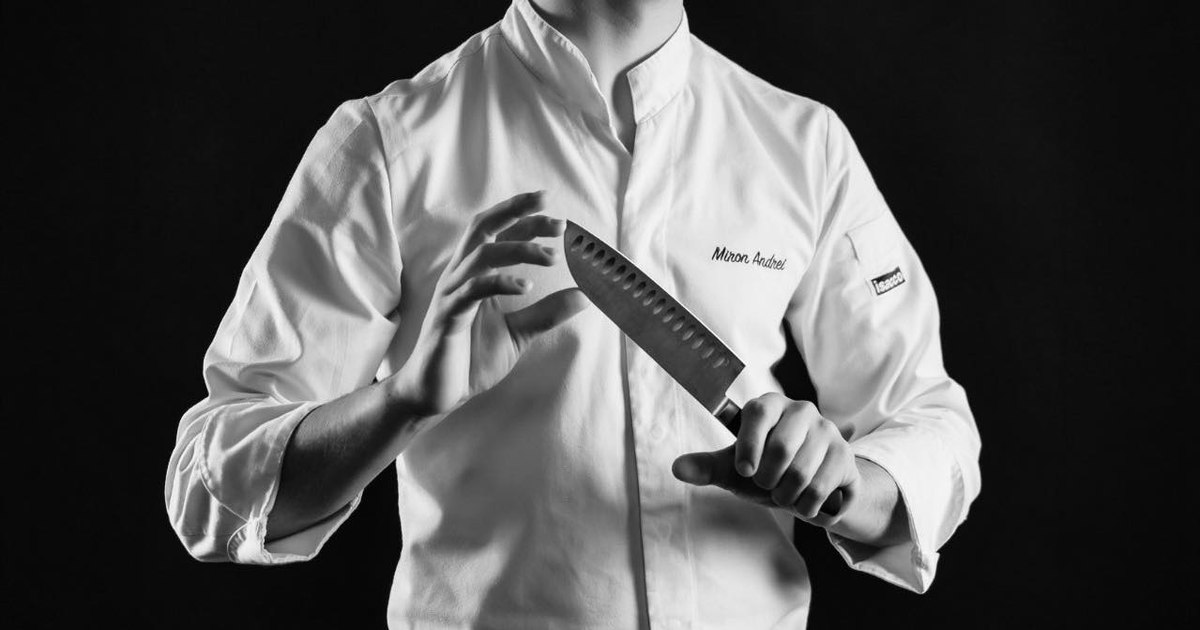
Andrei Miron, a 21-year-old from Botoșani, has become one of the most awarded young Romanian chefs at the international level. He left a village at the end of the country, and through work, passion and talent he has already become a top professional.
Andrei Miron PHOTO Andrei Miron/facebook
Romanians are usually proud of Olympian results in mathematics, computer science or linguistics. Less well known is that performance appears more and more often in gastronomy as well. Romanian chefs are present at important competitions in Europe and the world, with remarkable results.
One of the most promising is Andrei Miron, 21 years old, from Botoșani county. He already has a consistent track record. In March, he won the gold medal, representing Romania, at the Alimentaria competition in Barcelona.
He also obtained an important qualification at the final “The Global Vegan Chefs Challenge Final 2026”, organized in Newport. Born and raised in a village near Prut, Andrei Miron reached the international level through work, discipline and talent.
He agreed to give an interview to “Adevărul”, in which he talks about his journey, the most important results and the role of vocational schools and technological high schools in a context where the lack of craftsmen is becoming more and more evident.
“Not everyone is made for the kitchen”
The truth: How was your passion for gastronomy born?
Andrei Miron: My passion for gastronomy arose from the simple fact that I spent most of my time with my mother and grandmother, especially during the holidays. Instead of being with my father at work, I chose to spend my time in the kitchen, after which the culinary shows I watched “ignited” my passion for gastronomy even more.
Passion for gastronomy is 100% essential. If you are not passionate about this field, the chances are very low that you will pay off and progress. I have a saying: “Not everyone is made for the kitchen”, as it requires a lot of sacrifices.
The Truth: What are the highlights of your competitive career?
Andrei Miron: In the course of my career, I have been increasingly drawn to competitive cuisine, both nationally and internationally. I obtained valuable prizes by participating since school in the trade competition, where I took the 1st national place. After that, I participated in the Chefs' Arena, where professionalism was starting to grow. I then went to Stuttgart, with the national junior team, where I won two bronze medals.
In Rimini, together with chef Alin Vădean, I participated as a Commis (no assistant chef) in the vegan chef section. There we got the silver medal and the first qualification in the history of gastronomy at the world level, we will have the final in May in Wales. The next competition was in Croatia, where I participated in both the individual and team events, performing well and winning two gold medals. Last year I participated, together with chef Bogdan Cozma, in the national selection of the prestigious Bocuse d'Or competition. This year I also participated in Barcelona as a main competitor, under the guidance of chef Emanuel Mocan, representing Romania and obtaining the gold medal.
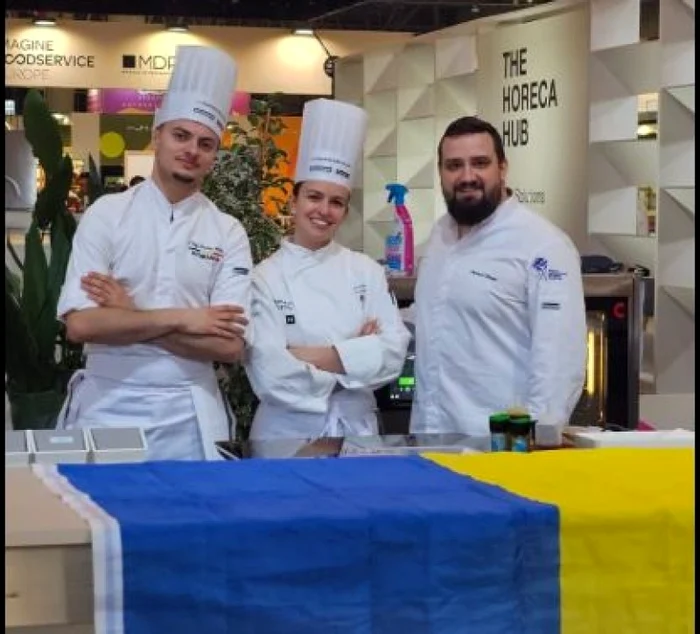
Andrei Miron, first from the left, at Alimentaria Barcelona PHOTO Consulate of Romania Barcelona
The Truth: How difficult was your road to this level and what are the secrets to success?
Andrei Miron: It was quite difficult to reach the level I wanted, but not impossible. As long as you do it with passion and love for the culinary art, everything becomes possible.
To reach the highest international podiums, alongside the best chefs, is a perfect honor won by me, a modest but great-minded citizen of Botosani. I tend to think the secrets to success are: working without looking at the clock, loving cooking, believing in your dream and a few people who support you.
The truth: How are Romanian chefs seen abroad?
Andrei Miron: If I were to discuss how Romanian chefs are seen from outside, I can say with my hand on my heart that it is getting better and better. I notice that we, as Romanian chefs, have also left our mark abroad, either at the competitive level or at the work level.
Foreigners really like the gastronomy, the taste and the authenticity that we have as a country. Indeed, we could be more visible. Perhaps more promotion of this area would help, so that the world knows that we really have chefs and a good kitchen.
The Truth: Who has influenced you the most in your career?
Andrei Miron: In my career so far I have had the opportunity to meet many very good chefs and pastry chefs, but there are a few that have left their mark on me. The first and foremost is my mentor, the one who showed me first-hand what the kitchen and discipline in a kitchen mean: chef Bogdan Cozma. He is the one to whom I have all the respect, both for the help he offers and for what he does. Currently, by his own efforts, he is building a barn out of a 100-year-old barn, creating dishes and magical evenings similar to those in Michelin-starred restaurants, there, in Zărnești, in Tohanul Nou, at the Black Barn location.
Pancakes with cheese or magiun, according to Adi Hădean's recipe. The secret for which they must be left under a doormat for at least 20 minutes
I remember that when he opened his location I told him, in a challenge of mine, that in 10-15 years I would open a similar restaurant, with the difference that it would be “White Barn”. That's it, like between teacher and student, something friendly. After that, other very talented and experienced chefs contributed to my career, such as chef Cezar Munteanu, chef Emanuel Mocan, chef Alin Vădean.
“The pressure in the kitchen either makes you or breaks you”
The truth: What are the current trends in modern gastronomy?
Andrei Miron: Modern cuisine no longer has a single “dominant trend”, but several intersecting global directions. Many of them combine tradition with technology and sustainability. It's about plant-based food (not just vegan): it's no longer just about eliminating meat, but about creativity, there are alternatives to meat (vegetable burgers, “meat” made from peas or mushrooms), vegetables are becoming stars (cauliflower “steak”, smoked carrot, etc.), plus the influence of Asian cuisines (tofu, fermented). The trend comes from sustainability and health. At the same time, another direction is reinterpreted “comfort food”, i.e. “soul” dishes, but at a premium level, such as mac & cheese with truffles, gourmet burgers or reinterpretations of traditional local recipes. Last but not least, there is modern, molecular gastronomy with foams, gels, spherifications and precise cooking (sous-vide).
The truth: How hard is it to get high?
Andrei Miron: It's not as easy to get in the mood as some people think. I notice how some people say: “What's so hard about being a cook? You cut 2-3 vegetables and make a soup…”. But things are not quite like that.
It takes a lot of time to learn the basics, because I don't think a single chef knows the whole kitchen. This work involves a lot of stress, nerves, fatigue, anxiety, and if you don't know how to balance them, you end up giving up. You need to be calm but quick, attentive but bold and always passionate about culinary art.
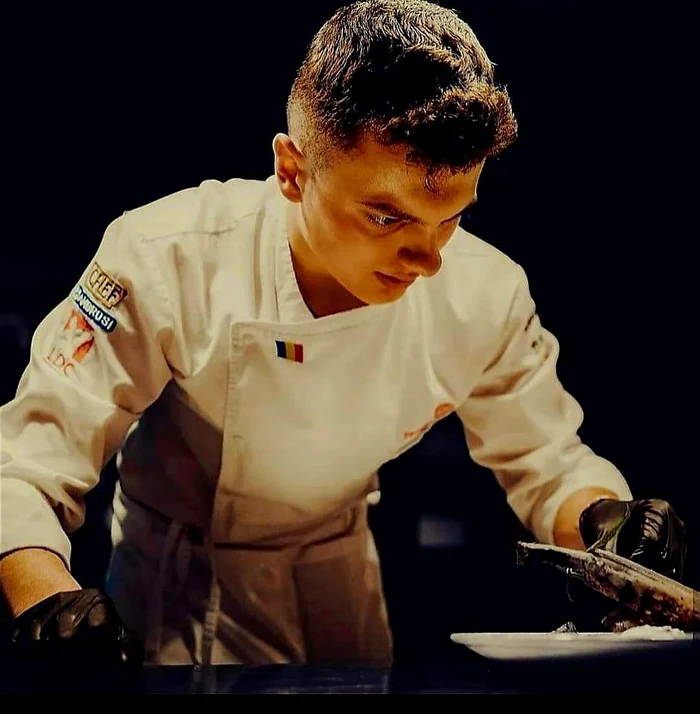
Andrei Miron PHOTO Andrei Miron/facebook
The Truth: How was your career path?
Andrei Miron: My path in the kitchen was not a quick one, but built over time, with a lot of discipline. I started from the bottom, just like many others — peeling vegetables, washing dishes, observing. I didn't have the luxury of choice, but I had the desire to learn. The first lessons were not about plating or fine dining, but about organization, respect for the product and work rhythm. At some point, I realized that if I want to grow, I have to get out of my comfort zone. I have worked in different kitchens with different styles — from traditional to modern. There I started to understand the technique, not just the recipe. I learned that talent is defeated by consistency, that taste comes from small details, repeated correctly, and especially that pressure in the kitchen either makes or “breaks” you.
I didn't stop at what I knew. I studied trends, I tested, I made a lot of mistakes. I started to build my identity: not just to cook well, but to say something through the plate. I got to where I am today because I didn't shy away from hard work, listened to feedback even when it hurt, and constantly invested in myself. Today, I no longer cook just to feed, I cook for the experience. But the basis remained the same: respect for the ingredient and discipline in execution. I currently hold the position of head chef at the DAR restaurant in my native county.
“If you know a job, you have a job”
The truth: What are the advantages of being a chef?
Andrei Miron: The job keeps you on your feet anywhere in the world. As a chef you can work in any city or country, you don't depend on theoretical degrees, but on what you know how to do and you always have opportunities, whether it's a restaurant, catering, hotel, own business or anything else. Cooking is one of the most “portable” professions. If you know your trade, you have work to do.
The wedding of Gordon Ramsay's daughter, marked by a painful conflict in the groom's family. Adam Peaty's mother was banned from the event
In addition, it gives you independence earlier than in other areas and develops discipline, endurance and organizational spirit.
The truth: What role do vocational schools play in training chefs?
Andrei Miron: Institutions like the Professional Cooperation School in Botoșani, where I studied, have an essential role, even if they are sometimes underestimated. They are important because they teach you a real job, not just theory, you come into contact with the kitchen early and learn the correct basics, with cuts, hygiene, organization. Last but not least, it gives you a faster start in life. Compared to theoretical high schools, you start working earlier and get practical experience before others. Many great chefs did not start academically, but practically. For example, Gordon Ramsay didn't get where he is because of a classical faculty, but because of discipline and hard work.
The truth: How do you see the future of cooking in Romania?
Andrei Miron: The profession of chef is very promising in Romania. I notice that most choose to go outside the country, but I don't always agree, because I feel that it is also possible in Romania. We, the chefs, have to “teach” the patrons that we can serve dishes like outside, but with work norms like outside.
I think that in a few years this job will be more and more appreciated, at the level of a profession like medicine, because everyone has to eat and wants better and better things. I also notice a massive increase in restaurants and event halls, but also a major lack of professional staff.