2026-02-08 16:30
publication
2026-02-08 16:30
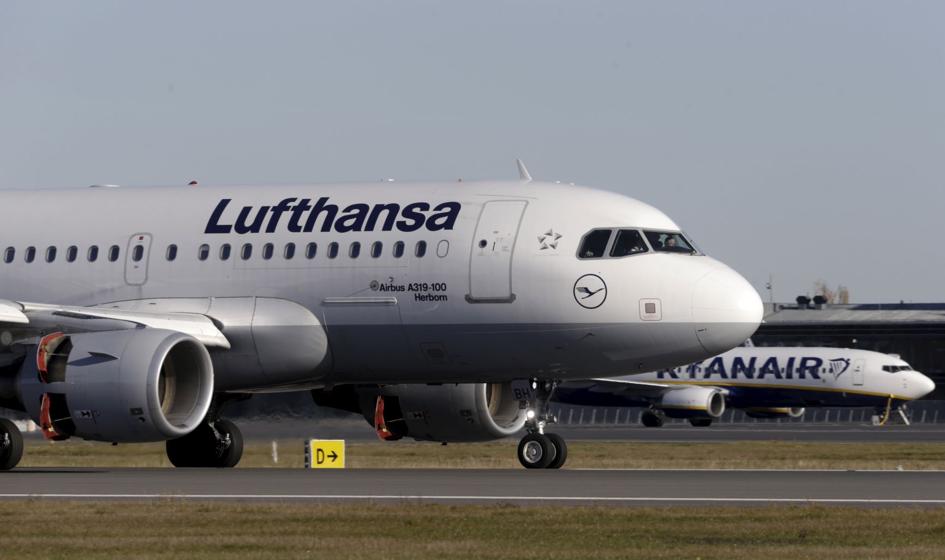
The management of the largest German airline Lufthansa on Wednesday recognized the company's responsibility for its activities in the Third Reich. The results of a comprehensive examination of the company's past are to be published next year.
“Lufthansa was, of course, part of the system,” said Lufthansa CEO Carsten Spohr in Frankfurt am Main on the occasion of the company's 100th anniversary. As dpa writes, Spohr distanced himself from previous attempts to completely ignore the role of the company in the Third Reich and focus only on the period from the new founding in 1955.
The head of the concern pointed to secret arms projects to circumvent the restrictions imposed on Germany after World War I, the integration of the company with Hitler's war economy system and the exploitation of forced laborers. “Lufthansa was a great beneficiary of Nazism and forced labor before 1945,” said the German public television ARD.
Spohr announced an in-depth study of the company's history by independent historians, especially the fate of forced laborers during the war.
Lufthansa was a “Nazi enterprise,” said historian Manfred Grieger of the University of Göttingen. As he noted, the symbiosis with the Nazis was the cause of misfortune. “The company completely collapsed along with the regime to which it was chained,” he emphasized.
The results of a research project on Lufthansa's links with Nazism are due to be published next year. Grieger is co-author of an album about Lufthansa, which is scheduled for release in April.
ARD recalled that 25 years ago, on the occasion of the company's 75th anniversary, the Lufthansa management commissioned the preparation of an expert opinion on the use of forced laborers, but later suspended the publication. The expert opinion saw the light of day only in 2016 – “without commentary, as an addition to the album devoted to technical matters.” It mentioned the decision to use forced labor “forced” on the company.
The author of the expert opinion, Lutz Budrass, published in 2016 a scientific monograph on Lufthansa in the years 1926–1955. Deutsche Lufthansa AG then refused to support this publication and did not allow the author to conduct research in the company archive.
Grieger noted that there is no “simple continuation” between the pre-war company, Luft Hansa, and Lufthansa, which was reactivated in 1955. The DPA agency emphasized that in a legal sense, the current Lufthansa has nothing in common with its predecessor. It retained the crane-shaped logo, name and colors from the post-war bankruptcy estate.
Operating until the end of World War II, Luft Hansa belonged mostly to the German state and received large subsidies. As established by British historian Harold James, the company paid members of the Reichstag to influence decisions favorable to the company. One of the beneficiaries of such payments was Hermann Goering.
According to ARD, members of the company's management board were involved in the Nazi movement. Hitler's plane flights during the 1932 election campaign were organized for a fee with the participation of Lufthansa. During General Francisco Franco's coup in Spain in 1936, Luft Hansa established an air bridge, allowing the transport of rebellious troops. The company also made money during the war by repairing military aircraft, using forced laborers for this purpose, including children as young as 12. When the concern was reactivated in the 1950s, managers from the former team played a leading role. (PAP)
lep/ akl/