Stone Age cooking has become a global trend: chefs in top restaurants cook in ash, over open fire or on stones

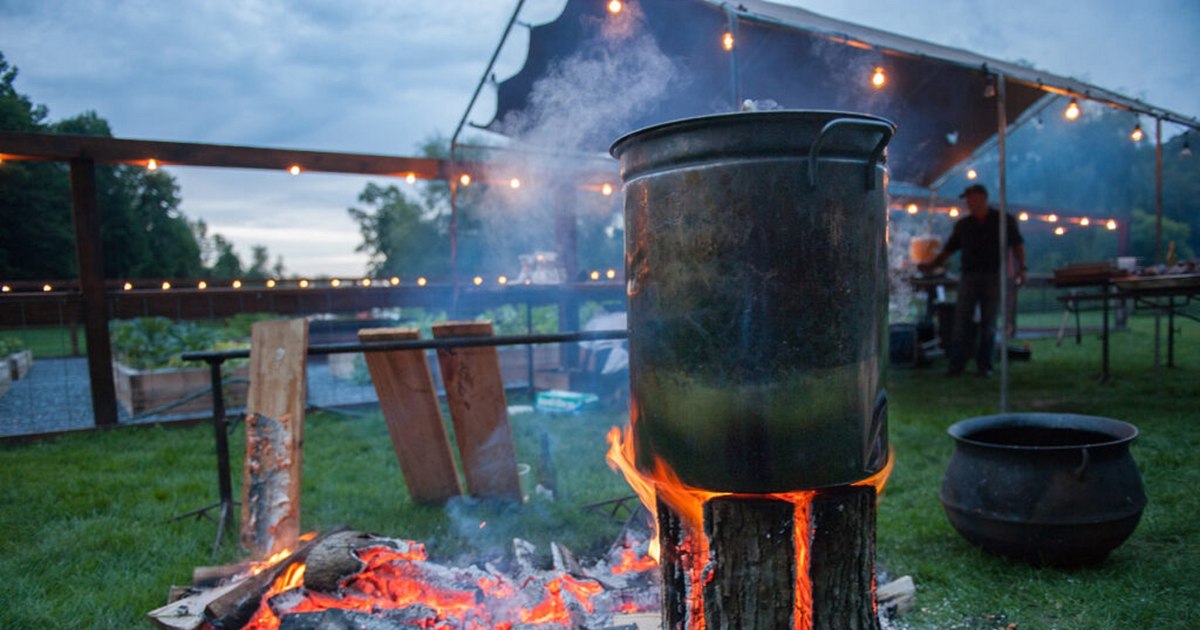
Modern cooking has become almost a science, aiming to transform traditional ingredients into new textures, shapes and flavors through physico-chemical processes. However, in parallel, a trend has emerged that promotes a return to primitive cooking methods, out of a desire to rediscover authentic taste and a direct connection with ingredients and nature.
Archaic way of cooking PHOTO Damon Jacoby
There has been more and more talk in recent decades about what is and isn't healthy to eat. Opinions are divided, and specialists group themselves into different currents, schools and scientific directions. It has been concluded, for example, that it is not necessarily harmful to consume bacon or eggs in moderate quantities. There is also more and more discussion about how healthy it is to cook food. Some argue that boiled or baked dishes are the healthiest, while others recommend grilling, provided the food is not burned or exposed to direct flame.
A form of modern gastronomy has even emerged where science and culinary practice merge. Chefs use knowledge of physics and microbiology to achieve new flavors and develop innovative preparation methods. Thus appeared techniques such as cooking with liquid nitrogen, the use of transglutaminase or various thermal control procedures.
Kitchen fittings, even in modest Western restaurants, seem inspired by research laboratories. Chefs often become creators concerned with presentation, resulting in elaborate dishes, in small portions, carefully arranged on plates reminiscent of artistic compositions. Many appreciate these innovations, but not a few get up from the table still hungry after such small portions.
In this context, a gastronomic trend has emerged that supports the return to simple cooking methods, considered closer to the natural needs of man. It is about preparing food in ways similar to those used in the Neolithic, Bronze Age or, at most, antiquity.
Char-roasted lambs, hooks and hanging cauldrons
In short, there was a return to traditional cuisine. One of the promoters of this current is Francis Mallmann, one of the most famous chefs in Argentina, famous for cooking over an open fire. He currently owns nine restaurants around the world, from Patagonia to France. Mallmann abandoned the molecular cuisine techniques he had studied in favor of a robust, open-air style inspired by “gaucho” traditions.
He popularized direct fire cooking, using wooden or metal frames on which he fixed whole, eviscerated lambs over the embers. He would also rotisserie whole cabbages, slowly rotated over the fire. “Mallmann's wood-fired cooking was ritual, theater, an art installation — a true “Burning Man” of gastronomy. Imagine whole “crucified” lambs, leaning over the coals, while rotisserie chickens and cabbages rotate above them like Chinese lanterns. Suddenly, the culinary world was reminded that fire has the power to reach down into the depths of the primitive soul and strike an essential chord”writes Julia Sexton in the article “The Future Is Primitive: Bringing Back Wood-Fired Cooking,” published in Edible Manhattan. Mallmann is not the only follower of this type of cooking.
Tom Ellis, a theater graduate and founder of a theater company in Manhattan, entered the food industry as a sideline. At some point, he became passionate about cooking and started preparing menus for events, including for well-known clients. Collaboration with a chef oriented towards natural products and traditional dishes is close to “primitive” cooking.
Later, Ellis founded his own catering company, building a unique concept where cooking becomes a show. His team arrives hours before the guests to set up what he calls “a stage kitchen.” The dishes are cooked as centuries ago: in cauldrons suspended above the fire, on rotisserie or in pots placed on the so-called “Swedish stoves”, split logs in which the fire burns from the inside. The chefs involved claim that these methods preserve nutrients better and, at the same time, provide a spectacle that stimulates the guests' appetites.
From induction hobs to direct ash cooking
Another technique that some gourmets and chefs return to is cooking in ashes. Food is placed directly into the hot embers left after the flames are extinguished. It is one of the oldest methods of preparation, used both for flavor and to preserve nutrients.
What is the 1,000-100-10 rule that can make the difference between ordinary pasta and really successful ones
Cooking in ash and embers gives food a smoky note and a tender, slightly caramelized texture, whether it's vegetables or meat. Burying the vegetables directly in the embers takes little effort, and the constant heat concentrates the flavors and gives them a nice smoky taste.
Under the burnt skin, which is later removed, an intensely aromatic and nutrient-rich core is preserved. Dense vegetables or fruits with a protective skin are especially suitable: potatoes, root vegetables such as beets, parsnips or turnips, but also aubergines, bell peppers and corn flakes. Garlic, onions or leeks can also be cooked in the embers, the interior of which becomes sweet and creamy, suitable for sauces and soups. Fruits such as apples and pears take on concentrated flavors and can be used in both sweet and savory dishes.
The method is simple: a wood fire is made, which is allowed to burn until only the incandescent embers and warm ashes remain. They spread evenly, forming a smoking layer on which the food is placed. The process generally takes about 45 minutes.
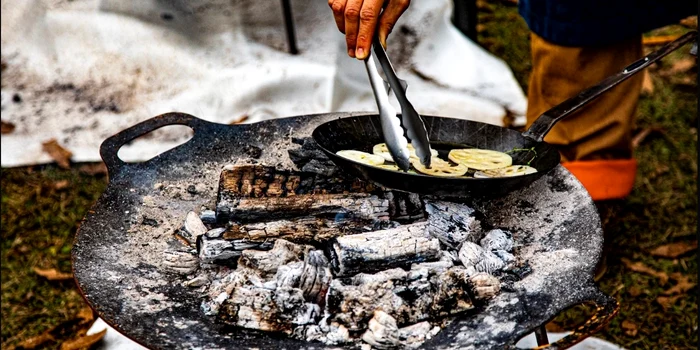
Cooking in Ashes PHOTO cookonfire.ca
Then we proceed to the preparation of the ingredients. They are smeared with vegetable oil, preferably rapeseed or olive, and seasoned with salt and pepper. If you're cooking hard-skinned ingredients like potatoes or sweet potatoes, it's a good idea to prick them beforehand with a fork or the tip of a knife.
The ingredients are placed directly on the “bed” of embers and ashes. With the help of a shovel or a metal duster, cover them with a thin layer of ash, enough so that they are no longer visible. In general, most ingredients cook completely in about an hour. The degree of doneness can be checked by poking with a toothpick.
The method has also been brought back into the limelight in top restaurants. Among the chefs who use it is René Redzepi, from the Michelin-starred Noma restaurant in Copenhagen. The technique is also used by Marcus Jernmark of Aquavit and Mourad Lahlou of Aziza.
Hot stones, a fashion that has taken social networks by storm
A well-known cooking method, inspired by ancient times, uses hot stones. Adherents of the “primitive” cuisine light a fire, over which they place a stone as flat as possible, about two centimeters thick. After it heats up, meat or vegetables are placed on top. The ingredients are cooked similarly to grilling, but some experts consider the method healthier.
The handy trick used by top restaurants for a la carte salmon
It is assumed that the technique was used since the Paleolithic. People of that time noticed that rocks and stones conduct heat well, and their flat surface allows for a relatively even distribution of heat.
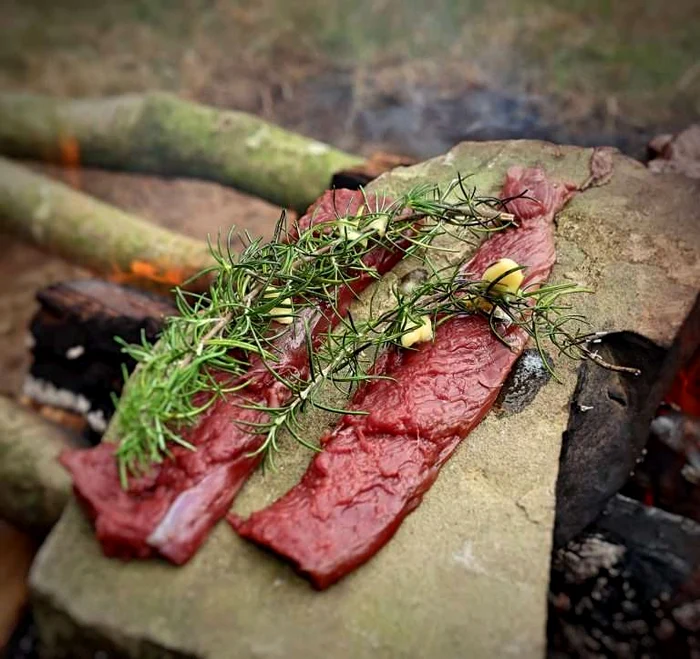
Stone cooking PHOTO wildwaybushcraft.co.uk
Care must be taken when choosing stones, as some rocks can crack due to high temperatures. Currently, volcanic stones are preferred due to their resistance to heat.
Cooking on a hot stone is thought to help preserve the juices in the meat, contributing to both flavor and nutrient retention. At the same time, it gives the dishes a specific aroma. The method is also seen as a healthier alternative to grilling, as it allows food to be prepared without added fat or oil.
Several well-known chefs have adopted this technique, including Gordon Ramsay or Paweł Jursa. The latter recommends that steaks be cut into small pieces and cooked directly on the hot stone with butter and spices. For his part, Nick Metcalfe promotes the use of volcanic stones for the preparation of steaks.