Ketamine. The anesthetic turned Germany into a drug center of Europe

During the vehicle inspection on the 81 motorway in October last year, officers of the Central Customs Office in Singen began to have suspicions. “The traveler looked very nervous,” the customs service later informed. The guards checked the interior of the car more thoroughly. They found a large, closed package in the trunk. The label showed the inscription “dietary supplement with frozen peach tea”.
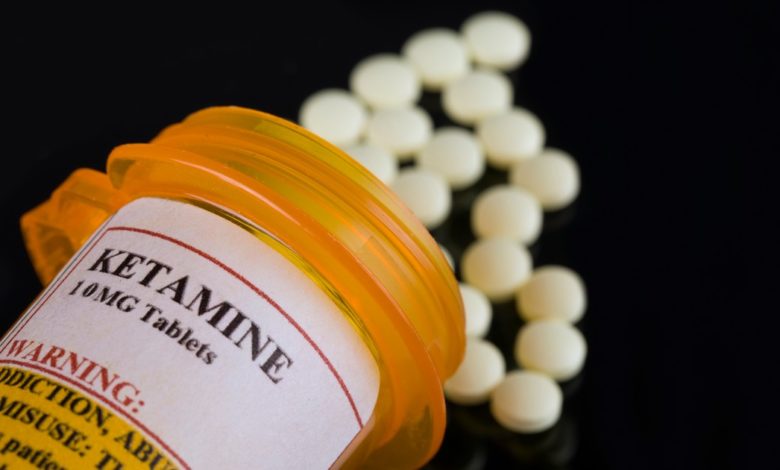
However, this had nothing to do with real content. Inside, there was 26.3 kg of ketamine, painkiller and anesthetic. The market value of this powder, often abused as a intoxicant, is 790 thousand. euro (PLN 3.3 million).
In recent years, no other substance has aroused such interest as the anesthetic ketamine. This drug is used in veterinary medicine and medicine as an analgesic and anesthetic. However, its action, which depending on the dose can cause from light euphoria to strong hallucinationsmade it popular at parties.
Managers and celebrities are also increasingly reaching for this intoxicating agent. Entrepreneur from the technology industry Elon Musk also confessed to taking ketamine. Her adoption had tragic effects in the case of the actor and star of the series “Friends” by Matthew Perry, who died in connection with the abuse of ketamine.
Also in Germany, ketamine is gaining popularity. “For several years, the number of confiscation related to ketamin is constantly growing “ – informs the Federal Criminal Office (BKA). According to data in 2021–2023, “at least” 900 kg of this substance was confiscated in Germany. How much the problem is growing is shown by the data of the National Criminal Office (LKA) of North Rhine-Westphalia. While in 2020 the police in this union country recorded 28 cases of violations related to ketamin, in 2024 there were already 418.
From Germany to the black market
More and more frequent abuse of this substance may also result from relatively mild criminal consequences compared to drugs such as cocaine or ecstasy. In Germany, ketamin is not subject to the Act on intoxicants, but a much milder act on drugs or the Act on new psychoactive substances.
People who have been prescribed by a doctor, e.g. for depression, receive it in a pharmacy and may have it completely legally. The illegal trafficking of ketamin is punishable by imprisonment. But Even legal sales are not subject to strict security measuressuch as supervised storage or extensive documentation obligations.
This legal situation may contribute to the flourishing of the legal trade in ketamin in this country. Commercial data that has been analyzed for “Welt am Sonntag” by the Munich company Qyobo, specializing in pharmaceutical supply chains, show that Germany is The world's largest trafficking center in the worldwhich goes to this country mainly from India. This is interesting because, according to the police, some of the legal supplies apparently go to the black market. Large gaps show the possibilities of the competent supervisory authorities in the field of control.
Sometimes ketamine delivery must take place quickly. “If it is possible to deliver before the end of 2022, my buyers are ready to buy immediately” – wrote in November 2021 to the European manufacturer of the active substance ketamines a company trading in pharmaceutical products from Dubai. However, the manufacturer was not interested. “Unfortunately, we do not have material for the entire next year,” replied Europeans.
Trade center
The company from Dubai did not give up. “Can you tell me when we can start cooperation? I prefer a European supplier”-it was written in an e-mail to the European manufacturer. However, this request seemed more and more suspicious to him. In addition to company data, Europeans also wanted to obtain customer statements “to ensure identification”. In addition, the manufacturer of the active substance asked for information whether ketamine would be used in veterinary medicine or in human medicine.
The transaction regarding ketamine did not finally take place. The company from Dubai apparently did not want to provide the requested information and did not respond to further messages. She also did not answer questions about the purpose of ketamine and whether she found other European suppliers.
E-mail correspondence illustrates how Suspicious commercial companies want to capture ketamin produced legally in Europe or imported to this continent. The legal status does not hinder such transactions. It is true that the distributors of active substances must register in the relevant domestic bodies and apply for a wholesale permission. However, the requirements end with this. “Special permits for ketamin containing drugs are not required,” informs the National Health and Social Affairs Office in Berlin (Lages), for example.
Also due to the legal situation, Germany is probably A popular location for international salesperson Ketamina. In 2024, Indian manufacturers delivered about 128 t of the active substance to this country. This accounts for over 75 percent. all world exports of ketamines from India. Because according to industry estimates, over three quarters of global demand for legal ketamin are produced there, it can be concluded that Germany is the largest trade center.
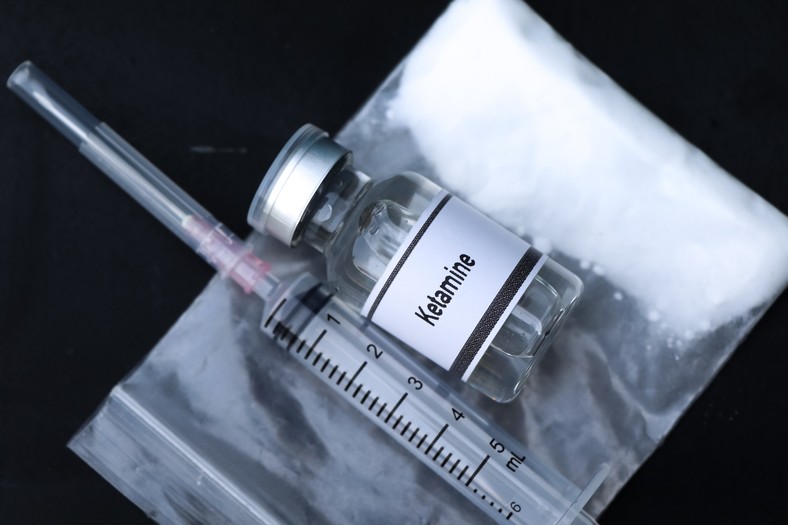
Ketamine (illustrative photo)
BKA assesses India as “one of the most important countries” legally exporting ketamin to Germany. This commercial flow is also interesting for investigators also because part of legal imports apparently goes to the black market. “Ketamine usually goes legally from India to the EU and Germany, where it is illegally redirected and sent mainly by post and parcels throughout the world,” informs North Rhine-Westphalia.
Helplessness
The authorities apparently do not know exactly what path of ketamine imported to Germany is then transported. Customs services inform that the data on ketamine “is not registered separately”. “Therefore, it is not possible to obtain accurate data only for ketamines,” the organs inform. The Federal Institute of Medicine and Medical Devices (BFARM) also does not collect such data. The Federal Opium agency there is not responsible for ketamin, because this substance is not subject to the Act on narcotic drugs. According to BFARM, it was only then that ketamine would be subject to “additional requirements compared to trade in drugs.”
National supervisory authorities are responsible for the control of enterprises producing or trading ketamin. However, there are gaps in this area. Admittedly, importers and distributors of active substances “intended for use by people” are obliged to transfer the names to the names of the names of introduced and sold substances once a year, but “not the quantity”. And this is not the only gap in national supervision.
For example, Lages in Berlin informs that no one has been issued in recent years special import permits ketamines. However, the office cannot rule out that it still legally goes to enterprises in the capital. “In the case of five importers based in Berlin, it would be theoretically possible to introduce this category of products, because import permits are not always issued for specific products,” informs Lageso. According to people who know the industry, official control can be additionally bypassed by simply trading the active substance without reference to its possible pharmaceutical use.
Even greater supervision gaps export from Germany. If the company's data is permission for wholesale drug sale, ketamin trade within the EU is possible.
“The legislator has not specified separate conditions of trade or purchasing drugs containing ketamin or ketamine hydrochloride as an active substance,” says Lageso. According to the Berlin Office, pharmaceutical law also does not provide for a separate export permit, therefore no numerical data can be provided.
Nobody can say where ketamine imported to Germany goes. Also international commercial data only provides limited information, because in many other countries trade is not registered separately. Not everywhere, the data is as good as in India. This may also result from the way Indians approach ketamine. The country classifies it as a intoxicant.