“What does it mean that the prime minister takes over Energia”. An expert's warning after Bolojan became interim at the Ministry of Energy: 11 critical points

The taking over of the interim Ministry of Energy by Prime Minister Ilie Bolojan generated a series of reactions among specialists in the field, and one of the most extensive analyzes belongs to Dumitru Chisăliță, president of the Intelligent Energy Association.
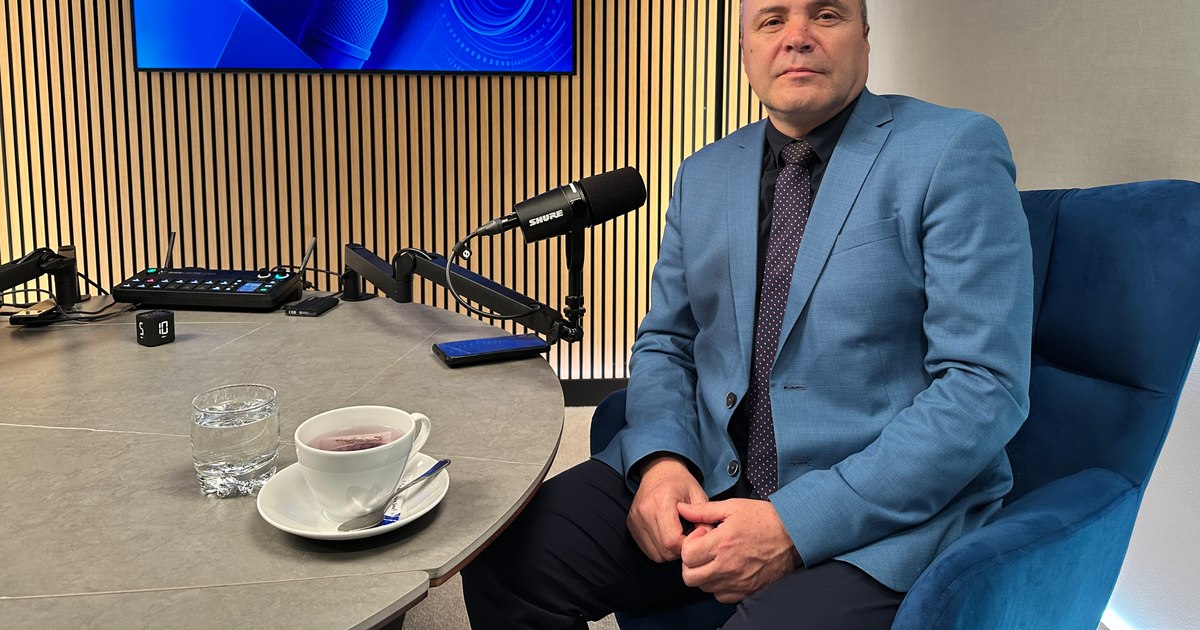
Dumitru Chisăliță, at the “Adevărul” Interviews. PHOTO: The truth
The interim takeover of the Ministry of Energy by Prime Minister Ilie Bolojan is viewed by specialists as a high-stakes moment for the entire energy system.
In a broad analysis, Dumitru Chisăliță, president of the Intelligent Energy Association (AEI) and an expert with over 20 years of experience in the field, warns that the decision can become either a moment to consolidate control over the sector, or a stage of administrative improvisation with chain effects.
“In theory, it sounds good”
In his view, the key is not the political takeover of the portfolio, but the ability to execute quickly and coherently, in a system already under pressure from delayed investment, overburdened networks and ongoing legislative transitions.
“What does it mean, in fact, that the prime minister takes over Energia. In theory, it sounds good, the prime minister has authority, he can cut through blockages, he can force collaboration between ministries and he can impose discipline on state-owned companies. In practice, however, there is a major risk: the prime minister does not have time to also be the operational manager of the ministry. If Bolojan tries to run Energia from press conferences and the cabinet at Victoria Palace, the interim will produce political noise, not results. The only formula that can work is this: the prime minister sets 5-10 strategic decisions, and a very tough technical core in the ministry executes them daily”, says the president of AEI.
Dumitru Chisăliță points out that the Ministry of Energy no longer needs political statements, but strict operational coordination, at a time when Romania is simultaneously managing major investments in nuclear, gas, renewables, but also structural network and energy security problems. In his view, the current challenges, from system issues to delayed projects, cannot be effectively managed without a clear command and execution mechanism.
In this context, the expert proposes that the prime minister publicly assume the limitations of an interim mandate and quickly establish a weekly operational command, with the participation of the Ministry of Energy, Transelectrica, ANRE and large producers such as Romgaz, Nuclearelectrica and Hidroelectrica.
“The first thing Mr. Bolojan should do is publicly accept that he cannot run the ministry as normal and immediately set up a weekly operational command… Not for the picture, but for a cold picture – stocks, available production, delayed works, blocked connections, litigation, support schemes, strategic projects and risk of slippage at state-owned companies”,
says the specialist.
Without such an overview, warns Dumitru Chisăliță, decisions risk being taken reactively, based on symptoms, not real causes. In this sense, he also considers it essential to appoint an executive coordinator in the ministry, with a clear implementation mandate, in order to avoid administrative blockages generated by excessive centralization.
However, his analysis goes much further, targeting the entire energy ecosystem: from market transition and the protection of vulnerable consumers, to transport infrastructure, offshore projects in the Black Sea and nuclear developments in Cernavodă.
The 11 theses of the expert on energy
1. The prime minister cannot run the ministry operationally
Chisăliță warns that “he doesn't have time to be the operational manager of the ministry”, which makes it necessary to clearly delegate the execution to a stable technical core.
2. Control is the zero priority
The first step must be a realistic picture of the energy system, updated weekly, with stocks, production, bottlenecks, delayed projects and systemic risks.
3. Market stabilization, not sudden interventions
The energy market is in a sensitive transition and consumer protection must be targeted and sustainable, not universal and costly.
4. The network is the critical link
The major problem is not just production, but transport capacity and integration, where congestion and delays in connecting new capacity occur.
5. Investments must be measured by execution
The gap between signed contracts and completed projects remains one of the great vulnerabilities of the energy system.
6. Neptun Deep, a state project, not a speech
The project must be managed as a strategic infrastructure, not a political symbol, with a focus on integration and real economic value.
7. Nuclear is not a decorative element
Units 3 and 4 at Cernavodă must be followed strictly technically, with clear responsibilities and progress reports without festive language.
8. “Smart guys” are eliminated by audit, not by declarations
Problems in state-owned companies are not solved by declarations, but by audit, contract control and management evaluation.
9. Efficiency determines the price of energy
Actual costs are influenced by waste, inefficiency and mismanagement, not just the level of production.
10. Bad investments are hidden costs
Not every investment is beneficial; some projects can generate higher costs in the long run than not having them.
11. Without a functioning market there is no cheap energy
Chaotic interventions distort prices, and stability and predictability are essential for investment.
What should the prime minister “deliver” in the first 45 days
The expert believes that, in a short period, we cannot talk about structural reforms, but concrete, verifiable results can be delivered:
1. Weekly operational table of the energy system: a public document, constantly updated, with production, stocks, blocked projects and risks.
2. Short list of critical projects: 10-15 major projects, each with a block, responsible institution, deadline and nominated person.
3. Clear decision on consumer protection: explicit establishment of criteria: who is protected, how much they receive and who bears the costs.
4. Emergency Pack for Networks: measures to accelerate investments in transport and distribution, with public deadlines and monthly reporting.
5. Actual progress report for Neptun Deep and Cernavoda: status, delays, risks and necessary decisions, without political wording.
6. First cleaning measures in state companies: audit of contracts, management evaluation and publication of performance indicators.
7. Operational coordination mechanism: weekly command that produces decisions, not just discussions.
8. Signal of stability for the market: clear rules, no sudden changes and no unpredictable interventions.
What the prime minister should NOT do
Dumitru Chisăliță warns Prime Minister Ilie Bolojan that there are some major mistakes that could cancel any progress and recommends what he should NOT do:
* not to launch a new energy strategy, given that there are already official documents (Energy Strategy and PNIESC);
* not to simultaneously promise cheapening, accelerated investment and universal protection, because these objectives are often contradictory;
* not to turn energy autonomy into an absolute slogan, ignoring the reality of European integration;
* not to confuse communication with execution, i.e. announcements with results;
* do not keep the state company area unchanged without real audit and reform.
Order of priorities
At the same time, the president of the Intelligent Energy Association also recommends an order of priorities:
* Consumer protection and market stability
* Networks and capacity integration
* Execution of investments already contracted
* Major strategic projects (Neptun Deep, Cernavodă)
* Governance reform in state-owned companies
In Dumitru Chisăliță's assessment, the 11 theses are not theoretical exercises, but minimum operating conditions in a sector under pressure.
The real test of Prime Minister Ilie Bolojan, says the expert, will not be taking over the portfolio itself, but the ability to obtain concrete results in a short time, without turning the interim into an exercise of political improvisation.
Ilie Bolojan announces tough energy measures: “We have networks blocked by speculative projects”. Guarantees for investors could increase significantly