The commander-in-chief of Ukraine's military said Russia is facing a shortage of anti-aircraft missiles needed to counter drone attacks – an indication that Moscow faces similar challenges to the West as the air war evolves, Business Insider writes.
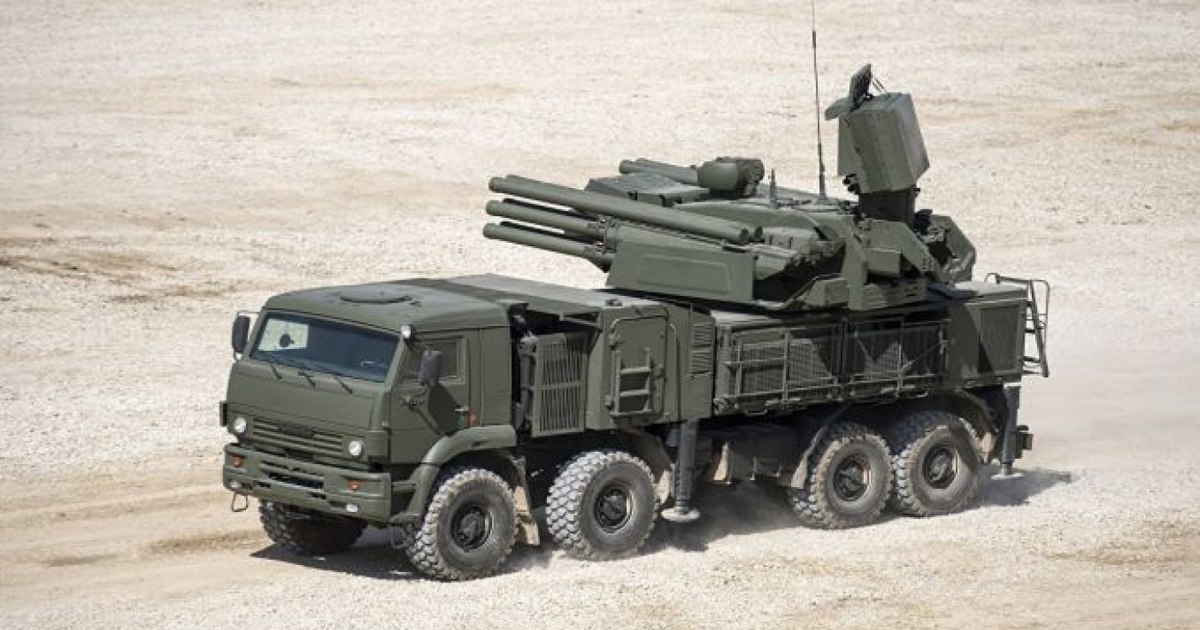
Pantir anti-aircraft defense system PHOTO: X
Oleksandr Sîrski made this statement during a meeting held in Kyiv with his Canadian counterpart.
In a statement, he stressed that the systematic strikes on Russian production facilities contribute to the degradation of the adversary's air defense capabilities, already affected by a shortage of missiles capable of intercepting Ukrainian drones and other attack systems.
The statements come as militaries around the world seek solutions to the growing use of long-range attack drones — relatively cheap, expendable systems that are difficult to neutralize with much more expensive conventional missiles.
The assessment suggests that the escalation of Ukraine's long-range strike campaign forces Russia to face the same dilemma: rapidly consuming sophisticated munitions to counter cheap threats.
Ukraine has regularly reported dozens of remote attacks on Russian territory, targeting energy and military infrastructure. Among the most recent targets are the Russian Black Sea Fleet base in Sevastopol and the Belbek airfield in Crimea.
Ukraine will likely continue to exploit Russian air defense vulnerabilities
According to the Institute for the Study of War, the pace of these operations is increasing, and Ukraine will likely continue to exploit the vulnerabilities of Russian air defenses, which are spread over a vast territory and under constant pressure.
Russia mainly uses Pantir defense systems to combat drones. However, the production of interceptor missiles is considerably slower than the production of drones.
Ukrainian authorities previously claimed that a significant part of these systems had been destroyed. Meanwhile, Russian military analysts and commentators warn that ammunition stocks are under increasing pressure.
A report by the Royal United Services Institute shows that Russia is consuming anti-aircraft interceptors at a faster rate than it can produce them, especially for older or considered obsolete systems.
Similar problems arise in other states. The United States, for example, has used a significant volume of air defense munitions in the conflict with Iran, including advanced systems such as the Patriot and high-altitude interceptors.
As modern warfare transforms, the focus is shifting increasingly to the balance between cost, efficiency and industrial capability – a challenge that affects Russia, Ukraine and Western allies alike.