The most controversial weapon in recent human history. American made bomb that could kill people without damaging infrastructure

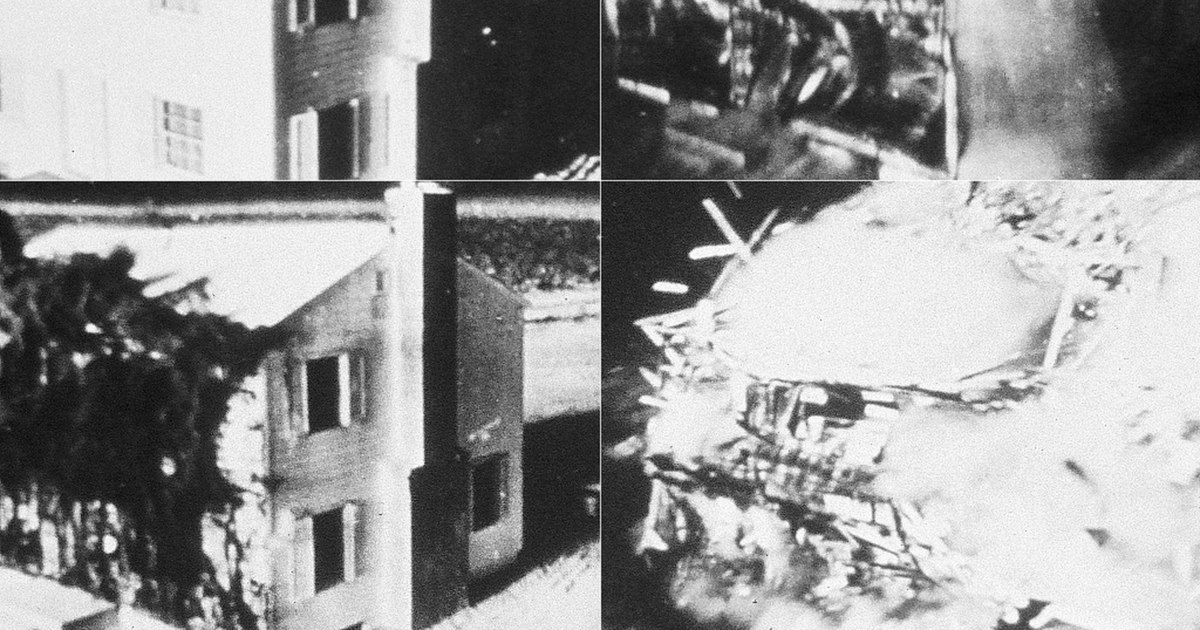
One of the most controversial weapons in history was the neutron bomb. It was intended for mass murder, and its design showed unusual cynicism.
The effects of a neutron bomb compared to a classical one PHOTO wikipedia
The end of World War II, the most destructive conflict in human history, did not bring peace to the world. Although the experience was effectively traumatic for people on three continents and tens of millions of human lives were lost, the great powers continued to arm and prepare for a new and more devastating conflict. Only a decade and a half after the end of the carnage, humanity was one step away from a third war. This time nuclear. Only a diplomatic miracle prevented disaster. World politics was dominated by the power struggle of the USA and the USSR, the famous “Cold War” that led to decades of devastating conflict in areas of influence such as Vietnam, Korea or Afghanistan. Both the Americans and the Russians have created weapons of mass destruction in the event of a direct conflict. One of the most controversial weapons of this period was the neutron bomb. It was not necessarily the power or the destructive capacity that created a real international scandal, but the cynical concept of this weapon, which, as one contemporary remarked, challenged the very idea of humanity.
A famous physicist and a weapon that should have been more “human”
The neutron bomb, officially known as an “enhanced radiation nuclear weapon”, was developed in the 1960s in the United States. The concept is attributed to physicist Samuel T. Cohen, who argued that the weapon could provide significant tactical advantages on the battlefield. Unlike traditional atomic bombs, which produce massive destruction through explosion and heat, the neutron bomb is designed to emit an intense stream of neutron radiation.
It has the ability to penetrate armor and structures, mainly affecting living organisms while the infrastructure remains relatively intact. The concept was made to limit destruction. In addition, the radiation concentration would decrease significantly after only 48 hours. Samuel Cohen developed the concept at Lawrence Livermore National Laboratory in 1958. It was originally part of the Dove and Starling projects, and an early device was tested underground in early 1962. Designs for a final version for military use were developed in 1963.
Neutron bombs are specially designed with lower explosive yields than other nuclear weapons. Because neutrons are scattered and absorbed by air, the effects of neutron radiation decrease rapidly with distance in air. As such, there is a clearer distinction, relative to thermal effects, between areas of high lethal impact and areas of minimal radiation doses. The intense pulse of high-energy neutrons generated by a neutron bomb is the primary killing mechanism, not radioactive fallout, heat, or explosion.
Although it is commonly believed that neutron bombs “leave the infrastructure intact”, with current designs having explosive yields in the low kiloton range, detonation in an area with infrastructure would still cause a considerable degree of destruction to buildings, through blast and heat effects at a moderate range, but with considerably less destructive effect than a standard nuclear bomb with exactly the same total energy release. “A neutron bomb is the most moral weapon ever invented”specified the physicist Samuel Cohen.
A weapon designed to destroy Soviet armor superiority
This weapon was specifically designed to destroy Soviet tank formations and kill as many enemies as possible. It was intended to be prepared in the event of a conflict with the USSR on the territory of Europe, especially if the Warsaw Pact countries tried to penetrate to the west. Basically, the bomb was designed to limit the destruction of the infrastructure, barely rebuilt after the Second World War, through the Marshall Plan, but to quickly and effectively kill anything that moves. The Soviet Union had far greater numbers of troops and tanks in Eastern Europe, and NATO feared a possible swift attack on Western Europe. Soviet battle doctrine was to use numerical advantage to attack quickly, by overwhelming any enemy, as it did with Nazi Germany.
US threatens to 'hit hard' Iran if nuclear talks fail: 'If we have to, we'll do it to stop them from getting a nuclear bomb'
In case the “Cold War” escalated in Europe, the Americans prepared the neutron bomb against the tanks and soldiers of the Red Army. Neutron bombs, or more specifically, enhanced neutron radiation weapons, were also to be used as strategic anti-missile weapons. NATO strategists saw the weapon as an “intermediate” solution between conventional weapons (numerically insufficient) and classic nuclear weapons (too destructive). Basically, it was about stopping a massive attack without completely destroying the continent. “Better to neutralize the enemy army than to destroy the territory you are trying to defend”specified strategies from that time. The principle of operation is similar to that of a thermonuclear bomb, but with one essential difference: the reaction is optimized to maximize the emission of fast neutrons. The result is a weapon with relatively low explosive power, but lethal effect on humans and animals at a considerable range.
“It is a weapon against the very idea of humanity”
Although the neutron bomb project was secret, a report by an American Washington Post investigative journalist in June 1977 revealed the US government's plans to equip the US military with neutron bombs. The article focused on the fact that this bomb was the first weapon in the world with such a cynical purpose. A huge international scandal ensued, fueled of course by Soviet leaders, who described the weapon as a “capitalist bomb” because it was designed to destroy human beings while protecting property.
“A nuclear war is knocking on the door.” Experts warn, 80 years after Hiroshima and Nagasaki
“It's a weapon designed to kill people but leave buildings standing”specified Leonid Brezhnev, the leader of the USSR. The scandal took on an unprecedented scale, this weapon being perceived not only as a military tool, but as a symbol of an era in which technology sometimes exceeded the limits of ethics. “We have reached the point where we can choose not whether we destroy the world, but how we do it.” said US President Jimmy Carter, clearly illustrating the dilemma regarding the use of nuclear weapons at the time. Religious leaders, politicians and activists have vehemently condemned it.
A European bishop declared in the 70s that “it is a weapon against the very idea of humanity”. At the same time, this weapon had supporters in both American and European politics. They argued that, paradoxically, it could reduce collateral damage and economic losses in the event of war. “This is a weapon that makes killing more acceptable.” stated Olof Palme, the prime minister of Sweden at the time. In any case, the situation had become so explosive that US President Jimmy Carter, who had originally approved the production of this weapon, suspended the entire project in 1978. However, several states tested or possessed neutron bombs. It is about France, China, Pakistan, Israel or India. Even the USSR possessed an ABM-3 Gazelle missile system equipped with neutron warheads.