VIDEO. “Terminator”, the Usain Bolt version. The race where robots beat humans, with a speed record

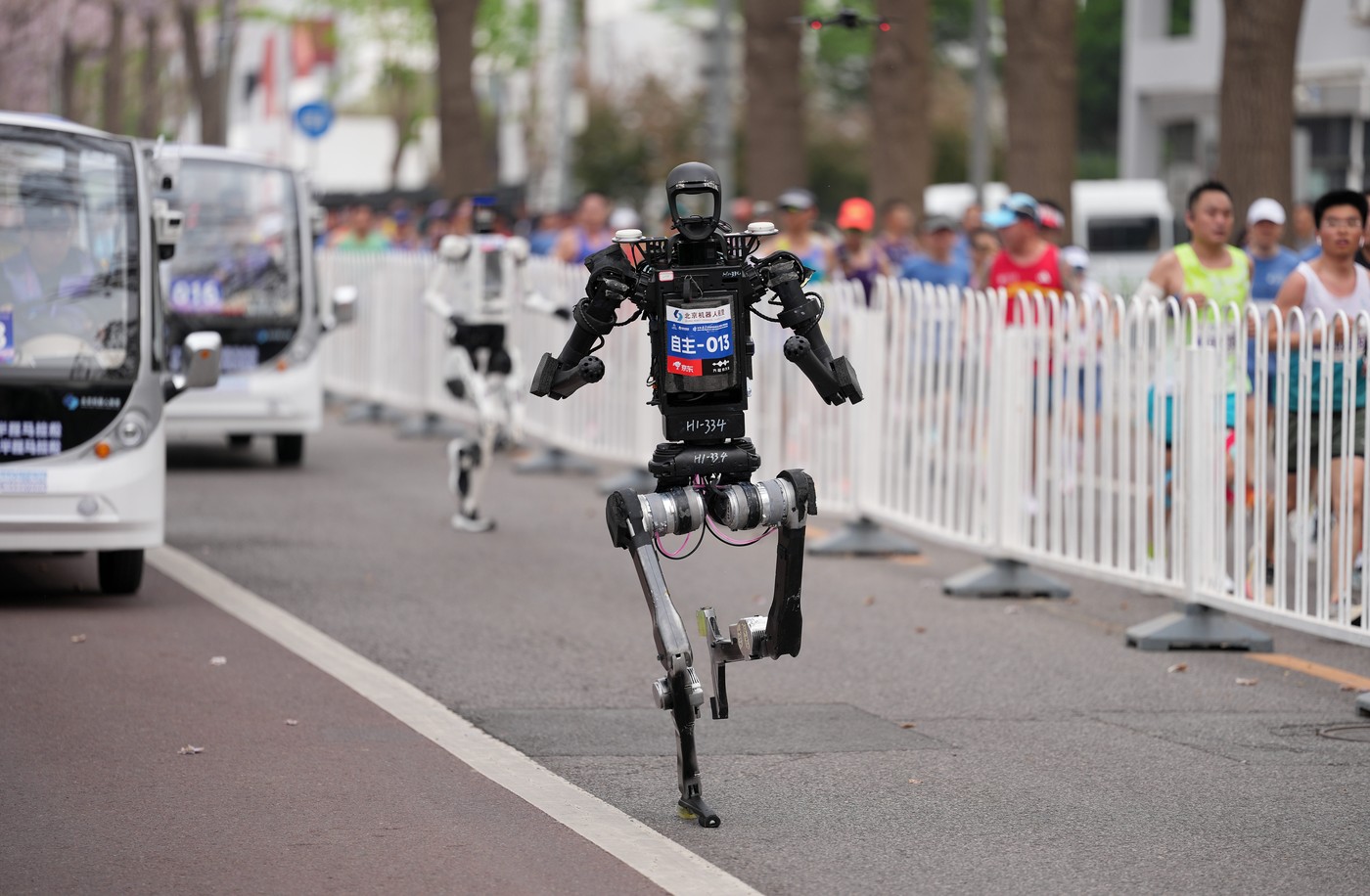
The streets of the Yizhuang Industrial Zone in southeast Beijing, home to dozens of robotics companies, hosted an unusual competition over the weekend.
Humanoid robots reminiscent of the legendary Usain Bolt have broken the world record of humans in the half marathon, illustrating the spectacular technological progress made by China in this sector, notes AFP.
Spectators gathered along the roads to watch the cars run, some very fast and almost as complex as a Terminator robot, others much more rudimentary in size and performance.
Humanoid robots hit the ground running in the Beijing E-Town humanoid robot half-marathon on Sunday, competing in both autonomous navigation and remote-controlled categories. #marathon #Beijing #HumanoidRobot pic.twitter.com/dxacB1BzH2
— China Xinhua News (@XHNews) April 19, 2026
The Yizhuang Half Marathon pitted robots against humans, with each group running on a parallel but different track to avoid any collision.
The champion robot, equipped with an autonomous navigation system and representing the Chinese smartphone brand Honor, covered the approximately 21 kilometers in 50 minutes and 26 seconds, an average speed of about 25 km/h, public broadcaster CCTV reported.
MOMENT 🤖🏆Chinese #Honor-made #robot champion crossing the finishing line at the #humanoidrobot half-marathon held Sunday in #Beijing # glory # robot dolls https://t.co/WvNQht2VbS pic.twitter.com/wjhTbJOW5N
— ShanghaiEye🚀official (@ShanghaiEye) April 19, 2026
Honor's robot was faster than the first human competitor, even beating the men's world record (57 minutes and 20 seconds), held by Ugandan runner Jacob Kiplimo.
“It worries me quite a bit”
Behind the security barriers, Han Chenyu, a 25-year-old student in a cap and sunglasses, barely had time to take out her smartphone before a robot had already passed her.
She considers the event “cool” and says she is excited about technological advances.
“On the other hand, as a future employee, this worries me quite a bit. Because if technology advances too quickly, it risks having repercussions on jobs,” with the replacement of certain professions by artificial intelligence (AI) and robots, the young woman said.
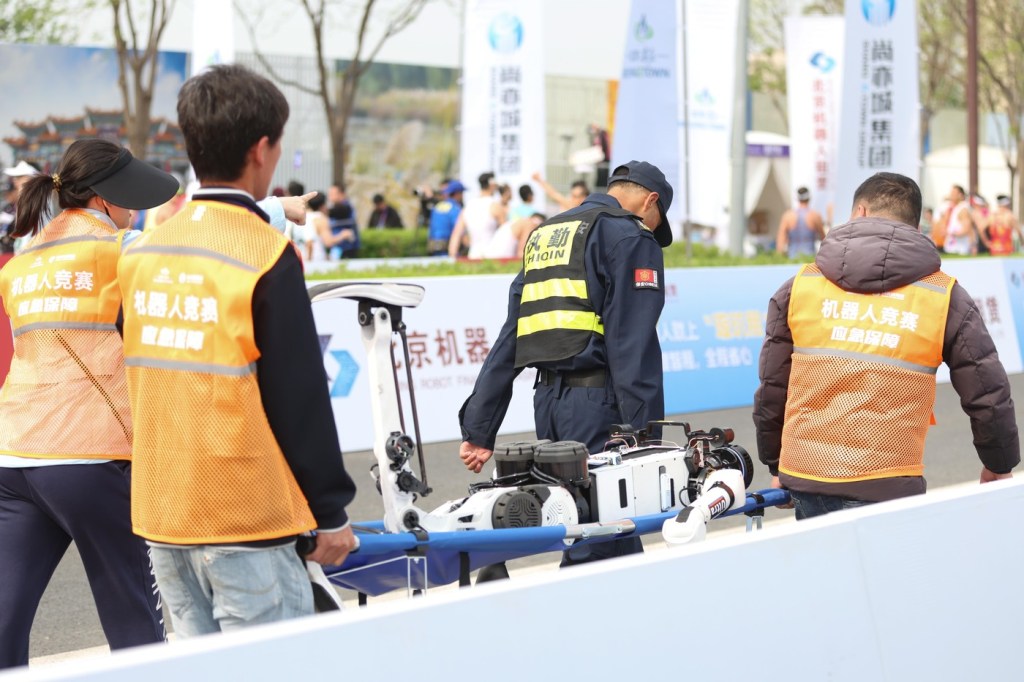
The progress made in this half-marathon is spectacular compared to the 2025 edition. At that time, the winning robot finished the race in three times longer (2 hours, 40 minutes and 42 seconds), and numerous falls marked the event.
The car movements were much smoother this year and the number of participating teams increased from around twenty to over a hundred. A sign of growing enthusiasm for the sector, according to organizers.
Consistent investment in robotics and AI
In recent years, humanoid robots have become a common presence in China, in the media and in public places.
“I think in three to five years, they will enter our daily lives” for “housework, the company of the elderly” or even for “dangerous jobs like firefighting,” said Xie Lei, a 41-year-old spectator who came with his family to watch the race.
This half marathon aimed to popularize this technology among the general public and stimulate innovation.
Investments in robotics and artificial intelligence in China reached 9.4 billion euros by the end of 2025, according to a study by an official body.
“For thousands of years, humans have been on top. But look, robots, in terms of autonomous navigation, at least in a sports competition, are starting to surpass us,” Xie Lei said with a smile.
“On the one hand, it's a bit sad for humanity. But technology, especially in recent years, is also opening up so many new horizons for us.”