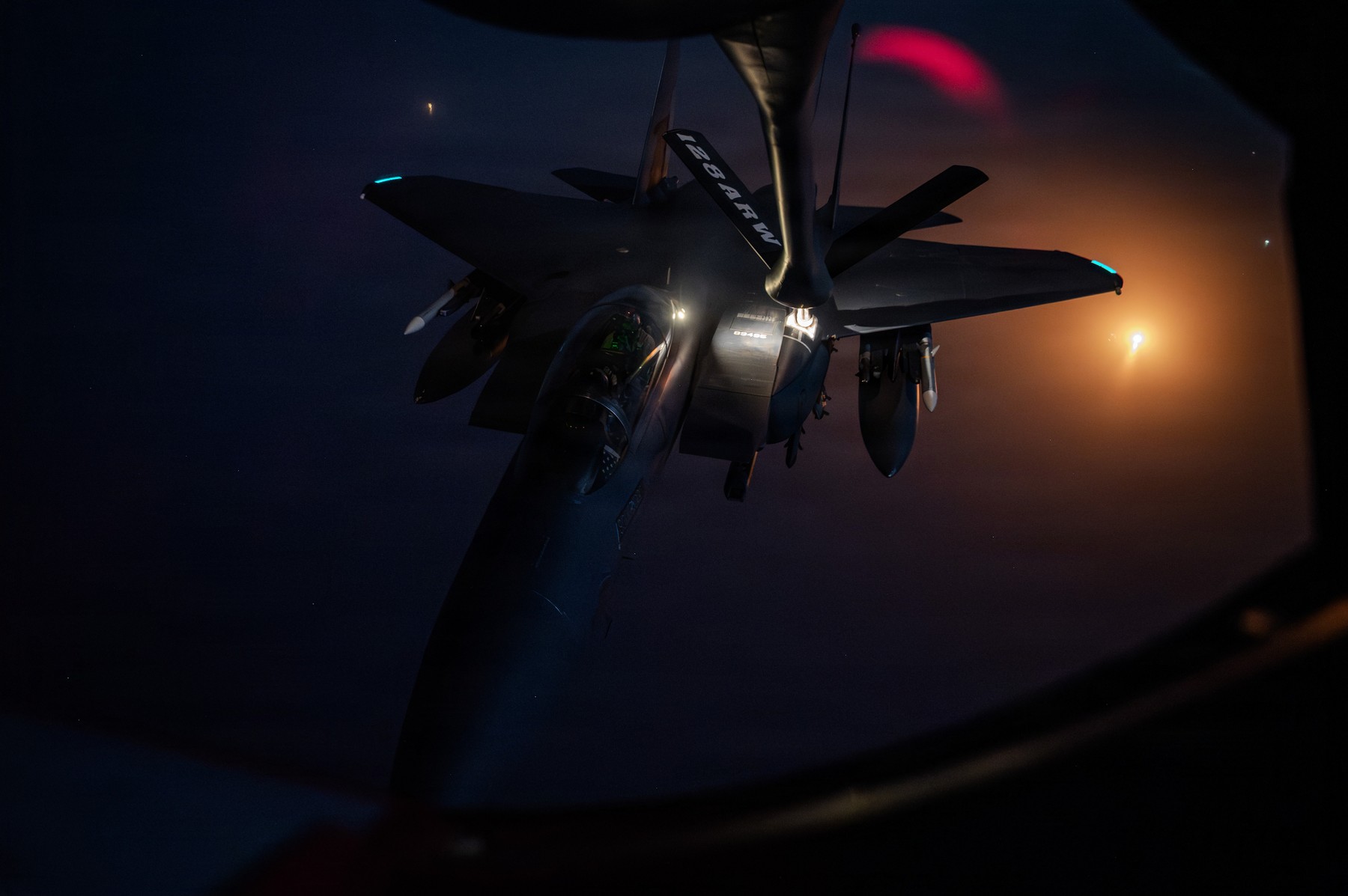
The US naval blockade of Iran is just one example of “polite” behavior during the current ceasefire, and US forces are prepared to strike Iran's power plants and energy industry if ordered, US Defense Secretary Pete Hegseth said on Thursday, according to Reuters.
Flanked by two of the top US military officers, Hegseth said Iran must choose wisely as it prepares for negotiations with the United States.
“We are reloading with more power than ever and better intelligence,” Hegseth said at a Pentagon press conference. “We're ready to fire — to hit your critical dual-use infrastructure, your remaining power generation capacity and your energy industry. We'd rather not have to do that,” the Pentagon chief added.
President Donald Trump's administration on Wednesday expressed optimism about a deal to end the war with Iran, while warning that it will increase economic pressure on Tehran if it remains defiant.
This included the blockade of Iranian ports that went into effect on Monday, with the US military forcing 14 ships to return. Dozens of US warships and aircraft, including about 10,000 troops, are enforcing the blockade.
Trump hopes the naval blockade will force Iran to accept Washington's terms for an end to the war, which the US and Israel launched on February 28, which include reopening the Strait of Hormuz, a waterway through which about a fifth of the world's oil and gas exports typically transit. Trump said that was also a condition of the truce set to expire next week.
The war led to the largest disruption of global oil and gas supplies in history.
Analysts say Iran can withstand a complete halt to oil exports for up to two months before being forced to cut production.
Hegseth, in his comments to Iran's leadership on Thursday, said the blockade “is the polite way to do this.”
The US military, ready to resume operations
Admiral Brad Cooper, head of US Central Command, which oversees military operations in the Middle East, said alongside Hegseth that the US military was adjusting its tactics, techniques and procedures, but did not elaborate.
At the same press conference at the Pentagon, General Dan Caine, the head of the US military, added that US forces are “ready to resume major combat operations at virtually any time”.
US Navy ships will pursue any Iranian-flagged vessel or any vessel attempting to provide material support to Iran, Caine said at the briefing. He added that this could happen not only in the region but also in the Indo-Pacific area.
Ships attempting to violate the blockade will be intercepted and warned that “if you don't comply with this blockade, we will use force,” and enforcement will take place in Iran's territorial waters and in international waters, Caine said.
So far, no ship has been boarded, the American general said.
The US military has expanded its blockade to include cargo deemed contraband, and any vessel suspected of trying to reach Iranian territory will be “subject to the belligerent's right to be inspected and searched,” the US Navy said in a statement on Thursday.
“These vessels, regardless of location, are subject to inspection, boarding, search and seizure,” the US Navy later said in an updated statement.
Among the contraband items listed are weapons, weapon systems, ammunition, nuclear materials, crude and refined petroleum products, as well as iron, steel and aluminum.
Sources briefed on Tehran told Reuters that Iran could allow ships to sail freely through the Oman side of the Strait of Hormuz without risk of attack, under proposals it has put forward in talks with the US, provided an agreement is reached to prevent a flare-up of conflict.
One of the sources cited by Reuters, who declined to be identified due to the sensitivity of the subject, said Iran may be willing to allow ships to use the other side of the narrow strait, in Oman's territorial waters, without any hindrance from Tehran.
The source did not say whether Iran would agree to remove any mines it may have placed in that maritime zone, or whether all ships — even those with ties to Israel — would be allowed to pass freely.
However, the source added that the proposal depends on Washington's willingness to meet Tehran's demands, a key condition for any potential progress on the Strait of Hormuz.