INTERVIEW How a Romanian doctor established in the USA for 30 years sees the new provisions that allow doctors to refuse patients with “irreverent attitude”


Anesthesiologist and director of the Pain Therapy Department at Bellevue Hospital in New York, Daiana Voiculescu speaks, in an interview for HotNews, about the risk that doctors in Romania will refuse to provide medical care if a patient or his relatives are “verbally or physically aggressive” or if the patient shows a “hostile or irreverent attitude towards the doctor”. I am provisions that appear in the new Code of Medical Ethicsadopted by the Romanian College of Physicians.
Adopted by the General Assembly of the College of Physicians on October 30 and published on November 5 on the CMR website, the new Code of Ethics is to be published in the Official Gazette and enter into force on January 1, 2026.
According to this code, doctors will be able to refuse to provide medical care if a patient or their relatives are verbally or physically aggressive, or if the patient exhibits a “hostile or disrespectful attitude towards the doctor”.
“Vague and highly subjective”
“I have seen, in the last few hours, on social media, colleagues who believe that they can now refuse the medical certificate to “rude” patients, or those who use rude names, disrespectful towards doctors or the institution. Vague and very subjective”, says, in the dialogue with HotNews, Daiana Voiculescu, a Romanian doctor established in the United States for almost 30 years. She is also an Associate Professor of Anesthesiology at New York University Grossman School of Medicine.
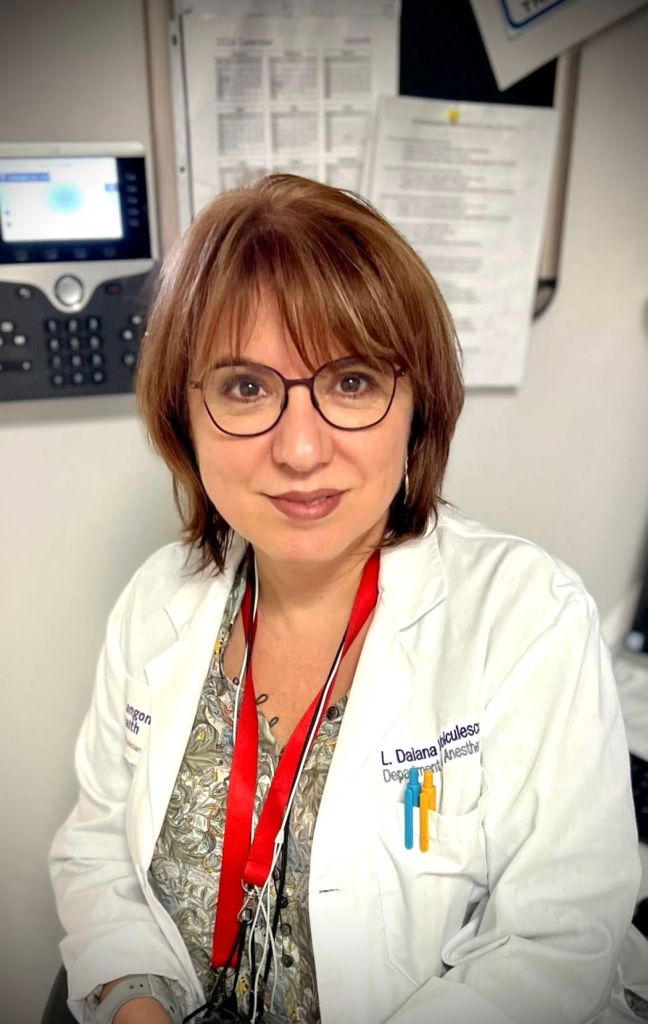
The new Code of Medical Ethics also brings new provisions that “emphasize respect for the patient and for science”, says Dr. Daiana Voiculescu, in the dialogue with HotNews. “I think it's very important that the aim is to strengthen public confidence in the medical profession.”
HotNews also asked the College of Physicians how it defines a patient's “hostile or disrespectful attitude.” The institution chose not to respond officially, but sources from the College of Doctors explained that “irreverent attitude is any conduct characterized by mockery, lack of respect towards doctors and the rules of the institution regarding the conduct of medical activity. This includes verbal expressions, gestures or behaviors that have the effect of undermining professional authority, disrupting and affecting the exercise of the medical act.”
“Our main obligation is to help patients in a non-discriminatory way”
HotNews: Mrs. Voiculescu, the new Code of Ethics of the College of Doctors in Romania brings a series of situations in which the doctor can refuse to provide medical care to the patient. You wrote, in a post on your Facebook page, that the paragraph about the possibility for the doctor to refuse the patient for “irreverent attitude” is “highly unethical”. Can you explain why?
Daiana Voiculescu: Medical ethics refers to rules of conduct and ethical and moral obligations of the profession. And our main obligation is to help patients in a non-discriminatory way.
This paragraph encourages the refusal of the medical act based on subjective criteria. If “physical abuse” has a clear definition and can justify under certain conditions (not always) the refusal of care, “verbal abuse” is quite vague.
“I have seen colleagues who believe they can refuse the medical certificate”
– Do you think that patients are at risk of being refused by doctors based on subjective criteria?
– I have seen, in the last few hours, on social media, colleagues who believe that they can now refuse the medical certificate to “rude” patients, or to those who use rude names, disrespectful towards doctors or the institution. Vague and very subjective.
Let's not forget that patients come from extremely varied backgrounds from a social, educational, cultural or material point of view. These environments leave their mark on their values, their way of expressing and reacting. Many patients have undiagnosed or untreated psychiatric or psychological pathologies. They can be aggressive, especially verbally. What do we do? Do we kick them out of the security room? What do we do with the drunk man who breaks his leg and comes cursing left and right? Are we sending him home because his closed tibial fracture is not life threatening?
In the emergency room or hospital, patients are in an unfamiliar environment, faced with a strong asymmetry of knowledge and power. They are vulnerable and dependent. And they should not be penalized for uncontrolled behavior. And when they are refused, most Romanians have nowhere to seek medical help or justice.
Terms like “disrespectful”, “hostile” or “verbal aggression” are highly interpretable and open the way to legitimizing abuse of power and patient abandonment.
“The doctor-patient relationship cannot be healed by turning one's back on the patient”
– What do you think are the reasons why the Romanian College of Physicians wanted these new provisions?
– I understand that Romanian doctors frequently face manifestations of disrespect and even physical aggression. Unfortunately, this provision attempts to modify the effect without addressing the causes. It is like a band-aid placed over the patients' mouths, so that the most unpleasant messages do not reach the doctors' ears.
The doctor-patient relationship cannot be healed by turning our back on the patient when we do not like his words or the tone in which he speaks and when, in our perception, he is aggressive.
The question is why are or why do Romanian patients seem so aggressive?
– Do we have an answer to this question? Why are they aggressive – some of them? And what could the solutions be?
– The causes are multiple and belong to all those involved: medical staff, patients, administrative structures, etc. Unfortunately, over the past 30 years, people have built up major frustrations in their relationship with the medical system. It is not the subject of our discussion, but this ugly reality cannot be denied. And not covered with nice and polite words.
I also see that the Roma minority is frequently blamed for “aggression”. But why do these people express themselves with violence towards doctors? Isn't it also a response to the way the Roma are treated in the guard rooms, in hospitals or clinics? The vulnerability of this minority in relation to the health environment and, often, its humiliation, lead to aggressive reactions.
In general, the solution would be to understand why Romanians behave aggressively and to improve their relationship with the medical system, not to turn our backs on them or impose artificial standards of respect on them
“Clear Action Protocols” in the US
– Are there, in the medical system in the United States, where you practice, such exceptions, where the doctor can refuse to provide medical care to a patient?
– There are, but they are very rare. In the center of attention is always the good and the satisfaction of the patient. Seriously, not at the declarative level. Every year we have mandatory courses for de-escalating tense situations. Institutions have clear protocols of action in such circumstances.
We try to identify and stop physical aggression before it occurs. Security personnel intervene immediately and the aggressive patient is discouraged and stopped from action. Usually, the doctor involved takes a step back and lets someone else talk to the patient, understand what caused the reaction, and de-escalate the situation.
This “mediator” comes up with solutions acceptable to both parties. Standards of care and behavior are thoroughly explained to the patient in a professional manner. If he doesn't agree, he leaves voluntarily.
Incidents are documented immediately by the personnel involved and the documentation is sent to the Risk Management department. They are the ones who decide if and by whom that patient will be treated. This is in non-emergency situations.
In the emergency room, however, all patients are treated. In New York State they are only prohibited from carrying weapons of any kind.
“The emphasis is on respect for the patient and for science”
– What good does this new Code of Ethics bring? What do you think are the measures that can change things for the better for patients?
– I have not seen the document in its entirety (at the time of the interview, only fragments of the new Code were public – ed.). But the fact that it was developed in accordance with European standards and modern medicine bodes well. I think it is very important that the emphasis is placed on respect for the patient and for science and that the aim is to strengthen public trust in the medical profession.
However, there are other potentially dangerous provisions. For example, Chapter VIII on “collegiate relations” promotes a lack of transparency, denies the participation of doctors in the analysis and improvement of the quality of the medical act, putting the absolute decision in the hands and at the discretion of the College of Doctors.
This centralization of the decision-making process strengthens the feudal type relationships already existing in Romanian medicine. In this context, the duty of loyalty required by the Code is highly problematic.
But in general, the updating of these ethical norms is welcome and, I hope, with positive consequences.
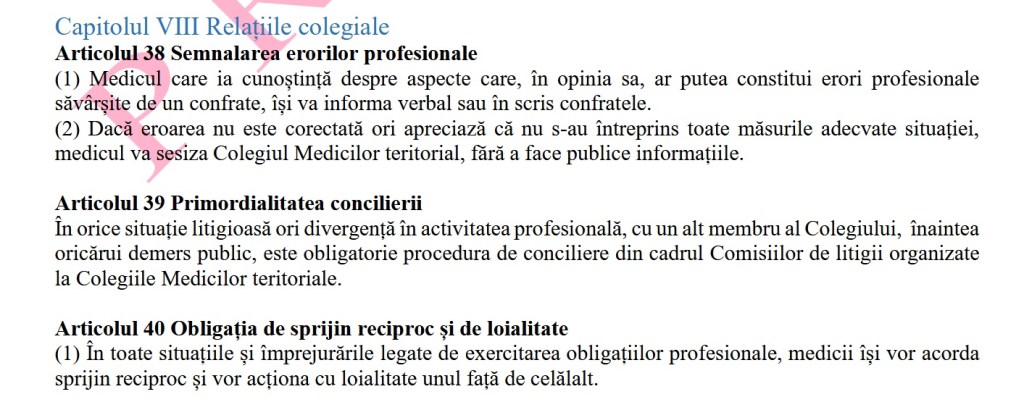
One of the main provisions of Chapter VIII: If a doctor notices a professional error of another doctor, he cannot make it public.
“Social media has taken the genie out of the bottle and medical misinformation has become a global phenomenon”
– The new Code of Ethics also brings a series of important provisions regarding the obligation of doctors to inform the public only based on scientific data. Do you think it will work and disinformation on medical topics launched even by some doctors will no longer circulate in the public space?
– The provision is commendable. It comes late, but it is very good that, finally, it aligns Romanian medical practice with Western standards. The ethical norms of medical societies in Europe, Great Britain and the United States require doctors to base their practice on scientific evidence. In some European states this requirement defines the standard of medical care and is codified in law.
Unfortunately, social media has taken the genie out of the bottle and medical disinformation has become a global phenomenon, politically manipulated and even part of the hybrid war humanity has entered.
I hope that, in Romania, this provision will not remain only on paper, but will be rigorously applied. The fight against misinformation is already taking on historical connotations and the Romanian medical corps has the chance to contribute positively.
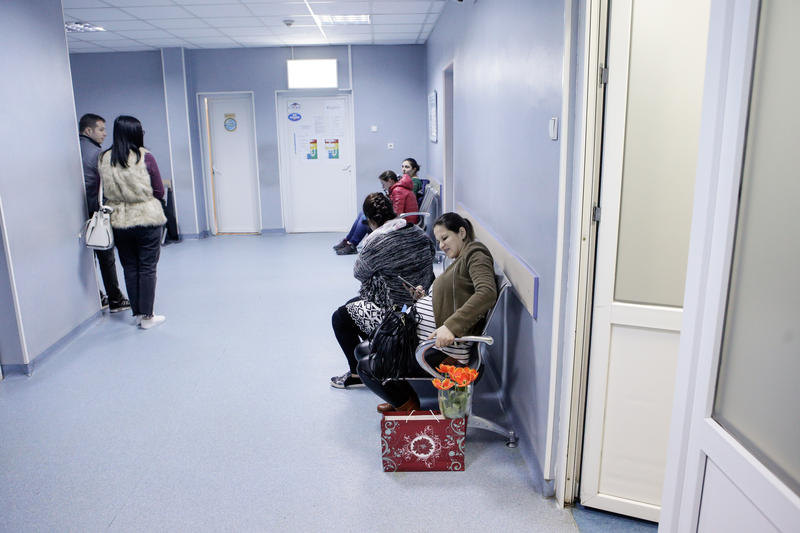 Doctors will be able to refuse to treat verbally or physically aggressive patients. Situations in which patients may be denied medical care