China's economy soared in the first months of the year, but a fundamental vulnerability has emerged: “The whole industry is under pressure”

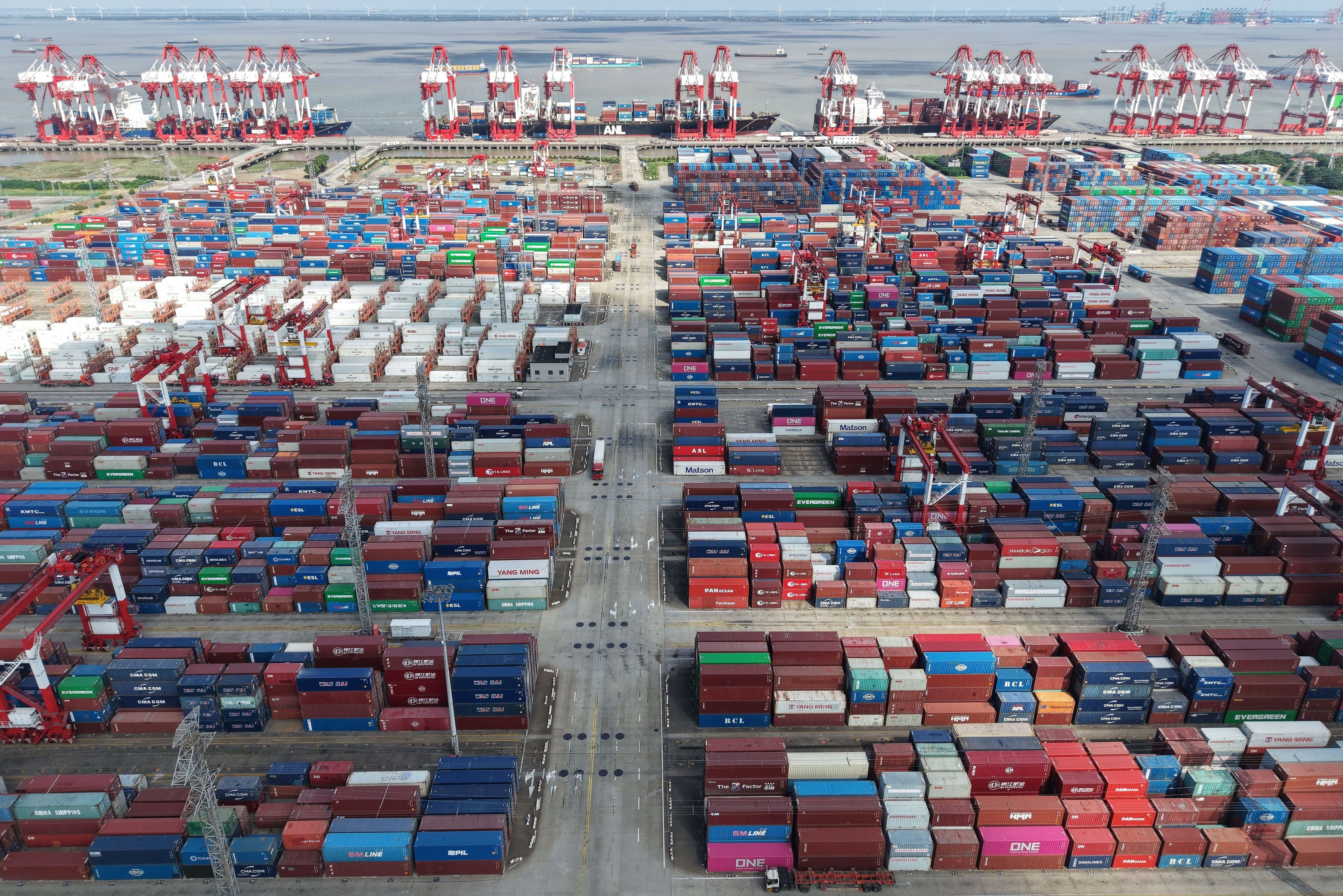
China's economy accelerated in early 2026, helped by rising exports, but the boost came before the war in Iran sent energy costs soaring and threatened global demand – key to Beijing's growth ambitions.
The 5.0% year-on-year growth in the first quarter is at the upper end of China's target range of 4.5%-5.0% annually, underscoring the resilience of its economy, which sets it apart from much of Asia, helped by its large strategic oil reserves and diversified energy mix.
China's economy is fundamentally dependent
However, the conflict in the Middle East exposes a fundamental vulnerability: an export-led growth model that generates annual trade surpluses the size of the Dutch economy depends on open sea lanes – both for China and for the customers it sells to.
And as the world's largest energy importer and largest industrial power, skyrocketing oil prices threaten to drive up production costs and squeeze the already “thin” margins of factories that employ hundreds of millions of people.
The longer the conflict drags on, the greater the stakes, and the pressure is already mounting.
“The entire industrial chain is under pressure”
Peng Xin, managing director of Guangdong Rongsu New Materials, which buys petrochemical raw materials from refineries and turns them into plastic granules for injection molding plants, says prices for two types of nylon have risen by about 40%-60%.
Peng is passing these price increases on as some of his customers rush to place orders and stock up before costs rise even further.
“The current method of dealing with the situation is to negotiate the price for each individual order. If you accept my price, we cooperate. Otherwise, there is nothing we can do,” he said.
“The whole industrial chain is under pressure,” added Peng Xin.
Export growth collapsed
GDP growth in the first quarter exceeded forecasts (which were 4.8%) and the three-year low in October-December (4.5%). A statistics office official said it was a “rare and commendable” achievement, while warning of a “complex and volatile” external environment.
But trade data for March, released earlier this week, revealed tensions.
Exports rose just 2.5 percent last month, slowing sharply from 21.8 percent in January-February.
And although factory-gate prices emerged from deflation in March for the first time in more than three years, analysts warn that “negative inflation” driven by production costs could be even more damaging to growth.
“The outlook is not rosy at all”
“The solid start to the year, supported by strong export performance, suggests that the direct impact of the Middle East conflict remains limited for now,” said Junyu Tan, North Asia economist at Coface.
“But the outlook is far from rosy, despite China's relative resilience,” Tan added. “The export engine could continue to be limited by weaker global demand if the conflict persists,” he explained.
And the economy remains unbalanced, with the decline unlikely to be offset by domestic demand if exports fall.
Retail sales, a gauge of consumption, rose 1.7% last month, down from a 2.8% advance in January-February and – as has been the norm in recent years – underperformed industrial production, which rose 5.7% in March from 6.3% in the first two months.