Why do Romanians live with insurance in Italy and Germany, but leave their homes and families in Romania unprotected


Romania has been living in a contradiction for many years: we go abroad to have more secure incomes, but we leave behind less protected goods and people. In Italy, Spain, Germany or the UK, home insurance or a life policy is often the norm. Back home, the norm is “we get by”. The difference between the two worlds is not only cultural, but also structural, that's why I thought we'd explore what “protection” means there and why we don't replicate the reflex for Romania as well.
In the countries where the largest communities of Romanians have settled, the insurance market is mature. In Italy, insurance premiums were 6.2% of GDP in 2023, with the majority being for life; in Spain, the insurance industry runs around 4.7% of GDP annually; in the UK, home damage payouts hit record levels in 2023-2024 on the back of weather, with policy prices rising accordingly; In Germany, coverage against natural hazards (as an add-on to home insurance) already reached around half of properties in 2021, with some regions exceeding 90%. There are clear indications that “protection” is treated as personal infrastructure, not as a fad.
In Romania, insurance penetration in GDP barely exceeded 1.3% in 2024, the highest level since 2015, but still far below the European average. The dynamics are positive, but the gap remains large. The mix is also relevant: here, non-life (especially auto) clearly dominates, while in southern and western Europe the life and long-term protection component has a much greater weight.
A survey carried out by Allianz-Țiriac shows that almost 7 out of 10 Romanians settled outside the country do not have any active insurance in Romania, although over 70% of them have life, health or housing policies in the countries where they live. The paradox is obvious: protection becomes a reflex when the system makes it easy to access, but it stops at the border when it involves bureaucracy or ignorance. In fact, the digitalization of insurance in Romania means that this barrier no longer exists. Many products can be bought and managed entirely online in minutes.
What we do outside, but don't do at home
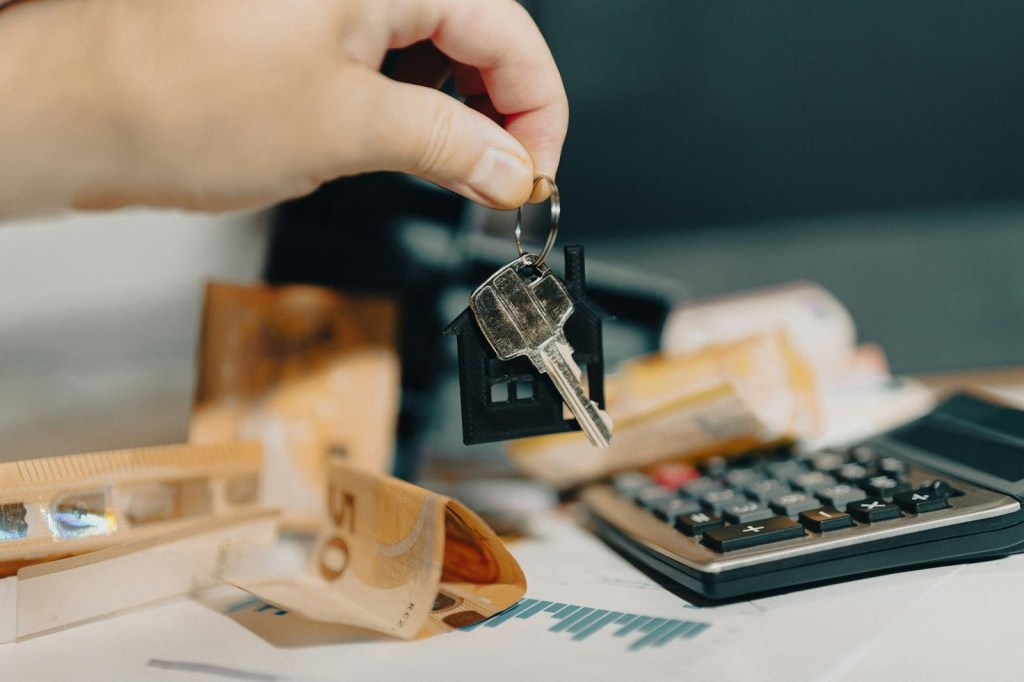
By Jarud Zerdzicki via Unsplash
Romanians adopt the rules of the game in their countries of residence: they sign home, life and health policies, they get used to digital procedures and the idea that “insurance is a fixed cost”. In the UK, over 80% of households have some form of home insurance; not a marketing figure, but a sign that protection has become routine. Also there, in 2023 and 2024, insurers paid record amounts for home damage amid successive storms, and prices soared.
In Germany, the discussion is not even on the level of “do you have a policy or not”, but on the quality of coverage: how much protection you have for floods, landslides, storms, some phenomena that, in 2021, produced damages estimated at tens of billions and pushed the state to build support and reinsurance mechanisms. There, natural hazard insurance is a standard add-on to your home policy, and penetration climbs to 94% in some states.
Why don't we replicate this reflex in Romania

Photo by Elie Meh via Unsplash
There are several explanations. Historically, Romania has always relied on the idea that the state or the neighbors solve the problem. Economically, many families operate close to the limit, and the insurance premium falls into the “if there's any money left” category. Culturally, we haven't had a serious public conversation about the risks: how much a broken pipe in old buildings actually costs, what a short in the electrical panel or an operation with hospitalization means. Institutionally, the local market focused mostly on RCA, which left personal and home protection policies in the shade.
The diaspora sends money home, but in the absence of a culture of risk, monthly transfers do not automatically translate into protection. The money sent by Romanians from the diaspora back to Romania was around 9.5–10 billion dollars annually in 2023–2024, consistently placing the country at the top of the EU as a share of GDP, but this money goes almost entirely into current expenses, not into risk buffers.
Differences that matter: Italy, Spain, Germany, Great Britain
Italy has an insurance market where life accounts for over 70% of premiums; that means long-term planning and protection products attached to credit and savings. Spain is an interesting example: the insurance industry represents almost 4.7% of the country's economy and is present everywhere: in banks, in local agencies, online. For people, this means that it is very easy to get insurance, without complications or barriers.
Germany accelerated add-on for catastrophic housing risks after 2021; public discussion shifted the focus from post-disaster relief to prevention and insurance. Britain has been through a climate 'stress test': record payouts, rising premiums, but also programs like Flood Re that maintain affordability for flood-prone households. All four have one thing in common: when risk increases, the market responds and people adjust their behaviors.
What practical translation looks like for families separated by distance

Photo by Jakub Zerdzicki via unsplash
Romanians from the diaspora who left a property in the country or parents who own the family home can get involved in its protection. They can take out insurance online if they are a home owner or help their family take out a comprehensive home policy (fire, water damage, theft, vandalism, liability, home assistance). The process is already digitized, and the premium payment can be made online, it's the easiest way not to turn an incident into a financial hole.
For life and unforeseen events, the rule is equally clear: the policy is made in the name of the insured person. To protect loved ones left in the country, the diaspora can document options, cover the premium and track due dates. For minors, there are dedicated products where parents can be contractors for the benefit of the child, but here we are discussing the most common scenario: adult in the country, supported by the family from outside.
In a minimal scenario, the family “raises the shield” with two decisions: the home (in the owner's name) and a life policy for the vulnerable person in the country. This does not replace the habit of monthly transfers, it complements it. Transfer pays tomorrow; the policy saves that month when the lives of loved ones could have been completely derailed.
Good digital solutions for such situations are the My Home and My Protect packages from Allianz-Țiriac, suitable for real scenarios such as those of families separated by distance.
My Home is a comprehensive home insurance that is in addition to the mandatory one and covers common events such as fire, water damage, theft, vandalism or accidental damage, plus home assistance and third party liability. It can be bought and managed 100% online, including by Romanians from the diaspora who have remained home owners in the country.
My Protect is a life policy for unforeseen situations (accidents with permanent disability or surgical interventions involving hospitalization), a financial safety net for those remaining in Romania, especially for elderly parents, young students or people at the beginning of the journey.
The road between Romania and the diaspora is paved with the unexpected, literally
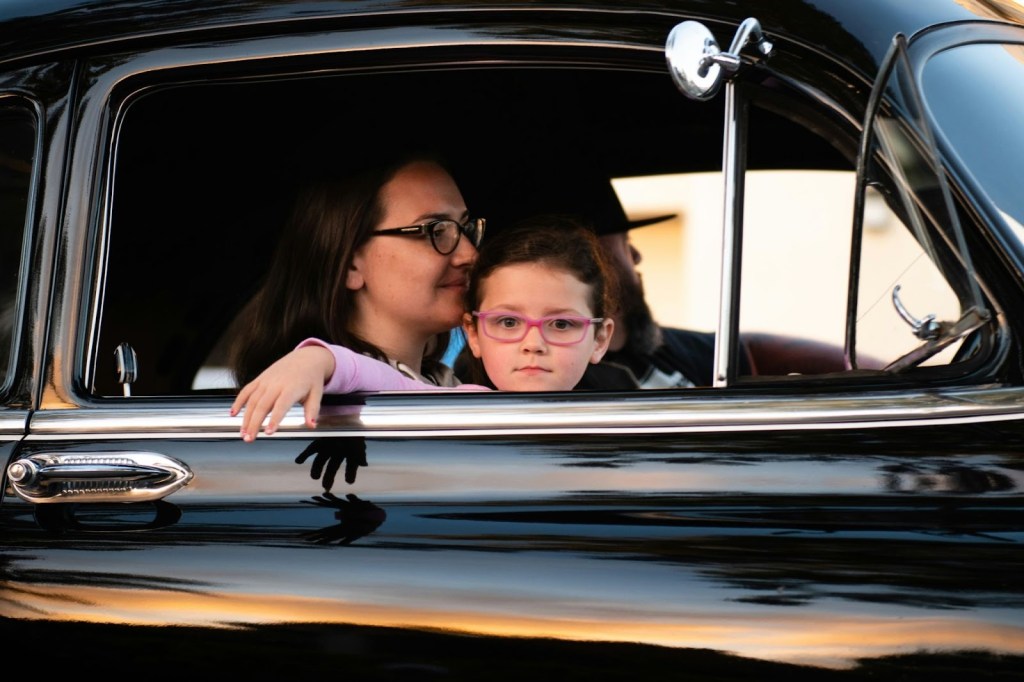
Photo by Tim Mosholder via Unsplash
Romanians in the diaspora do not only live between two economies, but also between two types of mobility. Every year, millions of trips are made between Romania and the countries of residence: vacations, visits, seasonal work, vacations. Most of the time, these trips are completely uncovered, meaning a medical emergency, a car breakdown on the highway or a canceled flight can turn a planned trip into an expense of thousands of euros.
It is precisely here that one can see how digitization can correct the protection gap between the West and Romania. Through products such as My Travel and My Car from Allianz-Țiriac, the safety reflex becomes as accessible as in the countries where Romanians have learned to practice it daily.
My Travel is a complete travel insurance, designed for anyone who travels, whether we are talking about family from Romania coming to visit those who have gone to the diaspora or traveling to other countries besides the country of residence and Romania for those who have left. It covers medical expenses, hospitalization, repatriation, trip cancellation or interruption, lost luggage and flight delays, all manageable online. The policy can be activated for a single trip or for a whole year, and assistance is always available.
And for those from the diaspora who own a car in Romania that they use including for roads in other countries, the optional My Car insurance offers additional protection for the car: damage, theft, roadside assistance and total cost transparency. It is a natural extension of the idea of continuous protection, the same predictability and digital simplicity applied to the automotive field.
These solutions show that the reflex to protect yourself does not have to stop at the border. Insurance is no longer a paper document, but a digital service that travels with you.
From “we're fine” to “we're covered”
It is not enough to take over the language from Italy or Germany; we must also take the reflex: when you risk losing more than you can quickly replace from income, insurance becomes personal infrastructure. In a local market that is growing but still has penetration of around 1.35% of GDP, every decision at the household level matters. In the coming years, the cost of climate risk will make the discussion even more concrete. Across Europe, weather payouts are increasing and the pressure on premiums is real. That's not a reason to delay, but a reason to get in the game early and be informed.
More and more Romanians from the diaspora began to see insurance not as a cost, but as a sign of real care for those at home. And the fact that they can contribute to the safety of the family through digital, transparent and accessible products, such as those offered by Allianz-Țiriac, makes “remote protection” no longer just a metaphor.
In a world where risks are increasing, prevention remains the most stable type of support.
Article supported by Allianz-Țiriac