Samuel Schumacher is an experienced editor of the Swiss website Blick.ch. He specializes in international politics.
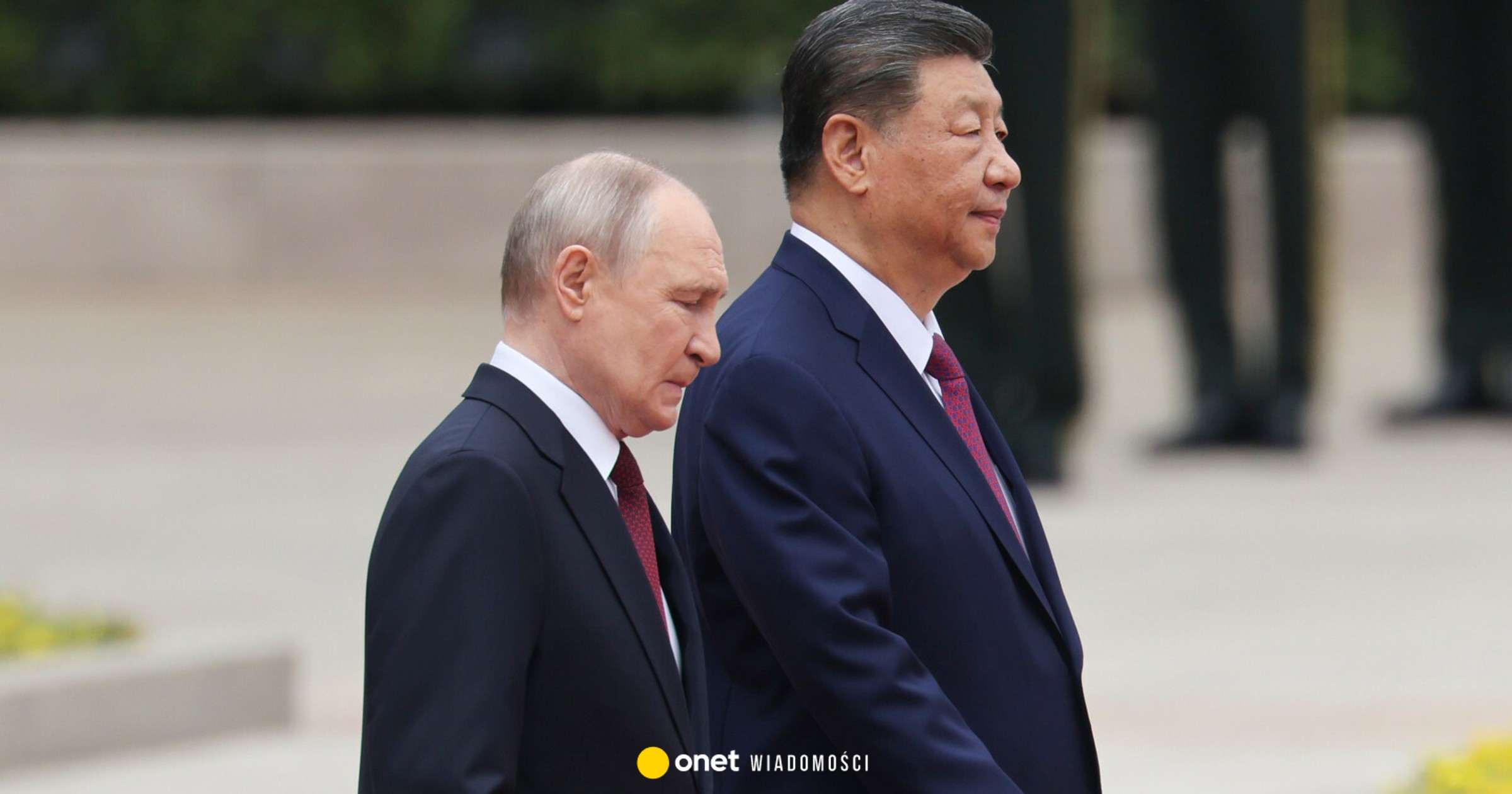
A few days after Donald Trump left Beijing, another supplicant knocked on the gates of the Middle Kingdom – Vladimir Putin. Russia now urgently needs specific agreements with the Chinese.
Without Xi Jinping's help, Putin cannot solve the huge problem he suddenly finds himself facing. In addition to the agreement on the Power of Siberia 2 pipeline and drone parts, the Kremlin wants something completely different.
The Russian economy is no longer running smoothly. In 2024, Russia boasted of an increase in Gross Domestic Product (GDP) of almost 5%. In 2026, the Russian economy has shrunk by almost 2% so far. The reason for this is reduced sales of Russian oil and gas.
The article continues below the video
If Putin intends to continue his war, according to Kiev, Russia is losing over 35,000 people every month. dead or wounded soldiers – he will need money. Soldiers only get involved when they can count on relatively high remuneration. The families of the deceased will only find peace if large compensations are paid.
Putin therefore hopes that the Chinese will compensate for the loss of customers in the energy sector in the West as soon as possible.
Putin's visit to China: no details
Putin would like this to happen thanks to the new “Power of Siberia 2” gas pipeline, a 2,200 km long pipeline that could transport 50 billion cubic meters annually. gas through Mongolia to China. The project remained in limbo for a long time – and there is still no information about Beijing changing its approach skeptical attitude towards this idea.
In the face of the uncertain situation in Iran (in recent years, the Chinese have purchased approximately 90 percent of Iranian oil) and the American coup in Venezuela, China may begin to worry about the reliability of its supplies.
Fortunately, a “Chinese gas station” is right next door – and with the situation becoming increasingly desperate, Russia is certainly happy to offer a good price. After all, Beijing made it clear to Moscow twice last year who had the upper hand in this unequal partnership.
In October, several Chinese companies suspended purchases of Russian oil due to new US sanctions. In January, China completely stopped supplying Russian gas due to too high prices.
However, Putin does not just want to deliver, he also wants to buy: spare parts for Russian aircraft, components for his drones (92 percent of foreign parts in Russian drones come from China), radar devices – all these useful things he will not get anywhere else.
Ultimately, for Putin, who suddenly finds himself in a difficult situation in his country due to massive Ukrainian drone attacks on Moscow, it is also about image. Putin wants to show that he has good relations with the Chinese superpower.
Of course, his country – an economy smaller than Italy, an army on the verge of exhaustion – is no longer a superpower. However, his motto is “fake it until you make it”.
The fact that Putin is visiting Xi in Beijing on Wednesday does not just arouse enthusiasm in Russia. Russians are very suspicious of growing Chinese influence, for example in the Russian Far East.
Chinese companies are opening production plants, and in supermarkets in Vladivostok, products are also described in Mandarin. Moreover, for almost a year, Chinese people have been able to enter Russia without visas.
For now, though, China is best served by leaving Putin alone — and even supporting him a little with energy purchases, satellite data, and apparently even training sites for his troops. At least 200 Russians were to be trained by the Chinese in 2025 to operate drones.
The longer the war in Ukraine lasts, the better for China.
Thanks to Putin, international attention is focused on Eastern Europe (and, thanks to Trump, now also in the Middle East). The world is thus turning its attention away from the key issue of Taiwan for China.
I’m Ashley Davis as an editor, I’m committed to upholding the highest standards of integrity and accuracy in every piece we publish. My work is driven by curiosity, a passion for truth, and a belief that journalism plays a crucial role in shaping public discourse. I strive to tell stories that not only inform but also inspire action and conversation.