A four-day work week and passive income? OpenAI reveals the strategy

On April 6, 2026, OpenAI, which is responsible for, among others, behind ChatGPT, published a policy document in which it outlines a vision of the coming era of superintelligence – artificial intelligence systems capable of outperforming the smartest humans, even when they rely on AI assistance. The company does not limit itself to technical forecasts. Instead, it proposes specific systemic changes that are intended to alleviate shocks in the labor market and the economy.
OpenAI is calling on governments to encourage employers to experiment with a four-day week without reducing wages. He also suggests linking additional benefits with productivity gains generated by AI tools. He goes further: he calls for the modernization of the tax system, i.e. moving away from taxing income from work and ZUS contributions to taxing corporate and capital profits and “automated work”.
A key element of Altman's vision is the creation of a public wealth fund — a joint venture of nations and AI companies that would invest in assets tied to the tech boom and pass the profits directly to citizens.
Read also in BUSINESS INSIDER
In addition, there is a strengthening of the social safety net, including expanded social security and automatic unemployment benefits, triggered when rates of AI-induced disruption exceed a certain threshold.
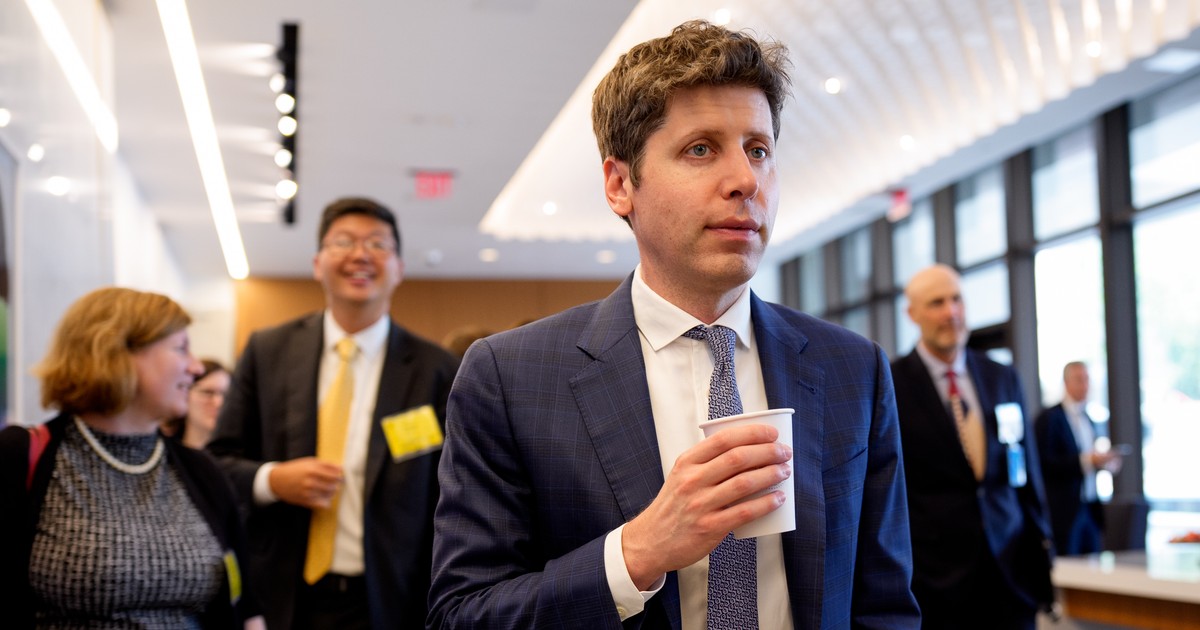
Sam Altman's OpenAI launched ChatGPT Gov to exclusively serve government agencies.
|
Andrew Harnik via Getty Images / Getty Images
“We are beginning the transition towards superintelligence,” the document reads. “No one knows exactly how this will unfold. We believe we should do it through a democratic process that gives people real power over the AI future they want.”
Sounds like utopia: less work, zero income tax on salaries, passive income for everyone. But this beautiful story is told by a company that just a few weeks earlier sealed a strategic contract with the Pentagon to develop AI systems for military applications – from autonomous weapons to advanced surveillance. The paradox is striking.
- Read also: Boycott ChatGPT. OpenAI's deal with the Pentagon has enraged users
Fighting the image crisis, or “we will give everyone money for free”
OpenAI does not publish such a document in isolation from reality. In April 2026, the company is at a pivotal point in its history. On April 4, OpenAI announced the acquisition of Technology Business Programming Network, a popular podcast and video channel focused on artificial intelligence, business and technology. The program, hosted by John Coogan and Jordi Hays, is very popular: it has over 330,000 views on the X platform. followers, and tops the podcast rankings in the US.
Fidji Simo, head of the applications department at OpenAI, explained the decision directly: instead of building your own format from scratch, it is better to support an existing, credible space for “a constructive conversation about the changes brought by AI”. Officially, TBPN is to maintain full editorial independence, but this move is seen as OpenAI's first clear step towards control over the public narrative around the technology.
- Read also: Artificial intelligence is the future of war? The Pentagon is putting pressure on Silicon Valley: either cooperation or blacklisting
But the background is even broader. OpenAI has just closed one of the largest rounds of financing in the history of the industry and is preparing for a potential stock exchange debut that could be valued at $1 trillion. At the same time, the company is facing image problems. It recently lost a lucrative contract with Disney – following accusations related to abuse of the Sora model, which generates realistic videos.
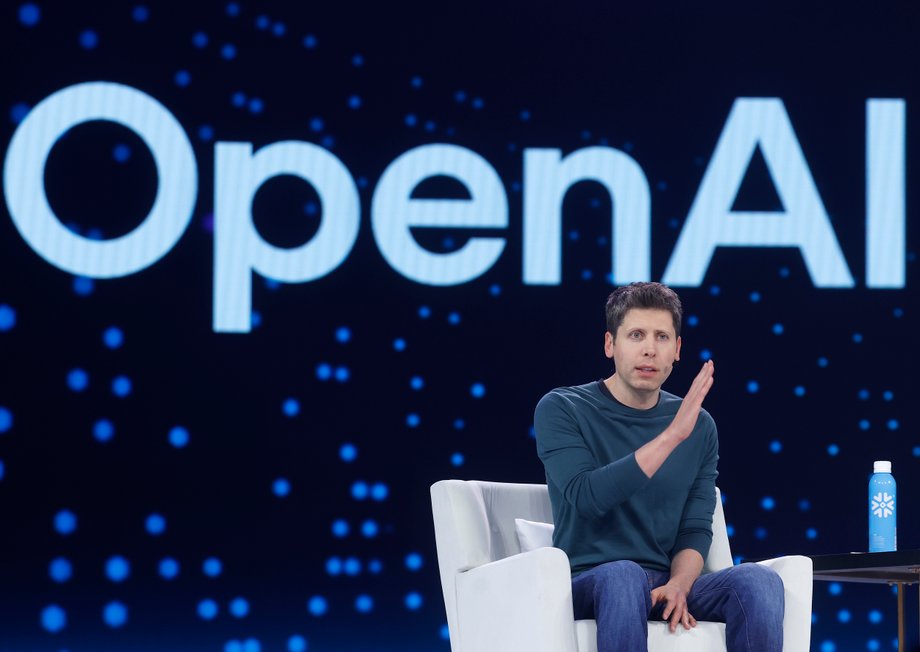
Sam Altman, CEO of OpenAI
|
Justin Sullivan/Getty Images
Back in 2023, Ilya Sutskever, then chief scientist, prepared extensive materials accusing Altman of systematically lying about the truth in contacts with the management and employees. After Altman's brief removal as CEO in November 2023 and his quick return, some key people left and AI security teams were significantly weakened or disbanded.
The most important context, however, is the latest military contract. OpenAI, through Amazon Web Services, signed an agreement worth approximately USD 200 million. with the Pentagon. In this contract, the company replaced Anthropic, which refused to use its models for autonomous weapons and broadly understood surveillance. OpenAI previously removed its internal ban on using the technology for military and war purposes.
In this way, the company has become a strategic partner of the US government in the development of AI systems that can be used both to recognize threats in real time and for autonomous actions on the battlefield. And at least $200 million. This is not much even compared to the lost contract with Disney, but the contract with the Pentagon practically puts OpenAI in an “untouchable” position – as a supplier of critical technology for the defense of the United States.

Passive income is a very catchy slogan for many people
|
Svetlana Zelenskaia / Shutterstock
In this situation, the beautiful story of a four-day working week, no income tax on wages and universal passive income plays a specific role. This is an attempt to rebuild its image and maintain public support at a time when OpenAI is entering its most serious alliance with the military and intelligence apparatus. Good PR is needed not only after the loss of the contract with Disney or internal conflicts, but above all to maintain the position of market leader and ensure further financing and cooperation with corporations.
Sam Altman's paradox – “love of humanity” and destructive weapons
Altman himself consistently builds the image of a visionary who cares about the good of all humanity. In public speeches and blogs, he envisions a future in which artificial intelligence solves the world's biggest problems – from climate change to scientific discoveries – and brings universal prosperity.
- Read also: Anthropic rejects Pentagon ultimatum. At stake are sanctions and a contract worth USD 200 million.
However, the reality of his actions is different. Altman has been meeting with the leaders of autocratic countries for years, including Mohammed bin Salman, whom he has called a friend since 2016. Together with Donald Trump, he promotes the Stargate project – worth $500 billion. a program to build massive AI data centers in the United Arab Emirates and Saudi Arabia. These investments in countries with questionable democracy go hand in hand with lobbying against AI regulation in Europe and the United States, as well as donating $1 million to Trump's inaugural fund.
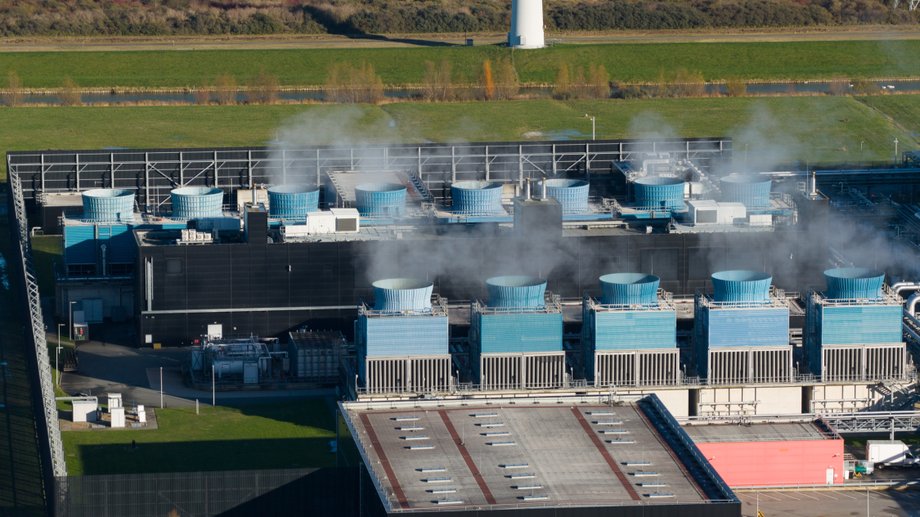
Data centers require special cooling systems. In the photo cooling systems in Eemshaven data centers
|
Make more Aerials / Shutterstock
At the same time, in the official OpenAI document, Altman emphasizes the “democratic process” that is intended to give ordinary people real power over the future of artificial intelligence. He declares that superintelligence should serve everyone, not just a small group.
This is the essence of the paradox. The head of the company that develops autonomous weapons and advanced surveillance systems for the Pentagon, cites the shortening of the working week to four days, the exemption from income tax on salaries and passive income from the public wealth fund as the greatest benefits for society. Altman himself once said that “he doesn't care about money, he cares about power.” The beautiful story he tells about abundance and a lazy future has a specific purpose – to cover the military and police potential of the technology that his company is currently putting into use.
A dystopian picture that emerges behind a beautiful story
However, behind the vision of abundance and a lazy future lies a much darker scenario. People would work less or not at all, receive money from a public wealth fund fueled by profits from AI, and everyday duties would be taken over by machines. This seems like a dream come true for a post-capitalist society. However, the same artificial intelligence system that generates wealth is becoming a tool with unprecedented effectiveness in detecting and eliminating threats – both on the battlefield and inside the country.
- Read also: A Chinese official revealed the government's secret strategy. All via ChatGPT
In practice, this means the ability to constantly monitor behavior, predict potential risks and respond immediately. On the military front, AI can independently identify targets and conduct operations without human intervention. In civilian life – support police surveillance, control border traffic or identify “dangerous” patterns of behavior among citizens. Preventive neutralization of problems resembles a mechanism known from science fiction literature.
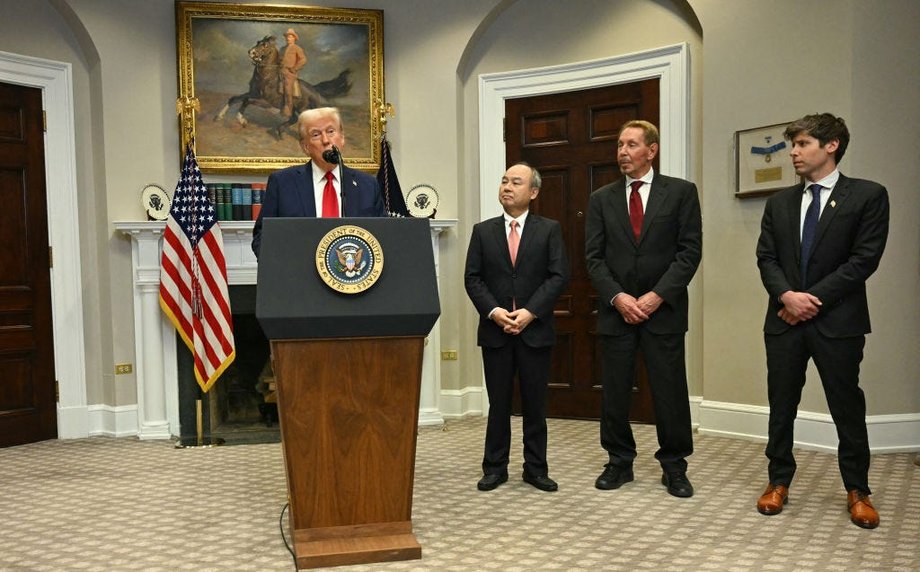
Sam Altman (first from the right) has long appeared in Donald Trump's entourage
|
Jabin Botsford/The Washington Post via Getty Images/Getty Images
Suffice it to recall Philip K. Dick's “Minority Report”, in which the system prevents crimes before they happen. Or the world of George Orwell's “1984”, where total surveillance is justified by the slogans of security and prosperity. Even closer to Ray Bradbury's “Fahrenheit 451” – a society flooded with entertainment and goods, while the state maintains absolute control over information and behavior. In this reality, universal passive income is not a reward. Rather, it becomes the price we pay for giving up control over the future to a corporation that is also building the most deadly systems in history.
I'm afraid of “Terminator”
OpenAI is no longer an ordinary technology company. Today it is a strategic partner of the Pentagon, a supplier of technology that may determine the outcomes of future conflicts. At the same time, it remains a global player that not only builds AI models, but also actively shapes the narrative around them. The document of April 6, 2026 is not a random collection of ideas. It is a carefully crafted story intended to convince society that the development of superintelligence will bring universal prosperity, not a threat.
- Read also: US Military Reveals How It Uses AI While Bombing Iran. “Processes that took days now take seconds”
Beautiful visions of a four-day working week, abolition of income tax on salaries and passive income for everyone have one very specific goal. They are expected to maintain public trust and continued funding at a time when OpenAI is entering its most serious alliance – between the largest AI company and the US military and intelligence apparatus. The paradox is obvious: the corporation responsible for the most effective systems of killing and surveillance in the history of mankind sells us an image of a paradise without work and without PIT.
And the worst thing about all this is that in the background there is really an action straight from “Terminator”, and we have already seen the first activities of the “real SkyNet” in Iran.