LIVE The latest information on the negotiations in Islamabad: What are Tehran's red lines / Direct talks between the delegates have begun

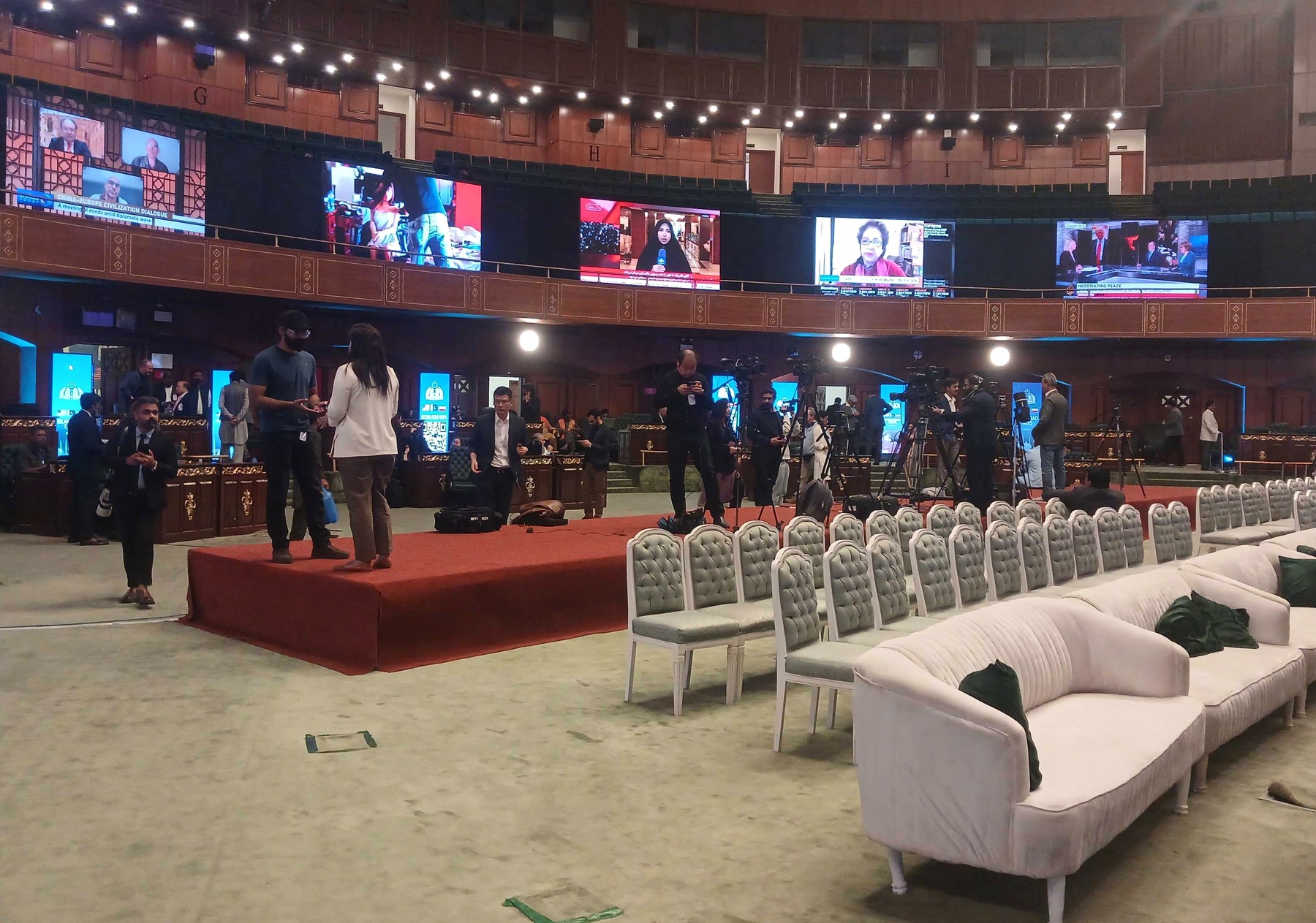
The United States and Iran are scheduled to hold talks in the Pakistani capital Islamabad on Saturday in an attempt to end the six-week standoff. The two delegations have already discussed with Pakistani mediators, but Tehran does not want to meet directly with the American delegation without prior commitments regarding Lebanon and the lifting of the sanctions applied to it, reports Reuters.
In short, the most important information so far:
- The delegation led by JD Vance, Steve Witkoff and Jared Kushner landed in Pakistan on Saturday morning. Tehran's mission, led by Foreign Minister Abbas Araghchi and Parliament Speaker Bagher Ghalibaf, arrived on Friday.
- Ghalibaf said two measures – a ceasefire in Lebanon and the release of seized Iranian assets – “must be met before the start of negotiations”.
- Trump said the Iranians “have no asset” other than the Strait of Hormuz and told them they were “the only reason they're alive is to negotiate.”
- The Pakistani hosts have already had preliminary talks with the preparation teams of both sides: Tehran has a delegation of about 70 people, the Americans came with one of about 100.
- Lebanon and Israel agreed to meet in Washington on Tuesday to discuss a truce and set a date for the start of negotiations.
Direct negotiations have begun
Face-to-face talks between the United States and Iran have begun, Iranian sources told CNN. For several hours, negotiations took place through the mediation of Pakistan.
It is the first time that representatives of the two countries are talking directly, after last spring's negotiations on obtaining a nuclear agreement. However, most of those talks were mediated by Omani mediators.
Tehran's delegation does not want to talk with the Americans for now
The launch of direct talks between the American and Iranian delegations in the Pakistani capital Islamabad is blocked, at least for now, due to preconditions set by Tehran, diplomatic sources who requested anonymity told the EFE agency on Saturday.
“There have not yet been face-to-face talks between the American and Iranian delegations. The two sides have had meetings with mediators, but there is currently a deadlock preventing progress towards direct talks,” a diplomatic source explained.
According to this source, “Lebanon and the issue of the release of funds (Iranians blocked abroad n.ed.) are the main obstacle now. The Iranians insist that their preconditions be met before direct talks take place.”
Iran's proposals and red lines have been conveyed to Pakistan's prime minister, a reporter for Iran's state television reported from Islamabad, according to Reuters.
Among Iran's red lines are (control of) the Straits of Hormuz, payment of war reparations, release of frozen Iranian assets and ceasefire in the entire region, the Iranian correspondent said.
The Pakistani Prime Minister met both delegations
Pakistani Prime Minister Shehbaz Sharif announced that he met with American Vice President JD Vance, reports AFP.
“As the talks in Islamabad began, Prime Minister Shehbaz Sharif held a meeting with JD Vance,” the Pakistani government said in a statement.
US special envoy Steve Witkoff and Jared Kushner, President Donald Trump's son-in-law, were also present, he added.
According to Iranian state television, the Iranian delegation present in Islamabad also had a meeting with Sharif earlier.
The United States gave in to an Iranian request
A senior Iranian source revealed to Reuters on Saturday that the United States had agreed to unfreeze Iranian assets “seized” in Qatar and other foreign banks, hailing the move as a sign of “seriousness” in reaching a deal with Washington at talks in Islamabad.
The source, who declined to be identified due to the sensitivity of the subject, told the international news agency that the release of the assets is “directly linked to ensuring safe passage through the Strait of Hormuz”, which is expected to be a key issue in the negotiations.
The seven issues on the negotiating table
There are seven main topics the two sides are expected to discuss, Reuters notes, noting that Iran insists formal negotiations can begin only after the US makes commitments on a ceasefire in Lebanon and the lifting of sanctions against Iran.
Details about the 7 main issues, here.
Pakistanis are optimistic
Pakistan praised the United States for its “commitment to achieving lasting regional and global peace” after the US delegation landed in Islamabad ahead of talks with Iran.
Pakistan's Foreign Minister Mohammad Ishaq Dar and Army Chief Asim Munir shook hands with the US officials as they disembarked from the plane in Islamabad on Saturday morning local time.
Ishaq Dar expressed hope that the US and Iran will engage constructively and reiterated Pakistan's willingness to help facilitate “a durable resolution and a long-term solution to the conflict,” according to a statement from Pakistan's foreign ministry, quoted by CNN.
Tehran would receive weapons from the Chinese
U.S. intelligence agencies believe China is preparing to deliver new air defense systems to Iran in the next few weeks, three people familiar with recent intelligence assessments told CNN.
The TV station said there are indications that Beijing is trying to route the shipments through third countries to hide their origin, Reuters notes.
Beijing is preparing to transfer shoulder-launched anti-aircraft missile systems, known as MANPADs.
Reuters: Mojtaba Khamenei is seriously injured, but participates in decisions
Iran's new Supreme Leader Mojtaba Khamenei is still recovering from serious face and leg injuries sustained in the airstrike that killed his father early in the war, three people close to his inner circle told Reuters.
Khamenei was disfigured in the attack on the Supreme Leader's compound in central Tehran, and also suffered serious injuries to one or both legs, all three sources told Reuters.
The 56-year-old Iranian leader is still recovering from his injuries and remains lucid, according to the people who spoke to Reuters on condition of anonymity.
JD Vance also reached Islamabad
The US delegation, led by Vice President JD Vance and including President Donald Trump's special envoy Steve Witkoff and his son-in-law Jared Kushner, landed in Islamabad on Saturday morning after a refueling stopover in Paris.
JD Vance has landed in Pakistan. This time, Asim Munir is wearing a suit while welcoming him; previously, he wore a military uniform when welcoming the Iranian delegation. pic.twitter.com/hrCDDC6gdB
— Clash Report (@clashreport) April 11, 2026
The Iranian delegation, led by Parliament Speaker Mohammad Baqer Qalibaf and Foreign Minister Abbas Araqchi, arrived on Friday.
Negotiations will not begin without two conditions, the Iranians say
Qalibaf said on Friday that Washington had previously agreed to unfreeze Iranian assets and accept a truce in Lebanon, where Israeli attacks on Iran-backed Hezbollah militants have killed nearly 2,000 people since fighting began in March.
He said negotiations would not begin until those commitments were met.
Israel and the US have said the campaign in Lebanon is not part of the Iran-US truce, while Tehran insists it is.
Qalibaf said separately that Iran was ready to reach a deal if Washington offered what he described as a genuine agreement and granted Iran its rights, Iranian state media reported.
Trump: They're only alive to negotiate
The White House did not immediately comment on the Iranian claims, but Trump wrote on social media that the only reason the Iranians are alive is to negotiate a deal.
“The Iranians don't seem to realize that they have no asset, other than short-term blackmail of the international community over the use of international waterways. The only reason they are alive today is to negotiate!” he stated.
Vance said on the way to Pakistan that he expected a positive outcome, but added: “If they try to play with us, they're going to find that the negotiating team is not that receptive.”
The US and Iran sent serious delegations to Islamabad
Preliminary talks were held separately between Pakistani officials and training teams of both sides, sources in Islamabad said.
Iran's semi-official Tasnim news agency said they included 70 members from Tehran, including technical specialists in the economic, security and political fields, as well as media and support staff.
About 100 members of a US training team were in the city, a Pakistani government source said.
Pakistanis are optimistic
“We are very optimistic,” said another Pakistani source close to the talks.
Asked if the negotiations would end on Saturday, the source said: “It's too early to say. They have instructions to make a deal or leave. So they're in no rush. There's no time limit on these negotiations.”
The talks come after Trump on Tuesday announced a two-week truce in the war, halting US and Israeli airstrikes on Iran.
But it has not ended Iran's blockade of the Strait of Hormuz, which has caused the largest disruption in global energy supplies in history, nor has it calmed the parallel war between Israel and Iran-backed Hezbollah in Lebanon.