Putin is not fighting against borders, but against precedent. And Ukraine put a stick into imperial spokes. And that's what she's being punished for [OPINIA]

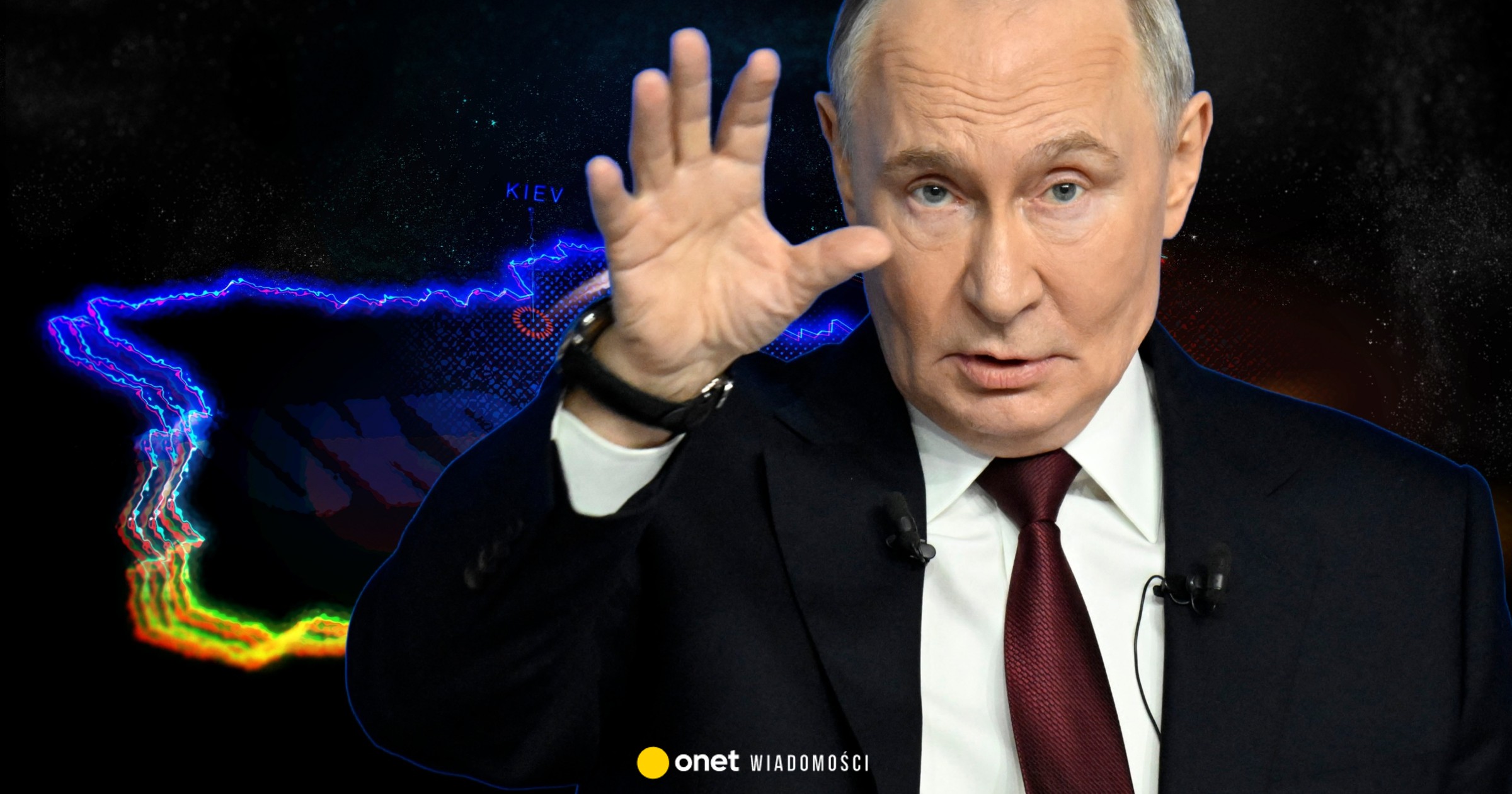
Three days before he launched a full-scale invasion of Ukraine in February 2022, Vladimir Putin stated that modern Ukraine was “entirely and fully created by Lenin's Bolshevik, communist Russia.” As he claimed, Ukraine occupies “historically Russian lands” that allegedly belong to Moscow.
In recent weeks, Putin has been repeating this belligerent nonsense again, both at his own disciplined public and at gullible or unaware audiences in the West.
These claims became the ideological foundation of a war that has already claimed hundreds of thousands of lives.
However, they raise a simple question: who really set Ukraine's borders and why does Putin not want to recognize them?
The answer reveals no real harm, but imperial delusions and the eternal Russian mania for expansion – phenomena that threaten the post-war international order and peace and security not only in Europe, but also in the world.
It is worth recalling some basic facts.
Ukraine's current, legally recognized borders are neither a nationalist invention nor a creation imposed by the West. They emerged with the collapse of the Soviet Union in 1991. Under the rules of international law, new states inherit existing administrative borders. Ukraine therefore took over the borders of the Ukrainian Soviet Socialist Republic as they existed in 1991 – including Crimea, which was transferred from the Russian SSR to the Ukrainian SSR by decision of the Soviet authorities in 1954.
Russia these borders recognized it many times and unambiguously. In 1994, as part of the Budapest Memorandum, Russia – together with the United States and Great Britain – pledged to respect Ukraine's territorial integrity in exchange for Kiev handing over the third largest nuclear arsenal in the world. In 2003, Putin himself signed a treaty recognizing the border, including the status of the Kerch Strait and the Sea of Azov. No one forced Russia to enter into these agreements.
International law is clear on this point: Territorial conquests are prohibited. This principle, enshrined in the United Nations Charter, was born in the ruins of World War II. Russia – as a permanent member of the UN Security Council – is bound by it in a special way. War crimes, ethnic cleansing and genocide are also prohibited.
Ukraine's perspective
From Ukraine's point of view, its borders are legal, confirmed by international treaties and voluntarily recognized by Russia.
Democracy also confirmed them. In the referendum of December 1, 1991, as many as 91 percent Ukrainian citizens voted for independence within the existing borders.
This also applied to predominantly Russian-speaking regions – those that became so as a result of mass resettlements of Russians, forced Russification and repression. In Crimea, 54 percent voted for it. voters, in the Donetsk and Luhansk regions, respectively, 84 percent. and 83 percent
Putin ignores these facts because they are inconvenient for him. He prefers to refer to the hazy past of Kievan Rus' (which existed long before the emergence of Moscovia – the progenitor of today's Russia) and tsarist conquests.
Ukrainian national identity existed long before Lenin and the USSR. Already in 1648, the French cartographer Guillaume Le Vasseur de Beauplan published detailed maps labeled “Ukraine” or “Land of the Cossacks”, which were distributed throughout Europe for over a century.
In 1648, Cossack leader Bohdan Khmelnytsky started an uprising against Polish rule, which turned into a war of liberation and led to the creation of a state called Ukraine, seen as the heir to Kievan Rus'.
The alliance concluded in 1654 with the Tsar of Russia in Pereyaslavl quickly turned out to be fraught with consequences – a few years later Khmelnytsky died, regretting this decision, and in 1667 Moscow and Poland partitioned Ukraine along the Dnieper.
An attempt to break away from Russian domination made in 1709 by Ivan Mazepa, allied with Sweden against Peter the Great, ended in defeat at Poltava, after which Moscow declared itself the Russian Empire, and Ukrainians began to be referred to as “Little Russians”.
Summarizing these events, Voltaire wrote in 1731: “Ukraine has always strived for freedom.”
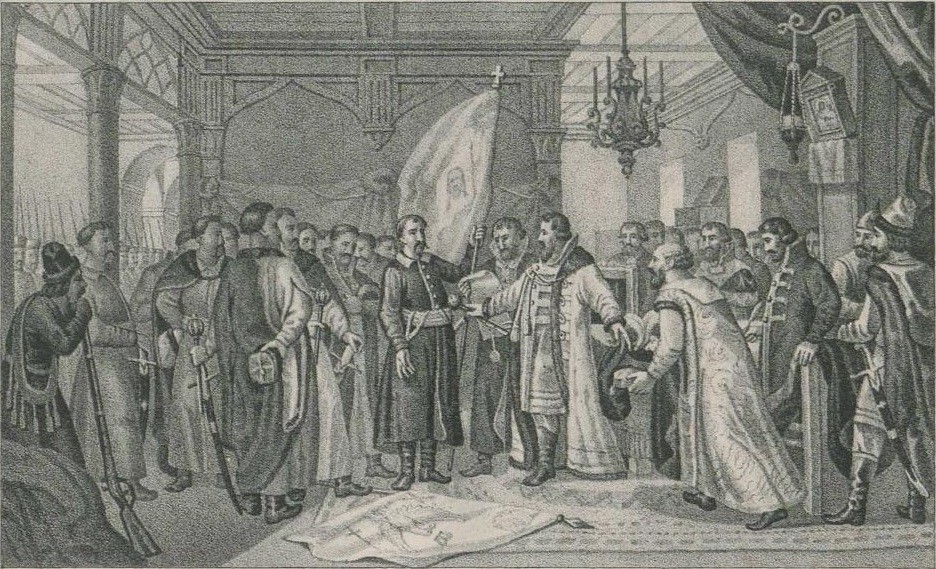
Bohdan Khmelnytsky takes an oath of allegiance to Russia. Russian graphic from 1910Wikipedia
After the 1917 revolution, Ukraine briefly regained independence and was recognized in the 1918 Treaty of Brest-Litovsk – by Germany, Austria-Hungary, Turkey, Bulgaria, and even Bolshevik Russia.
The strength of the Ukrainian national movement forced Lenin to formally recognize the existence of Soviet Ukraine as a union republic of the USSR – which for Ukrainians and other non-Russian peoples effectively meant the reconstruction of the Russian Empire under a new name and new ideology.
In 1945, the Ukrainian SSR became a founding member of the UN, retaining this status even after independence.
It is difficult to consider all this as features of an “invented nation”.
Facts that the Kremlin does not want to acknowledge
Putin's revisionist approach to borders is part of the centuries-old Russian pattern of denying Ukrainian identity. In July 2021, Putin published an approximately 5,000-word essay in which he claimed that Russians and Ukrainians are “one nation” and that Ukrainian identity is an artificial creation.
This is not reliable historical analysis – it is imperial propaganda based on lies.
The pattern is well known: the empire claims that the conquered are not a separate nation, but merely a “stray” part of the dominant nation. Their language is a “dialect”, their culture is provincial, and their independence is the result of foreign intrigues. This is how the British spoke about the Irish, the French about the Algerians, the Franco regime about the Catalans. Russia has been saying this about Ukrainians for centuries.
In the 19th century, Russia banned the use of the Ukrainian language in printing and education. In the 1930s, Stalin caused a genocidal famine that killed millions of Ukrainians and destroyed the country's cultural elite.
In 2014, Russia annexed Crimea and started a war in Donbas. Putin claims he was forced to do so by an alleged Western-inspired coup in Kiev.
In fact, Ukrainians themselves rebelled against a corrupt president who blocked the country's European aspirations and made it increasingly dependent on Moscow. What happened next was a clear violation of sovereign Ukraine's right to self-determination and Russian interference in the affairs of its independent neighbor.
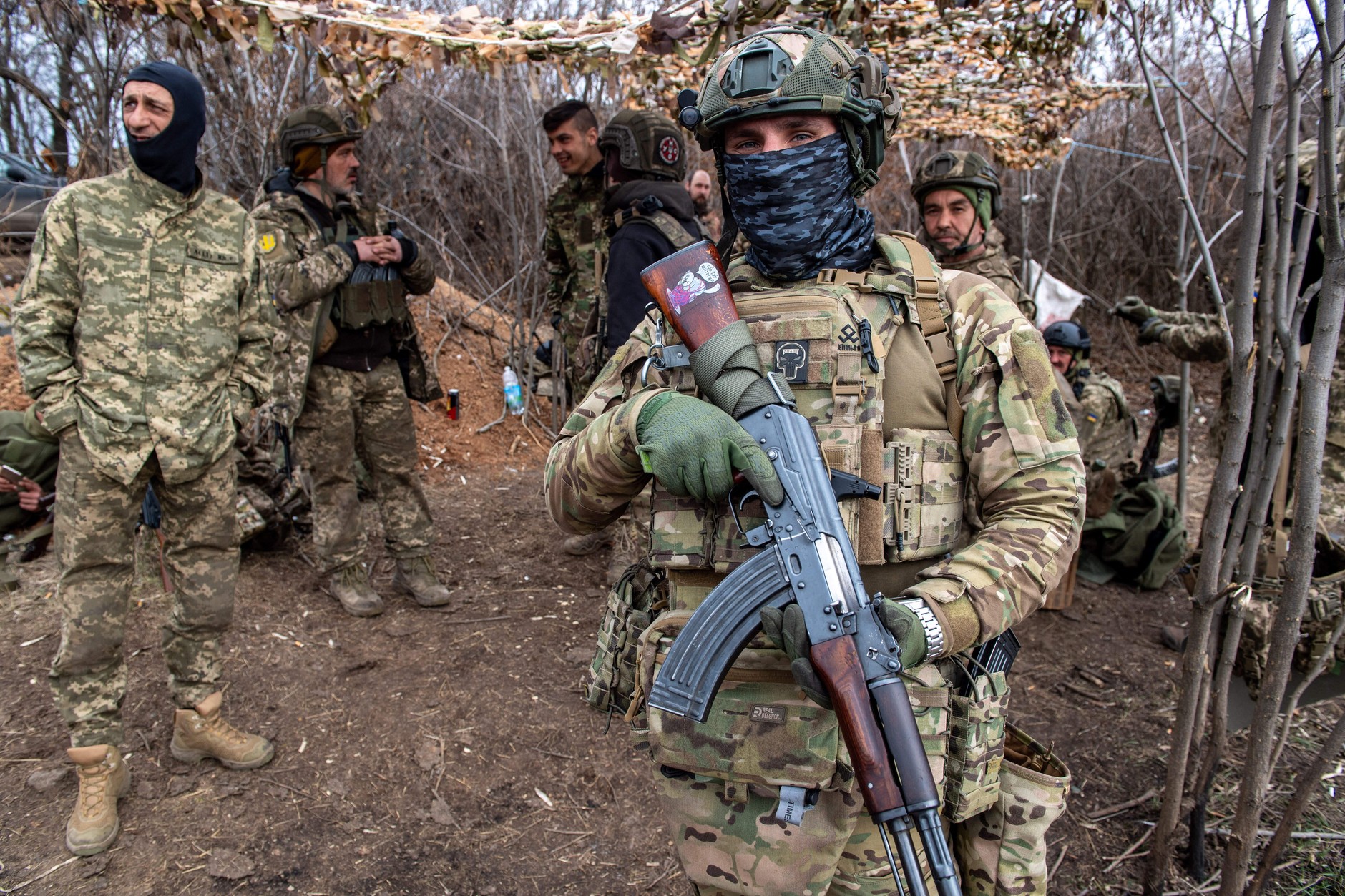
Soldiers from the special battalion of Ukraine's 59th air assault brigade take part in training exercises near Donbas, Ukraine, March 20, 2025.AA/ABACA / PAP
In 2022, Russia launched a full-scale invasion, ostensibly to defend the Russian-speaking inhabitants of Donbas. Meanwhile, Russian troops were not welcomed there as liberators.
Significantly, it is Russian-speaking Ukrainians – and even ethnic Russians loyal to Ukraine's democratic, European values - who today constitute the core of the resistance against Russian aggression, both at the front and in cities such as Kharkov, Odessa and Dnieper.
So we are dealing with textbook imperial revisionism. Each empire claimed that its conquests were “unification” and that the subject nations were “liberated” from supposedly artificial divisions.
Putin's arguments are nothing unique – they are classic imperial rhetoric, distinguished only by its brazenness in the 21st century.
The essence of the matter is clear: Russia has never come to terms with Ukrainian independence, because recognizing it would mean the final end of the empire. There are additional motives – the desire to take over Ukrainian lands, agricultural and mineral resources, as well as potential energy deposits in the east of the country and in the Black Sea.
Democracy is a threat
In fact, Putin's obsession with Ukraine's borders is not about borders or even about natural resources. It's about legitimacy of power.
Putin is not afraid of NATO expansion – he is afraid of Ukraine as a successful, democratic European state.
An independent and prosperous Ukraine challenges the foundations of his regime: the narrative that democracy is a Western imposition, and the natural order in the Russian sphere of influence is despotism supported by the Orthodox Church.
Orange Revolution in 2004 [czyli masowe, pokojowe protesty przeciwko sfałszowanym wyborom prezydenckim w Ukrainie] and Euromaidan in 2014 [czyli protesty, które zakończyły się obaleniem prorosyjskiego prezydenta i wyborem drogi integracji z Europą] showed that Ukrainians want democracy and integration with Europe, not Russian domination.
These were not any “CIA conspiracies”, but genuine social movements. They threatened Putin's model of archaic despotism, showing that the alternative to Putin's neofascism is not chaos and moral decline, but democracy.
The choice facing the world
Ukraine's borders were defined by international law and confirmed by treaties signed by Russia.
The Russia-Ukraine war is not about security, NATO expansion or the protection of Russian-speaking minorities. This is a war for imperialism — about the refusal to come to terms with the fact that the era of empires is over, that Ukraine is sovereign, and Ukrainians decide about their future themselves.
The map that Putin cannot accept is the map of the 21st century. His war is to take it back to the 19th century.
The question is: Will the world let him? The answer will decide not only the future of Ukraine, but also the fate of the entire international order.