Russia has been offline for days. Tensions rise after Moscow's decision to block the internet

“It's an unpopular and pointless campaign, like Gorbachev's crusade against alcohol in the 1980s,” says an elderly commentator on a Russian television channel.
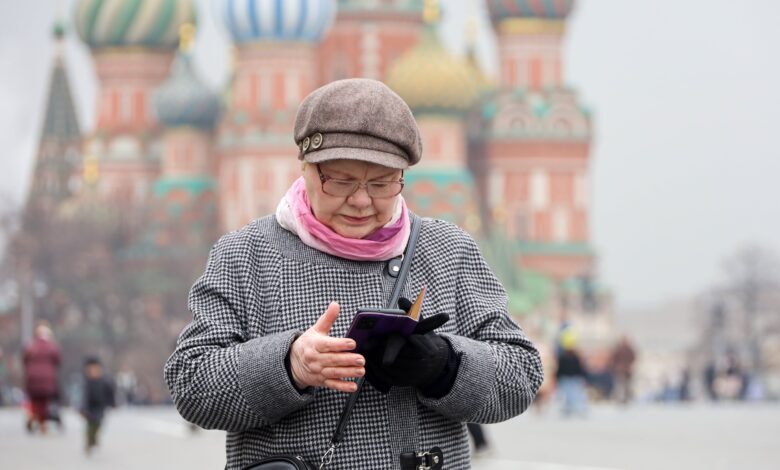
For days, nothing works. Smartphones and computers freeze and browsing any website is impossible. If you're lucky, you can see at most the sites on the “white list”, that is, the Russian sites approved by the authorities, but not all. Even the Telegram messenger, the main source of information for the population, was blocked, and Pavel Durov's platform would have responded with countermeasures that have proven to be effective so far, the Italian daily Avvenire reports on Monday, quoted by Rador Radio Romania.
But according to some experts, the truth is different: Russia's Federal Telecommunications Agency's grip on the Internet was actually weakened because, at the same time, the pro-government MAX system, an alternative national messaging system, which – according to experts – also requires geolocation, also fell.
The only solution to avoid the blockade is, following China's model, to use a VPN (virtual private networks) program. Users downloaded all kinds of such programs en masse, and authorities began to disable them. The problem is that by doing so, Russian banks – who use them to ensure their own security – have seen their systems blocked.
“The dialogue between the relevant ministry and the IT companies,” said Natalia Kasperskaia, president of the programmers' association, “has deteriorated.” Another problem is that without the use of VPNs, computer programs cannot be updated because the bases are abroad.
“These restrictive measures,” a Russian official explained to the Italian newspaper, “are being adopted to combat cybercrime (ie online fraud) and limit the enemy's sabotage capabilities.”
It may be true – notes Avvenire – but the general feeling is that those in power want to control the Internet and the possibility of freely obtaining information or visiting foreign websites.
Back to the past!
From Volzhsky to Kaluga, protest movements have been growing in all regions of Russia lately, generally organized by young people who do not realize the risks they face. Not only that Russia's “Special Military Operation” in Ukraine recently passed its 1,500th day and is not over yet, and federal parliamentary elections are scheduled for September.
“Kids in schools,” says one parent, “have all kinds of VPNs and are constantly changing them. This is the only way they can access the world's most popular social networks, officially banned in Russia, and above all, play games.”
But the atmosphere becomes tense. The latest news, as RBK reports, is that authorities are forcing IT companies to distribute toxic attachments that spy on users' smartphones and report VPN usage as soon as they visit the most popular and essential sites.
The latest crackdown described above comes after mobile data traffic was completely shut down for about two weeks in March in central Moscow and parts of St. Petersburg, as has been happening for months across Russia.
The outages also brought problems with electronic payments, with many Russians being forced to return to cash, a situation that created difficulties for banks.
Even everyday life has become more complicated without the usual apps. For example, booking a taxi, scheduling a medical consultation or finding an address has become a daunting task.
Back to the past! Welcome to 1980s life without electronic gadgets! – remarks the newspaper Avvenire about the situation in Russia.
“We'll give you back what you didn't use,” the phone companies immediately began repeating in their TV commercials, referring to unused data traffic. As if to say, “It's not our fault!”
Officially, data connections have been shut down for security reasons, with claims that Ukrainian drones are exploiting mobile phone data traffic to better navigate and identify their Russian targets.