As we read at academia.pan.pl, according to the report “Global Annual to Decadal Climate Update” there is as many as 80 %. The chance that at least one of the next five years will be warmer than the record 2024. In the perspective of five years, the risk that the average temperature for 2025–2029 will exceed 1.5 degrees, increased to 70 percent. For comparison, a year earlier WMO assessed this probability at 47 percent, and two years ago at 32 percent – informs the portal.
Adam Scaife from the British met office recalled in the text during a press briefing emphasized that these statistics are shocking and indicate that Years with temperatures exceeding the 1.5 degrees threshold can become the norm. Experts, on which academia.pan.pl cites, point out that even the temporary exceeding of this level, as in 2024, does not yet mean a permanent failure of the Paris Agreement, which refers to medium temperatures from twenty -year periods.
Read also: “Deep transformation of the entire economy”. A new climate goal of the EU and Poland [WYWIAD]
The threshold of 2 degrees Celsius is getting closer
For the first time, scientists estimated the risk of the year in which the average global temperature will exceed 2 degrees Celsius relative to the level from before the industrial era. Although the probability of such a scenario is currently about 1 percent, the very presence of this forecast is new. Adam Scaife noted that a few years ago such a scenario seemed practically impossible – emphasizes academia.pan.pl.
Crossing the border of 2 degrees Celsius would have serious both symbolic and physical effects. The official goals of the Paris Agreement of 2015 assume that the long -term temperature increase below this level assumes with the ambition to keep it within 1.5 degrees. Leon Hermanson from Met Office noticed that if the current trends persist, a chance for a year with a temperature above 2 degrees will increase rapidly.
Arctic and Amazonia under pressure
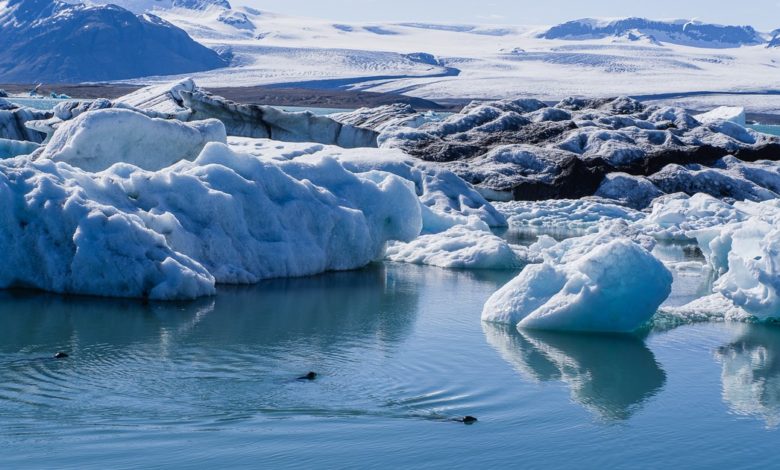
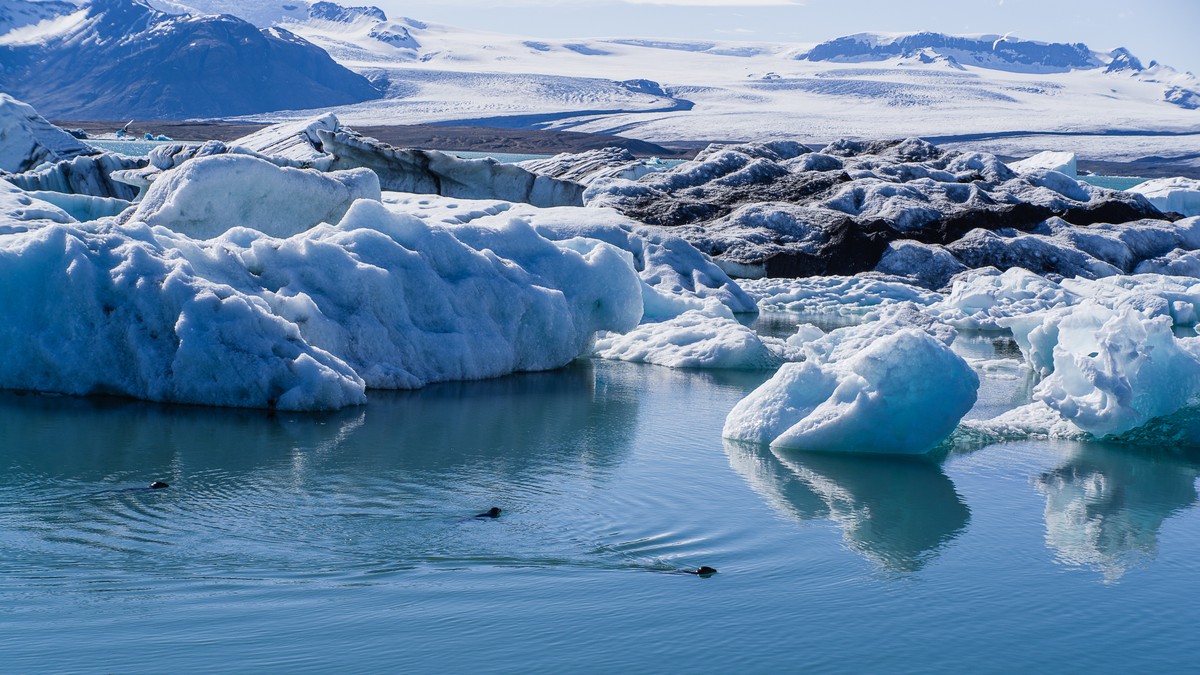
The situation in the Arctic raises particular anxiety. Forecasts indicate that winter temperatures in this region (from November to March) will be on average 2.4 degrees higher than in 1991–2020, which means more than three times greater growth than a global average. Ice loss in the seas of Bering, Barents and Ochocki will proceed, as in other areas usually covered with ice in September.
As we read at academia.pan.pl, climate change will also affect other regions of the world. In the period from May to September in 2025–2029, more moist conditions in Northern Europe, Alaska, Sahel and Northern Siberia are expected. At the same time, Amazonia can become more dry than usual, which has serious consequences for the largest rainforest in the world.
Scientists emphasize that even a small increase in average temperature leads to the severity of extreme weather phenomena, such as heat waves, heavy rainfall, long -lasting drought, faster melting of glaciers, increase in sea level and accelerated ocean heating.
The “Global Annual to Decadal Climate Update” report was developed by 15 climate modeling centers from around the world, including Met Office from Great Britain, BSC from Spain, DWD from Germany and CCCMA from Canada.
Careful forecasts and political challenges
The latest WMO report, as noted by academia.pan.pl, prof. Szymon Malinowski, presents cautious forecasts for the coming years, not the most alarming scenarios. In his opinion, in the light of the latest observation data, the report can be considered conservative. The professor emphasizes that warnings against the possibility of crossing the threshold of 2 degrees Celsius had already appeared earlier, including in reports of the UN environmental program (UNEP), such as Emissions Gap Report.
According to Malinowski, the problem is that socio-political reality often differs from scientific facts. Politicians and decision -makers willingly refer to the assumptions of the Paris Agreement, treating them as a causative tool, while the laws of physics, not political declarations, decide the direction of climate change.
The consequences of crossing the threshold of 2 degrees Celsius are serious and concern the present, not a distant future. The professor points out that the lack of reduction of emissions is a fact that the world of politics and economy often ignores. In addition, the importance of organized disinformation is growing, and instead of coherent adaptive and mitigating strategies, narratives based on fear and false visions of the future are increasingly appearing.
Malinowski emphasizes that this does not yet mean complete failure, but indicates the need to urgently change the approach to a climate disaster threat. In his opinion, the solution is not to give up civilization, but a real and sober treatment of the problem, the introduction of elements of crisis management and providing the public with reliable information on both the scale of danger and the possibilities of counteracting