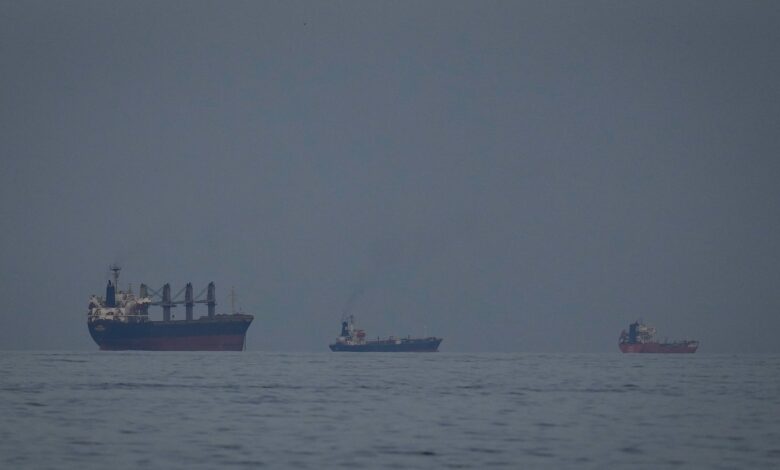
The US investment giant talks about the biggest oil crisis of all time and examines 3 critical indicators
The global oil market is entering a “danger zone”, with the question of whether the world is heading for a real shortage now being put in urgent terms as war rages in the Middle East, Greek media reports.
An analysis by Goldman Sachs attempts to provide answers by examining three critical indicators: supply levels, price behavior and signs from the real economy.
The collapse of imports – the first “bell”
In Asia, the situation is already worrying. Oil imports fell by about 9 million barrels a day through the end of March, reflecting the supply shock, particularly after the unrest in the Persian Gulf.
The delay in shipments – due to the length of the sea routes – means that the real shortage has started to be felt late, intensifying the pressure on the markets.
Explosive prices – up to +150%
The second clue comes from prices. Refined products such as diesel have seen increases of up to 150%, not only because of shortages but also because of competition between richer countries to secure supplies.
The battle for fuels – from diesel to jet fuel – is intensifying distortions, leading to a vicious cycle of rising prices and limited availability.
The real economy is “crying”
The third and most worrying signal comes from the day-to-day life of economies. Several states have declared fuel emergencies, South Korea is restricting the use of public vehicles, and in Australia, gas stations are running out of gas. These are signs that this crisis is no longer a theoretical or stock market crisis – it has expanded into the real economy.
In Europe, the energy crisis triggered by the war in the Middle East has already triggered emergency scenarios, with the Commission and Member States preparing for even the most extreme measures.
On the table – at least as a last resort – is the imposition of fuel rationing, should a “Union Alert” be declared due to insufficient stocks. In such a scenario, critical services such as hospitals, food delivery and public transport would be prioritized, while consumption for individuals and companies would be drastically reduced. At the same time, governments are reviving austerity plans, which include travel restrictions, consumption caps and – in an extreme phase – mandatory energy cuts for industries to ensure household sufficiency.
At the EU level, further release of strategic oil reserves is also being considered, as well as market interventions such as taxing excessive profits of energy companies to support consumers. The key message from Brussels is clear: Europe is not yet at its worst, but it is preparing as if it is already there – with all the tools at its disposal for what could prove to be a long-lasting crisis.
The grimmest assessment: “The worst oil crisis in history”
Goldman Sachs is now raising the tone, warning that the world is facing “the worst oil crisis in history” as a result of the almost complete cessation of hydrocarbon exports from the Gulf states.
This rating represents a clear escalation compared to previous reviews. Just a few weeks ago, the International Energy Agency described the situation as “the largest power outage in history”. Now, however, the picture is changing from a disruption to a real crisis.
Shortage “bomb” – and late
Goldman Sachs is warning that a global oil shortage is imminent as stocks fall and flows from the Persian Gulf have been cut to record levels.
At the same time, analysts at JPMorgan Chase describe the situation as a “ticking time bomb”, predicting that natural oil shortages will begin to play out sequentially in April, starting in Asia and spreading to Europe and the US as tanker arrivals slow.
Marginal reserves – large imbalances
The data shows how tight the margins are. Major economies hold roughly 40 days of crude oil reserves on average, with significant variations.
The UK is described as “particularly exposed”, with only 14 days' stock, while India has around 20 days. In the case of refined products, inventories average 37 days, with Japan in a better position and India again among the most vulnerable.
Beyond energy: a risk for food too
The impact is not limited to energy. According to reports cited by The Guardian, fertilizer shortages threaten to reduce agricultural production in the autumn, increasing the risk of a food crisis for millions of people.
Analysts' conclusion is clear: the crisis has not yet reached its peak — and the worst could be yet to come.