Treating skin diseases requires time and patience. Dermatologist: “A correct treatment also requires lifestyle changes”

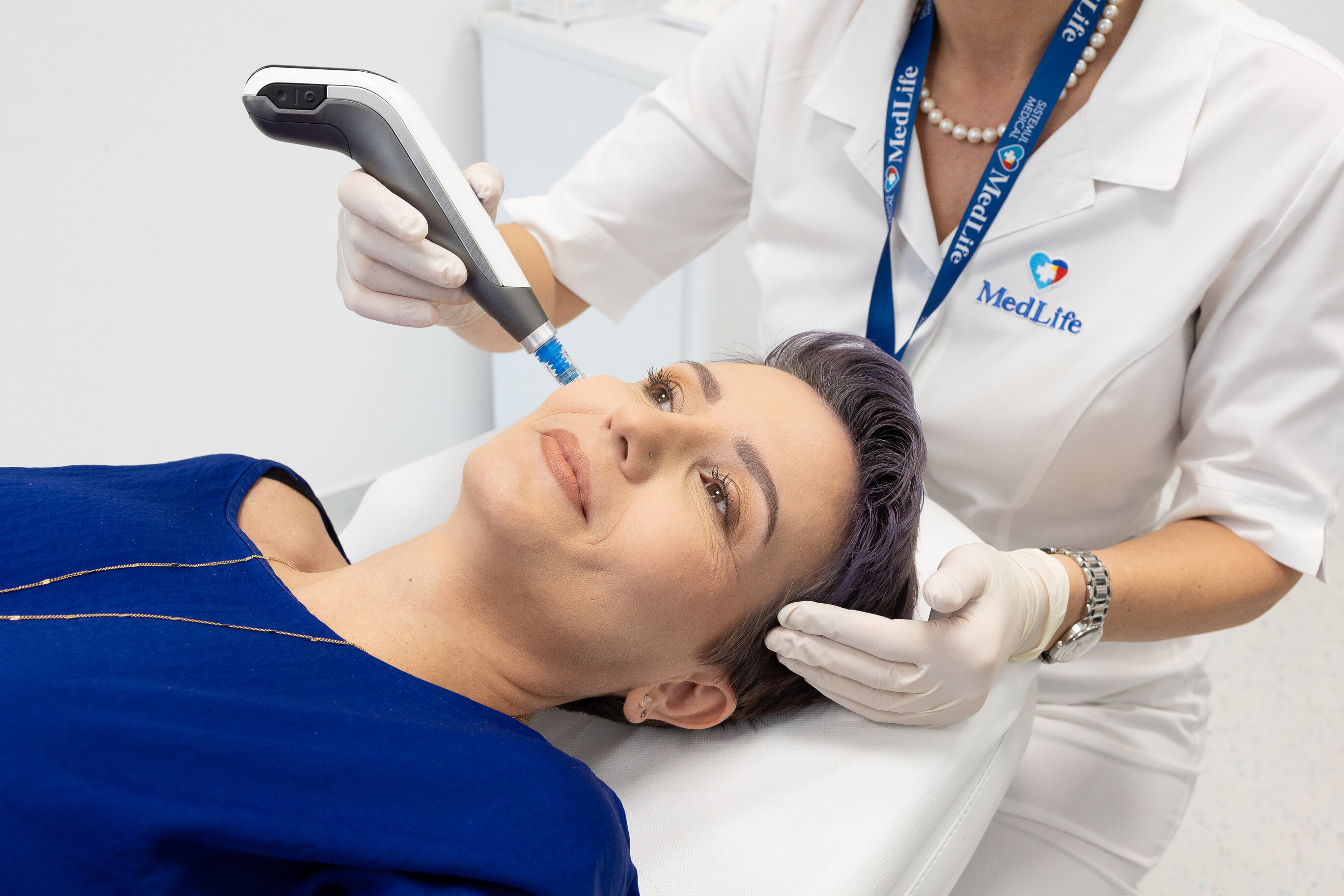
Skin conditions negatively influence our lives not only because of the specific symptoms, but also through the social impact. People who have dermatological problems, especially on the skin, have impaired self-esteem and experience states of anxiety and depression, feeling daily how the signs of acne, psoriasis or atopic dermatitis are a stigma that isolates them from others in order to stop feeling judged. Dr. Ana Maria Drăgăniţă, dermatovenerologist at MedLife Ploiești Hyperclinic and MedLife Lotus Hospital in Ploiesti, says that the success of the treatment is primarily due to the patient's desire to heal, which requires a lot of patience, lifestyle changes and compliance with the doctor's recommendations. In addition, modern technology helps a lot in the effective treatment of these ailments.
Causes of skin diseases
The most common dermatological diseases – acne, atopic dermatitis and seborrheic dermatitis – are caused by various factors related to an unhealthy lifestyle: diet, pollution, stress, excessive exposure to the sun, but also by the existence of chronic diseases such as diabetes or lupus erythematosus, the administration of certain drugs, pregnancy, menopause or genetic predisposition. Precisely for this reason, an effective treatment is based, where possible, on the patient's effort to make a change in his life.
“The skin is the body's largest and most visible organ, and therefore a multitude of skin conditions have a significant impact on patients' quality of life. Various forms of skin cancer, as well as chronic conditions – atopic dermatitis, acne, psoriasis – can have moderate or severe psychological consequences among patients, such as depression, anxiety, low self-esteem, feelings of shame or guilt.
Many dermatological conditions are chronic, characterized by frequent relapses, and one of the biggest challenges for a dermatologist is to maintain patient compliance with treatment, especially during relapses, to reduce their long-term risk. A correct treatment also involves changes in the patient's lifestyle, in order to obtain optimal results“, emphasized the doctor Ana Maria Drăgăniţă.
The dermatologist explained that the most common dermatological conditions he encounters in the office are acne, seborrheic dermatitis and atopic dermatitis, diseases that cause discomfort due to the symptoms: pimples, blackheads, lesions and inflammation in acne or itching, redness, scales, inflammation in the case of dermatitis, but also affect the patients' social life.
Skin diseases have a negative impact on the quality of life
Atopic dermatitis, a skin disease that can appear at any age for various reasons, affects more than 200 million people worldwide. In our country, according to a prevalence study carried out in 2022 by the Romanian Society of Dermatology, 9.41% of the Romanian population faces atopic dermatitis. The disease is characterized by severe dryness of the skin, spots, inflammation and persistent itching, the patients – babies of a few months or adults – can show milder or severe forms. Severe forms can seriously affect life.
“I had a patient with a severe form of atopic dermatitis who ended up losing his job because of the mental impact the disease was having on him. For several years, the patient had multiple lesions specific to atopic dermatitis all over the body, including the face, and a strong itching sensation, especially during the night, which caused him insomnia, discomfort and increased depression and anxiety. He had tried numerous treatments without much success, and after a while he even quit his job, due to the feeling of shame and stigma.
At the time of presentation, we performed a complex set of blood tests and started her on a state-of-the-art treatment, to which she responded successfully, with complete symptom relief after approximately 2 months. He also started psychotherapy sessions in parallel with the initiated treatment, and after about 4 months he also found a new job, and his personal and professional life improved considerably“, said Dr. Ana Maria Drăgăniță.
Psychotherapy, very important in treatment
Skin conditions can have a significant psychological impact. Psoriasis, acne or atopic dermatitis can lead to depression, anxiety or stigma. At the age of adolescence, hormonal disturbances are often accompanied by acne, some forms being so serious that young people prefer to isolate themselves socially because they are affected by bullying due to visible lesions.
More than 73% of young adults experience anxiety and depression with atopic dermatitis, caused both by the way they are viewed by those around them and by the limitations imposed by the disease, including self-isolation and the absence of socialization. People with severe atopic dermatitis may avoid social interactions because of physical symptoms (itching, inflamed skin) or the appearance of the skin. Voluntary isolation increases the risk of depression, and the lack of social support can increase feelings of loneliness. That is why it is recommended that the treatment be done in a team with a psychotherapist.
“The stigmatization of patients with dermatological conditions greatly impacts their quality of life, by increasing anxiety, depression and feelings of shame. In such cases, the doctor-patient relationship based on trust, empathy and communication is very important. Many dermatological conditions (seborrheic dermatitis, atopic dermatitis, psoriasis, vitiligo, alopecia) are triggered by strong emotions. Empathic communication is essential to increase treatment compliance. There are situations of moderate-severe forms of dermatological conditions in which I recommend the combination of psychotherapy in order to obtain the best long-term results and to reduce the number of relapses”, said the doctor Ana Maria Drăgăniţă.
The feeling of stigma depends on the degree of visibility of the skin lesions, as well as the fear of those around that the condition could be contagious.
“These chronic dermatological conditions (acne, dermatitis, psoriasis) are not contagious! Patients with psoriasisfor example, they often face social rejection or discrimination in certain public places (swimming pool, beach), because others fear that it could be a contagious disease. Numerous studies have shown that patients with skin conditions have a much more psychologically impaired quality of life compared to patients with cardiovascular or pulmonary conditions, due to the visibility of skin lesions,” explained the dermatologist.
Modern dermato-aesthetic treatments
In addition to advanced topical therapies, innovative systemic treatments such as JAK inhibitors and biological molecules reduce inflammation at the cellular level and help a lot in treating moderate-severe forms of atopic dermatitis and psoriasis that do not respond to conservative treatments. In addition, post-acne scars can be significantly reduced or even disappear with the help of modern minimally invasive procedures.
“For post-acne scars, we use treatments that stimulate collagen synthesis, such as CO2 laser, microneedling, PRP and mesotherapy. All of these offer favorable long-term results, but patients need patience, because these therapies require time, several consecutive sessions, because the collagen stimulation process is a slow one. But the results are visible after 2-3 months. Skin problems require personalized treatment, depending on the scars, from the patient's age or associated diseases, and in addition to these therapies, it is also necessary to maintain a daily care routine and a healthy lifestyle“, stated the dermatologist.
Proper skin care
The skin represents the image of everyone's general state of health, therefore a healthy lifestyle that includes a balanced diet with as few sweets as possible, constant physical activity and avoiding smoking are important for healthy skin.
“The skin reflects the general state of health. The skin care routine must be adapted to the skin type and the dermatological condition. The needs of the skin change according to the season. In the cold season, the secretion of sebum decreases and the skin dries much more easily, therefore products with a greasier texture may be needed to cover the need for hydration – creams, ointments. During the summer, the secretion of sebum increases and the skin requires products with a lighter texture -lotions, fluids, products with a mattifying effect”mentions Dr. Drăgănita.
Sunscreen products should be used all year round, not just in summer. Exposure to the sun and ultraviolet rays happens all year round, regardless of the season. Even in the shade or on cloudy days, ultraviolet rays are present.
“The areas exposed all year round to ultraviolet rays are the face, neck, décolleté and hands, and they are the areas that really tell one's age. Also, excessive and cumulative exposure to ultraviolet is one of the main factors in triggering skin cancers. Therefore, it is recommended to use sunscreen products consistently and correctly throughout the year. It is also important to have an annual checkup of newly appearing moles to prevent skin cancers which are mostly asymptomatic but are treatable if caught in the early stages“, said the dermatologist.
Article sponsored by MedLife