Who are you, Mr. Orban? How a former liberal became Putin's friend

This text was created as part of the Axel Springer Global Reporters Network project, of which Onet is a part.
Zsuzsanna Szelenyi remembers that it was Viktor Orban who told Russians to get out of Hungary.
Szelenyi, who was then a member of the honorary assistance at the re-burial, recalls how the country's future longest-serving prime minister came on stage and demanded the withdrawal of the Soviet Army from Hungary.
— If we believe in our own strength, we can end the communist dictatorship, Orban said. — If we are determined enough, we can force the ruling party to hold free elections.
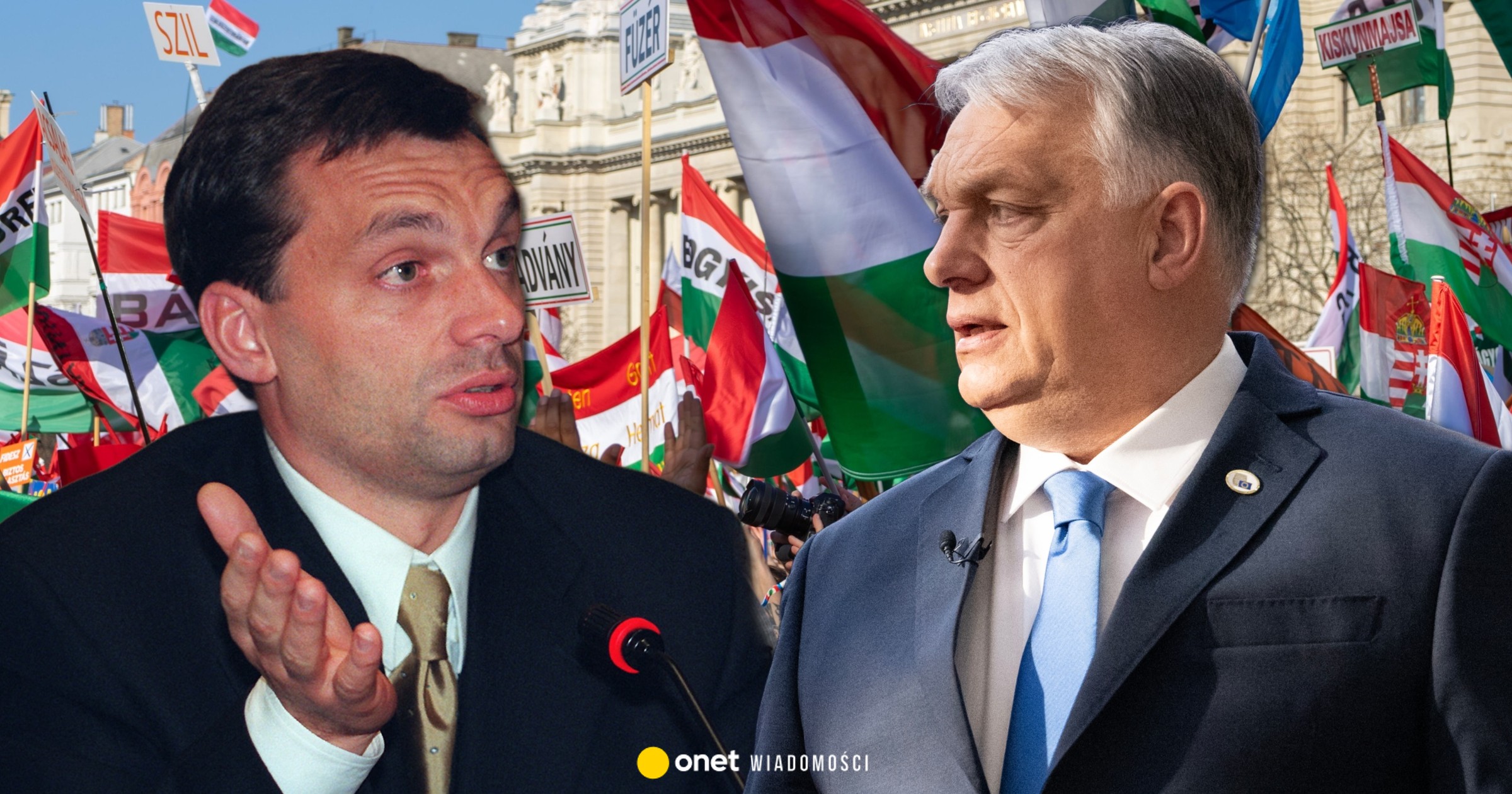
There was no indication of who Orban would one day become, says Szelenyi, a former MP from the ruling Fidesz party. With a liberal leader calling on Hungary to break with Moscow Orban has become a self-proclaimed champion of illiberalism — and the Kremlin's best friend in Europe.
At a time when the European Union is struggling to contain Moscow's aggression against Ukraine and the entire continent, the Hungarian prime minister is there for Russian President Vladimir Putin a man he can count on.
— It was a gradual transformation, consisting of several stages and turning points. Each step led, as it were, logically to the next one, says Szelenyi, sipping tea on a cool afternoon in a café by the Danube. — The pro-Russian direction is probably the most surprising. But it wasn't an overnight transformation.
“He pushed away those who opposed him”
When the first free elections were held in Hungary in 1990, Orban and Szelenyi were among 22 Fidesz MPs – then a liberal-centrist group of anti-communist students and intellectuals — elected to the National Assembly.
Viktor Orban at the Central European Free Trade Agreement summit in Prague, September 11, 1998.CTK Photo/Tomas Zelezny / PAP
As Szelenyi reports, Orbán's transformation began shortly thereafter. Elected chairman of Fidesz in 1990, the young politician quickly gained full control of the party. “He pushed away those who opposed him or even questioned his decisions,” Szelenyi recalls.
Seeing where this was heading, she and several other MPs left Fidesz in 1994, when Orban suddenly switched the party from a liberal to a national-conservative trend. “Those who stayed in Fidesz were more united and more loyal to it,” he says. — Since then, the history of the party and Orban himself has been one and the same story.
Orban's transformation took place in stages: after a short period as prime minister at the turn of the century, he spent eight years in opposition, doing everything to obstruct the work of the National Assembly and sabotage the socialist-liberal government.
When he returned to the office of prime minister in 2010, he resolved never to lose again. He changed the constitution, amended key laws to limit democratic control mechanisms, weakened media freedom and judicial independence, and tilted electoral rules in his favor.
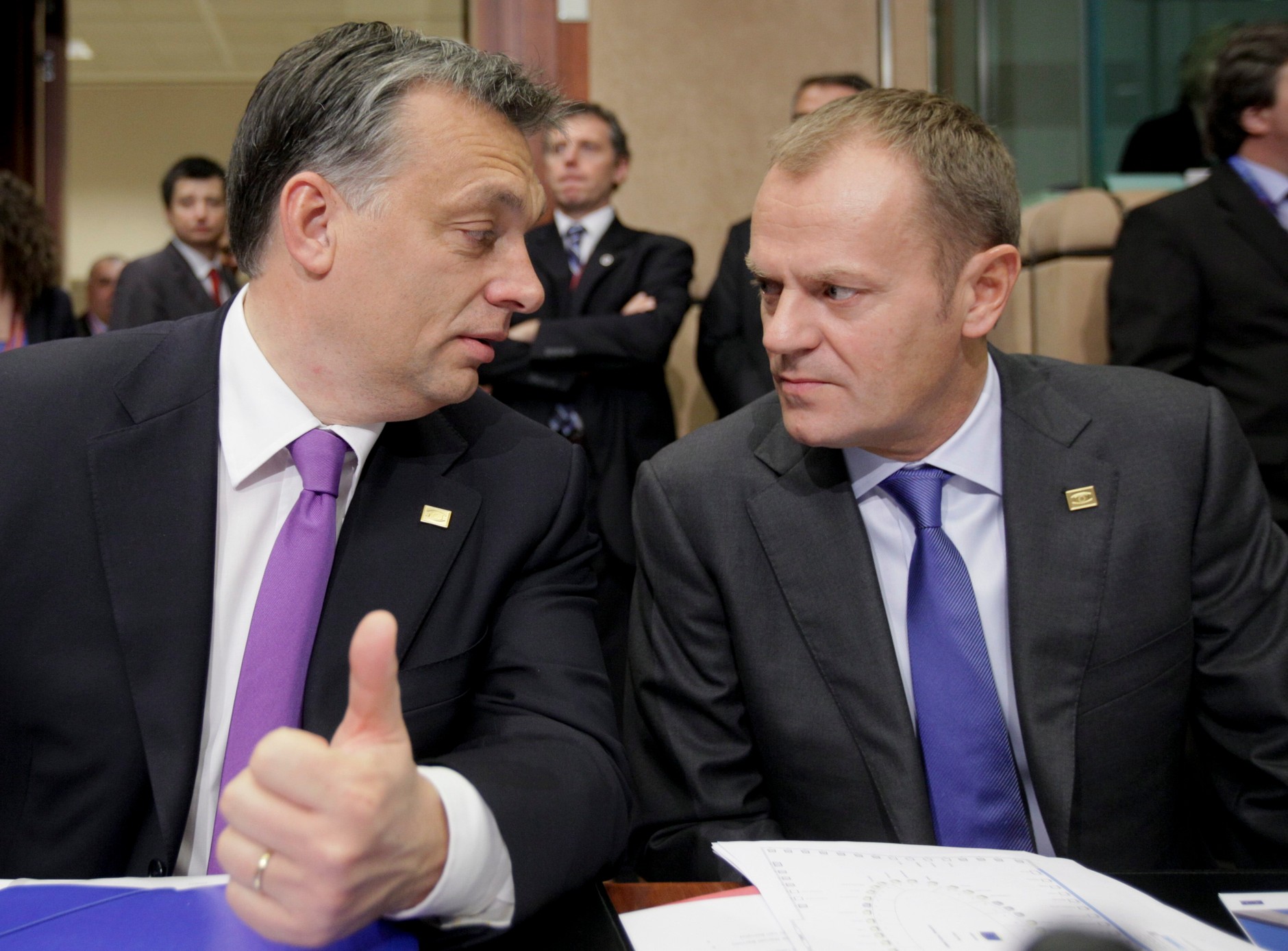
Viktor Orban and Donald Tusk at the summit at the European Council. Brussels, 28 October 2010EPA/OLIVIER HOSLET / PAP
Szelenyi believes that the first stage of Orban's transformation – the ideological turn – was driven by personal ambition, or as he puts it, his “will to power”. According to her, Orban believed that Fidesz had a better chance of gaining power and better electoral prospects on the right side of the political scene, where the main right-wing party was in crisis and in retreat.
Unexpected “opening to the East”
Just six months later, the Prime Minister declared that he intended to build an “illiberal state” in Hungary based on national and Christian values, directly pointing to Putin's Russia as a model – which was significant, considering that back in 2007 he “told Fidesz activists that Russia is in fact an empire that always wants to dominate its neighbors and you can never trust her,” Szelenyi recalls.
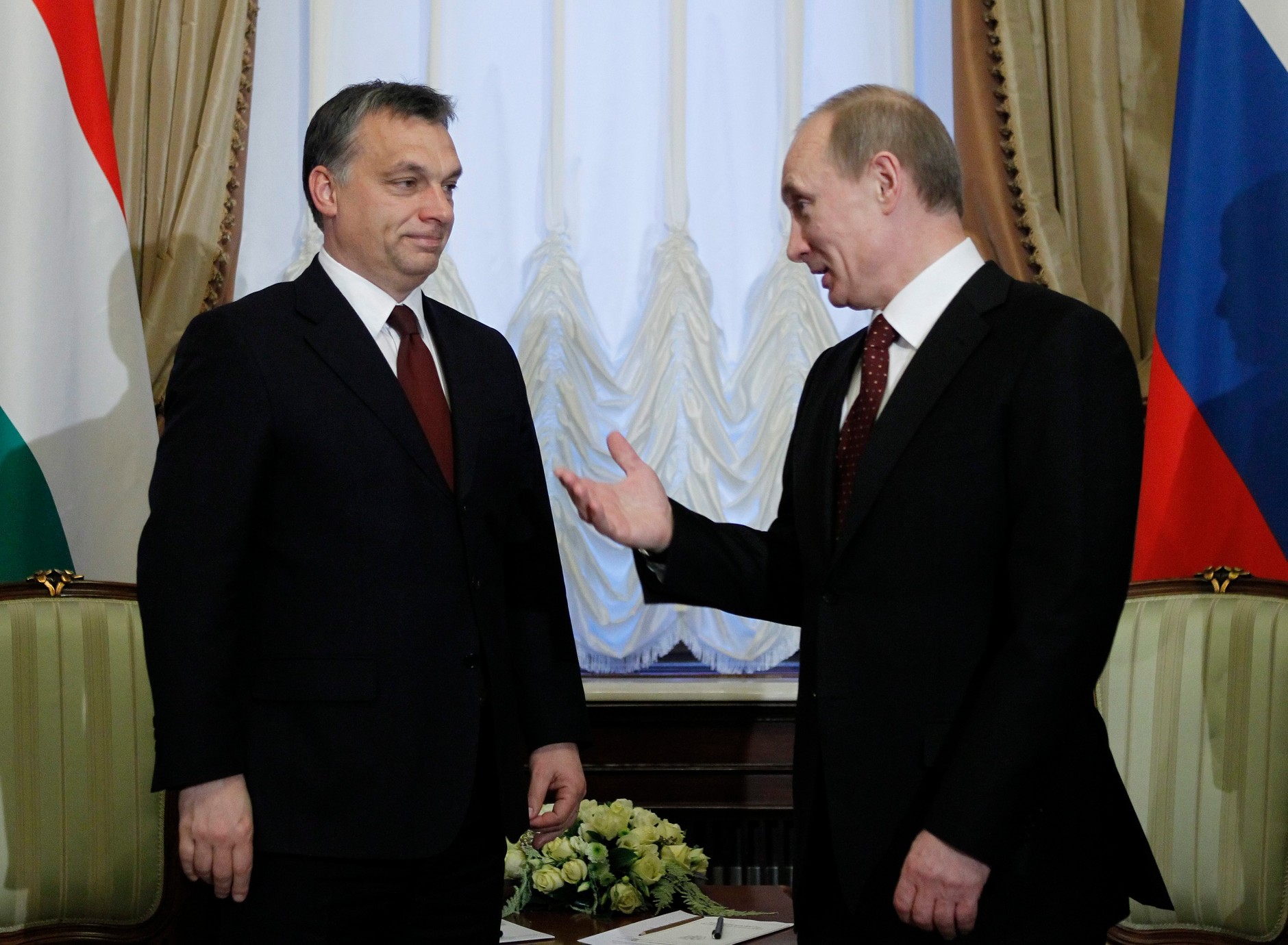
Viktor Orban and Vladimir Putin, then Prime Minister of Russia. Moscow, November 30, 2010EPA/YURI KOCHETKOV / PAP
Other Hungarian prime ministers also sought closer economic relations with Russia, but During Orban's government, economic cooperation gained momentum and quickly developed into close political ties. He started talking about “opening to the East”, arguing that Hungary should improve relations not only with Russia, but also with China and Turkey in order to balance relations with the West.
Rebuild the greatness of Hungary
For Peter Molnar — Orban's classmate at Eotvos Lorand University and a former Fidesz MP who left in 1994 — Orban's rise from Russia's enemy to its friend reflects his international ambitions.
“Orban cannot make Hungary bigger again,” he says, referring to the country's loss of about two-thirds of its territory after World War I. – But maybe he thinks he can make them great again.
And with each subsequent conflict between Budapest and Brussels, Hungary's relationship with Putin only grew closer – just as it later did with US President Donald Trump.
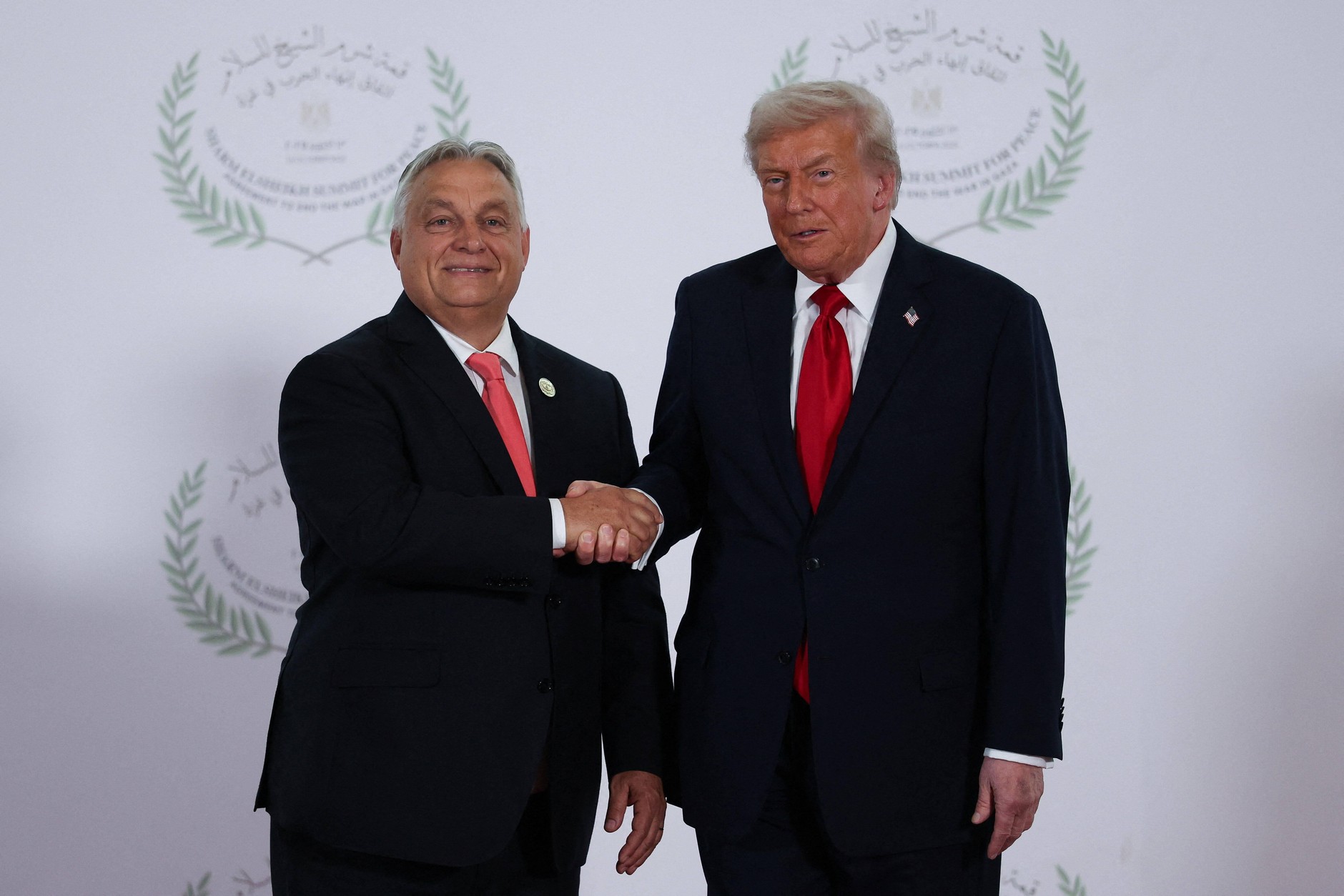
Viktor Orban and Donald Trump, president of the USA, during the peace summit. Sharm el-Sheikh, October 13, 2025SUZANNE PLUNKETT / PAP
Molnar, today a scientist and poetry slam champion, highlights his college colleague's relentless drive for success. While having lunch at a traditional Hungarian restaurant near the US Embassy in Budapest's historic fifth district The 62-year-old chooses his words carefully, using the term “hardworking” to describe the young Orban: his determination, ability to work hard and attention to detail.
But – as Molnar adds – during his student days, Orban also knew how to have fun. He went to illegal underground dance parties – a form of youth rebellion often under surveillance by the secret police. And although he was not particularly interested in art or literature, he willingly got involved in staging the play “How Mr. Mockinpott Was Cured of His Sufferings” by the German writer Peter Weiss – a satire about the fate of an ordinary man in an oppressive society.
“Except that the ambition was always enormous,” he notes. — I think she's the one pushing him to where he sees a chance to gain power. — If the political situation had been such that the liberal path offered greater prospects, he would probably have remained a liberal.
Political journalist Pal Daniel Renyi, author of Orban's biography from 2021, has a similar opinion – I think he is fascinated by power itself. She is his main driving force. If we lived in times when liberalism was in vogue, he would be a liberal, he says.
Meanwhile, Orban “already in the 1990s understood that being a nationalist and conservative gave him advantages greater freedom in government, the ability to control and build communities. In Hungary it is easier to create them if you are a traditionalist. In the 1990s, there was a powerful socialist party and a quite strong liberal one, but the conservative MDF was falling apart,” Renyi explains.
— It was clear to him that he had to move to the right to occupy the political field.
Staring at Berlusconi
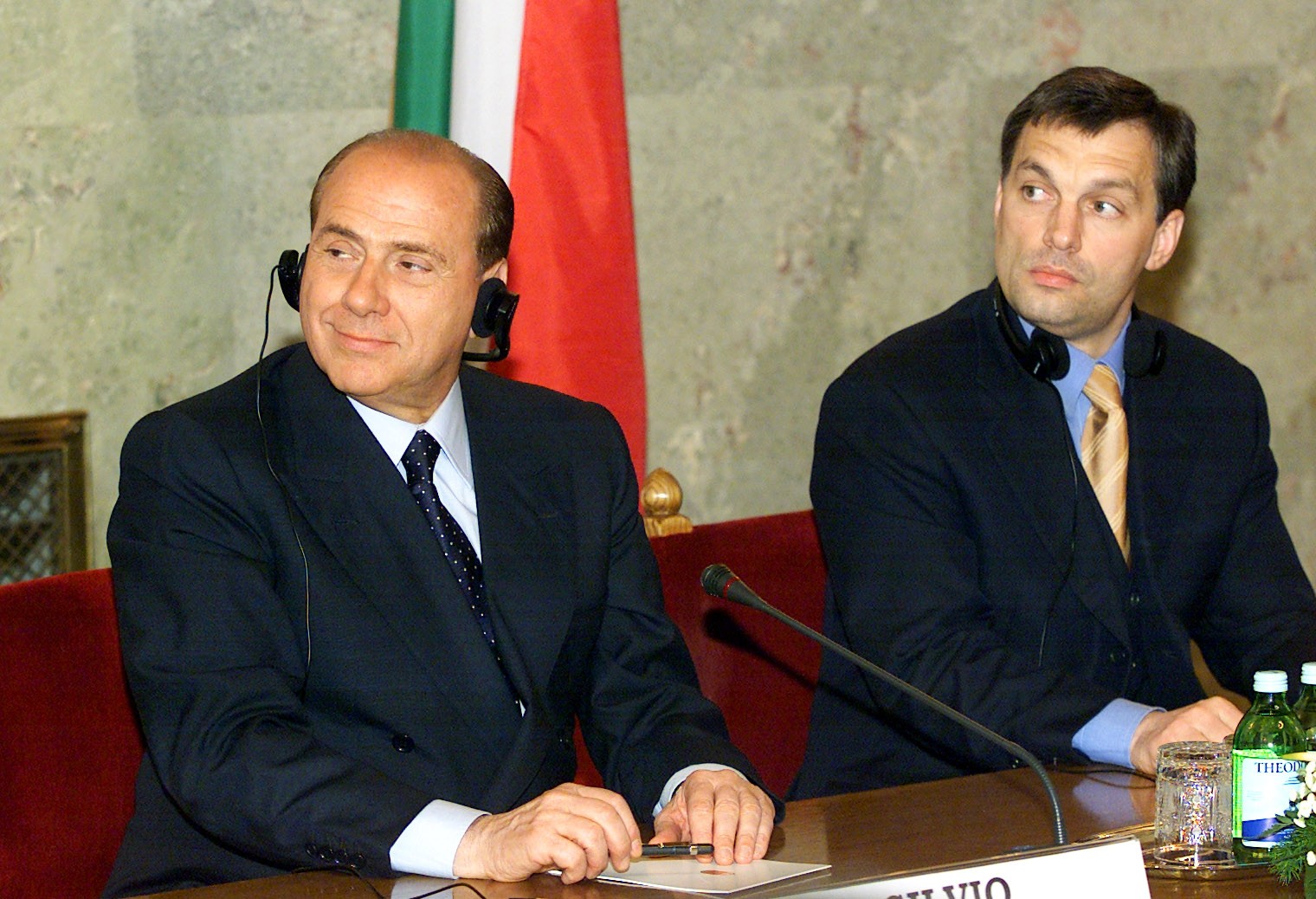
Silvio Berlusconi, Prime Minister of Italy, and Viktor Orban. Budapest, February 28, 2002EPA/ATTILA KISBENEDEK/AK-hh / PAP
— Berlusconi's example was very important to Orban. The way he practiced conservatism, how he built a party around himself, what language he spoke to ordinary people, his combination of football with politics and the use of sports for politics – Renyi enumerates.
Like Berlusconi, who owns the AC Milan football club, Orban founded a football academy in his hometown of Felcsutwhich evolved into a club with a 4,000-seat stadium — big enough to accommodate an entire village twice.
— Orban ends his speeches with the slogan “elore Magyarorszag”, meaning “forward, Hungary”, clearly taking inspiration from Berlusconi, whose party is called Forza Italia – adds Renyi.
Brussels as an evil empire
According to Frank Furedi, an Orban ally who heads the Brussels branch of the Hungarian-backed Maciej Corvinus College (MCC), it is actually “it is the European Union that has changed” — has become more liberal and increasingly undermines the sovereignty of the Member States.
— Orban sees his path as a smooth evolution. At one point, EU reluctance had a major impact on his approach. Let's remember that the previous prime minister in Budapest was Brussels' favorite, and EU officials were really angry that he lost the elections to Fidesz in 2010, says Furedi. — This is a key dynamic.
Furedi also points to Orban's response to the 2015 migration crisis as a turning point. — Before this happened, the EU treated Orban with distrust, but tolerated him. However, when he clashed with the European Commission's migration policy, tolerance gave way to hostility. Today, as more and more countries adopt Orban's approach to mass illegal migration, from the Commission's point of view, everything Orban does becomes inexcusable, he says.
From this perspective, in Orban's mind, it was Brussels that replaced Russia as the “occupying” power of Hungary.
In election campaigns since 2010 Orban often portrays Hungary as a country under siegereferring to the idea of a constant threat from larger neighbors, transnational powers or mysterious financial forces. This is a strategy that reaches into the deep layer of historical wrongs, starting in 1848, when Hungary rebelled against the Habsburgs and fought for independence.
In a speech in 2011, he said: – In 1848 we did not allow Vienna to dictate to us, in 1956 we did not allow Moscow to dictate to us. And now we will not let Brussels or any other place dictate to us.
However, not everyone is convinced that Orban himself has not changed. In one of his poems, Molnar recalls a conversation with a young politician. It shows the difference between Orban in 1989 and today's prime minister: :
What if we manage to create a democracy, but someone again accumulates too much power?
“Impossible,” you replied.
But what if it happens? – I asked again.
If anyone has too much power again, they will have to deal with me, you replied.