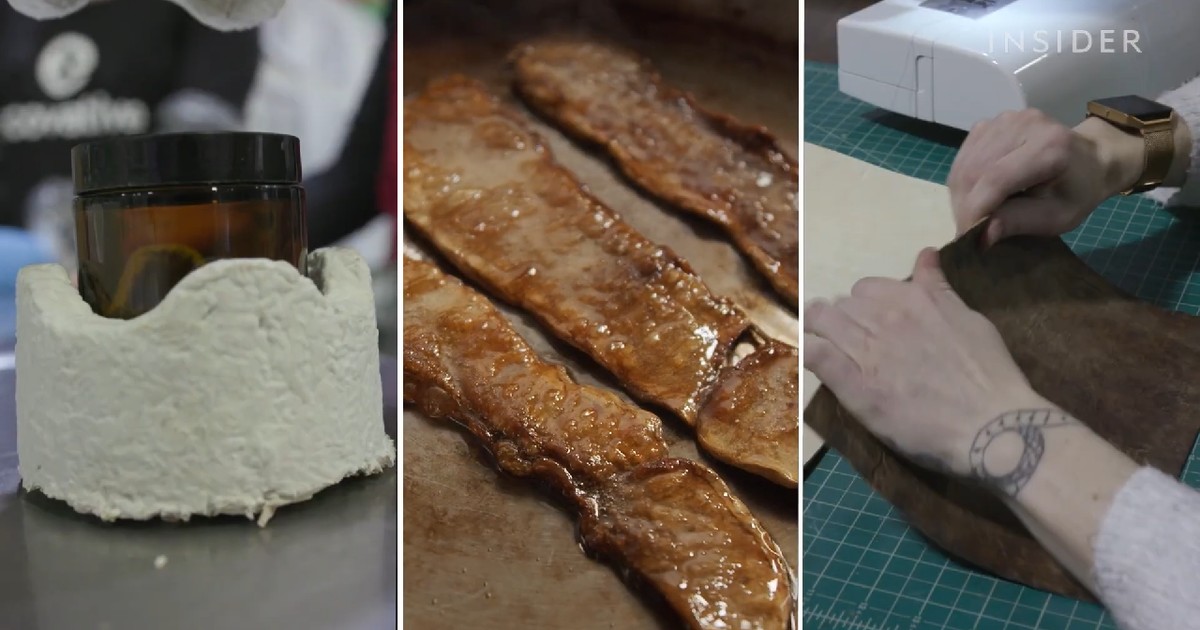
It looks like a giant marshmallow, but it's actually a mushroom. After cutting, we get crispy vegan bacon or an alternative to skin.
This laboratory grows an ecological substitute for Styrofoam – a light but large material that takes up one third of the space in all landfills.
They use the mycelium to create vegan bacon
|
Business Insider
What can you make with mycelium?
Can this company grow a replacement fast enough to make a global impact? We visited Ecovative's headquarters in Green Island, New York to find out.
The magic lies in the mycelium, the living root structures of mushrooms.
Our entire philosophy is based on the idea that nature provides what is needed. Mycelium is an excellent solution to both the problem of plastic waste and animal husbandry
– says Eben Bayer, co-founder and CEO of Ecovative.
“I take the mycelium and just divide it into a petri dish,” explains Alex Carlton, chief scientist at Ecovative.
All Ecovative products are made from these natural elements.
“We have about a hundred different strains and we analyze them for different material properties,” explains Alex.
The company's best-selling product is MycoComposite. It has properties similar to Styrofoam, but is completely biodegradable.
— We have cooperated with many companies, including giants such as Dell, who use our ecological packaging to ship servers. We've also worked with small New York startups like Keep Candles, says Andy Bass, chief marketing officer at Ecovative.
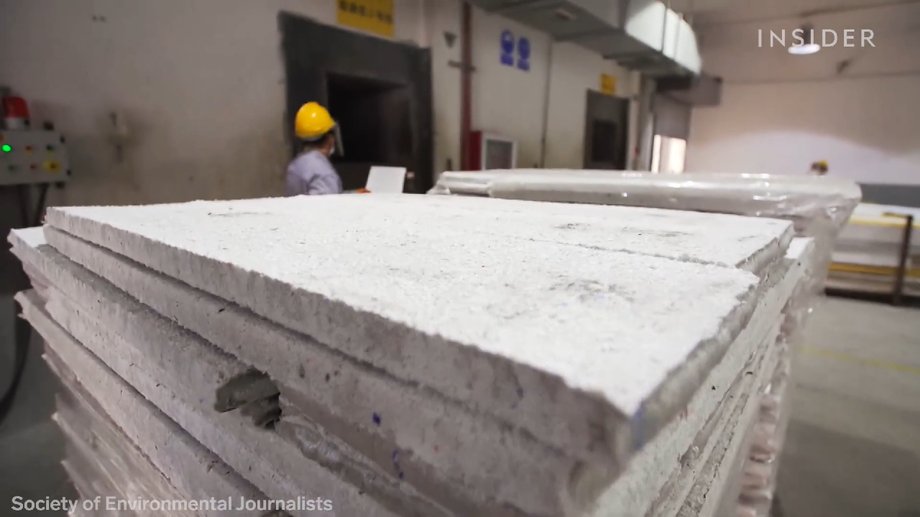
The company's best-selling product is MycoComposite
|
Business Insider
What is the process of converting mycelium into styrofoam?
Manufacturers make molds using large sheets of recyclable plastic. The heat makes the sheets flexible, so they can be adapted to any product.
The process starts with wood chips, corn husks or hemp that would otherwise be discarded by local farms. Then mushroom spores and water are added.
The mixture is placed in molds where the mycelium begins to grow, feeding on crushed agricultural waste.
Just over a week later, the form-fit mold is ready for shipment. The finished material is slightly heavier than Styrofoam, but it is velvety soft to the touch.
This packaging decomposes in just 30 days. Traditional Styrofoam never actually decomposes. It can remain in the environment for up to five centuries, and less than 1 percent is recycled at all.
Ecovative uses a different process to produce vegan meat and leather.
The company claims that the process uses significantly fewer resources than real products. Workers still start with agricultural waste and spores, but these mixtures are placed in vertical farms.
These are growth chambers in which the conditions of natural soil are imitated.
The mixture tries to grow and push its way to the top to form a mushroom, but in our environment it grows continuously, creating a structure that resembles a large marshmallow
explains Andy.
This foam is called aerial mycelium and takes about 10 days to grow. The largest chamber can produce up to 90 tons of mycelium per year.
“The result is large patches that can be up to 15 m long, 1.5 m wide and several cm thick,” explains Eben.
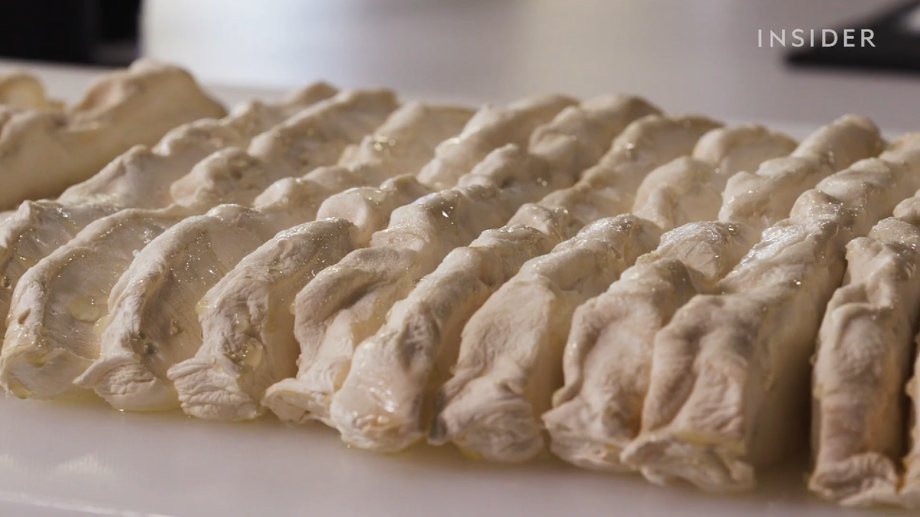
It looks like marshmallow, but it can replace plastic, meat and even leather
|
Business Insider
They also use the mycelium to create vegan bacon, which contains less fat
In 2020, the company launched a line of mushroom-based meat products called MyEats. “We” is short for mycelium (mycelium). The company's first product is called MyBacon.
It is made from aerial mycelium, which is cut into slices, then kneaded and seasoned.
“You can fry it, which makes it crispy like bacon, and it tastes really good,” says Andy.
We can't confirm the taste, but MyBacon is definitely a healthier alternative. It is high in fiber and has the same protein content as a regular slice of bacon, but with five times less fat.
It takes almost 5,000 liters of water to produce a kilogram of pork, and only about 8 liters to produce a kilogram of bacon from mycelium.
Eben Bayer and Gavin McIntyre founded Ecovative in 2007 and launched their MycoComposite packaging in 2011. Since then, more cities and states have banned Styrofoam.
However, in the US there are no nationwide restrictions, and the average person uses 75 Styrofoam coffee cups a year, which gives a total of 25 billion.
In 2020, Ecovative produced over 2,720 tons of its Styrofoam substitute, but this was only 0.5%. cups used by Americans. MyBacon may gain popularity more easily.
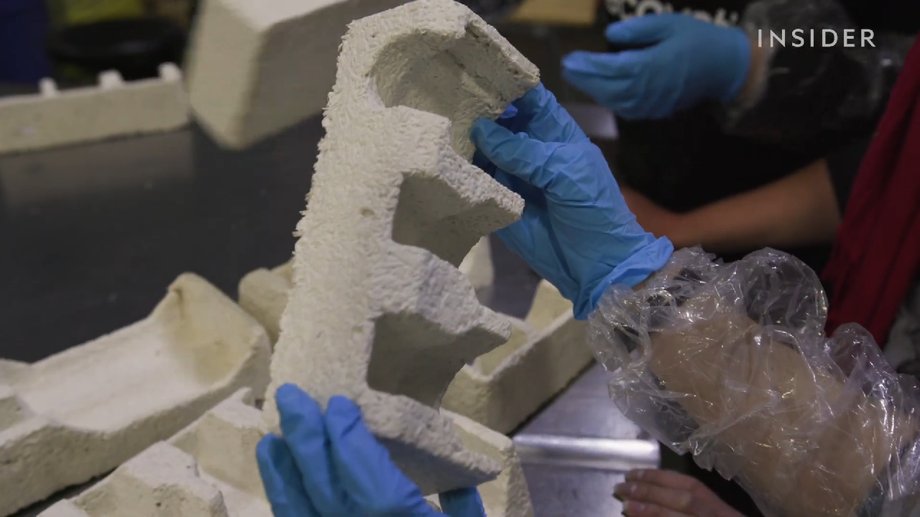
Mycelium can be used as styrofoam
|
Business Insider
Mycelium protein can imitate whole cuts of meat, unlike most other plant-based alternatives that come in the form of ground cutlets or sausages.
Ecovative Design is a long way from replacing plastics and factory farming, but Eben says his company is harnessing the potential of the living world.
My experience and career path is in finding ways to reimagine our relationship with nature and use it to create better solutions for everyday products so that they have a lower impact on the planet
– admits Eben.