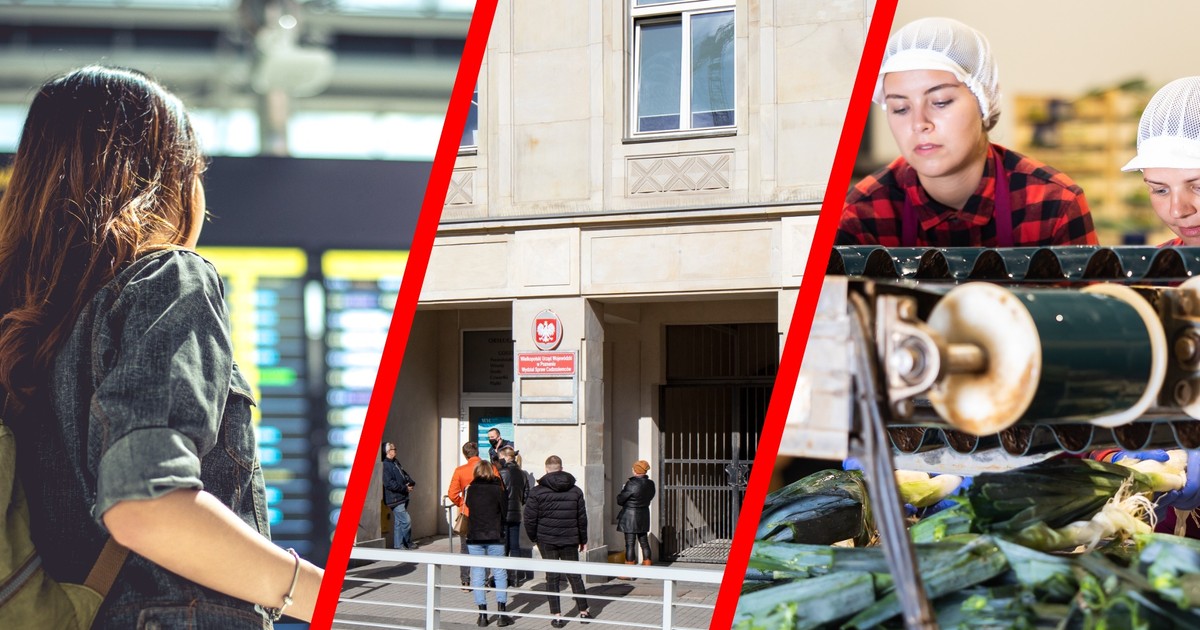
MOS2 is a new electronic system for handling matters related to the legalization of stay and work of foreigners, handled by voivodeship offices. It was intended to simplify and organize processes: enable online submission of applications, reduce the number of paper documents and increase the transparency of proceedings. The labor market has been expecting such a change for a long time, hoping to reduce the documentation chaos and length of cases.
According to Artur Gregorczyk, head of the legal department of EWL Group and president of Legalito, the digitization of residence legalization was inevitable given the current scale of cases in voivodeship offices. As he emphasizes, the idea of MOS2 itself is correct, and the main challenge concerns implementation and adaptation on the part of offices, employers and foreigners.
— Even a minor error, such as an incorrect e-mail, attachment or signature, can block the entire process, generating stress and costs – emphasizes Gregorczyk. He also adds that the system transfers greater responsibility to mobile employees themselves, who must independently monitor deadlines and respond to communications from offices. For some foreigners, this is a significant barrier.
— As always in contacts with the public, consistent standards of communication between offices are crucial – clear messages, response deadlines and information support during the transition period – he comments.
Read also: Poland is a champion in employing immigrants. Germany is far behind
Technical problems and lack of flexibility
Similar observations are made by Tomasz Bogdevic, CEO of Gremi Personal. In his opinion, digitization was necessary and could ultimately organize the circulation of documents and reduce paper bureaucracy. However, the practice of the first weeks of the system's operation shows that the implementation takes place under great organizational and technological pressure.
Gremi Personal's experience shows that the biggest challenge currently is the stability and functionality of MOS2. Employers report technical problems, difficulties in using the platform and lack of flexibility in non-standard situations.
Read also: “I thought it was a mistake.” After 20 years of work in Germany, retirement is shocking
The expert also points out that Electronicization did not eliminate the most important systemic problem, i.e. the administrative inefficiency of voivodeship offices. Simply submitting an application electronically does not mean that your stay or work will be legalized faster. The procedure still requires a personal visit to the office, taking fingerprints and further processing of the case by the administration. It is at this stage that the greatest congestion still occurs. As a result, for companies, the process of acquiring and retaining foreign employees remains highly unpredictable.
—— Companies expected that digitalization would shorten procedures and increase the predictability of deadlines. Currently, however, many organizations treat MOS2 more as another stage of transformation than as a real simplification of the process, says Tomasz Bogdevic.
Voice of employers' organizations: the system works, but it is inconvenient in practice
Nadia Winiarska, deputy director of the Department of Labor of the Lewiatan Confederation, also draws attention to practical problems. As he emphasizes, a positive sign is the stability of the system – there are no serious failures that prevent the submission of applications. In her opinion, however, it is still too early to assess the impact of electronicization on shortening the duration of proceedings.
— Difficulties appear already at the stage of creating accounts and logging in. Some of the functions provided for in the regulations, such as the possibility for a foreigner to use a qualified signature, do not work in practice – explains the expert.
Users also note the limitations related to filling out forms. The system allows you to save a draft version of the application only after completing all tabswhich forces you to perform many activities during one session. Technical limitations regarding application annexes are also a significant challenge.
Read also: There is a shortage of labor here. Employers are sounding the alarm
There is a problem on the employers' side inability to save the draft version of Annex 1which specifies the conditions of employment of a foreigner. The system also does not allow the employer to attach certain documents (e.g. powers of attorney) directly to the form — they must be sent by foreigners, which complicates the circulation of documents.
Employers also point out that the forms are not adapted to the realities of the labor market, including: when it comes to indicating the position, PKD classification and the place of work, especially in the remote, hybrid or mobile model.
Language issues raise additional doubts. Some language versions are missing from the system, including: Spanishwhich is a barrier for a large group of candidates. Some form fields are still only available in Polish. This limits the ability of foreigners to submit applications on their own and de facto increases their dependence on the support of employers or intermediaries.
Read also: Foreigners working in Poland. The new visas will reduce arrivals from key destinations
— From the perspective of the labor market, this means that the process of acquiring and retaining foreign employees still remains highly unpredictable – explains Tomasz Bogdevic. — Companies expected that digitalization would shorten procedures and increase the predictability of deadlines, but now many organizations approach MOS2 as the next stage of transformation rather than as an actual process simplification.
Despite the problems, the interlocutors unanimously emphasize that the direction of changes is the right one.
— Ultimately, the electronic system can improve communication, reduce the number of formal errors and improve access to information on the status of the case. However, the condition is the stabilization of the platform's operation, greater technical support for users and a parallel increase in human resources on the administration side. Without this, even the best digital tool will not translate into a real reduction in the time needed to legalize the stay and work of foreigners in Poland – sums up Tomasz Bogdevic.