If Chatgpt was a guitar, the new Mira Murati start-up is a “reed”. Billions for an unusual project


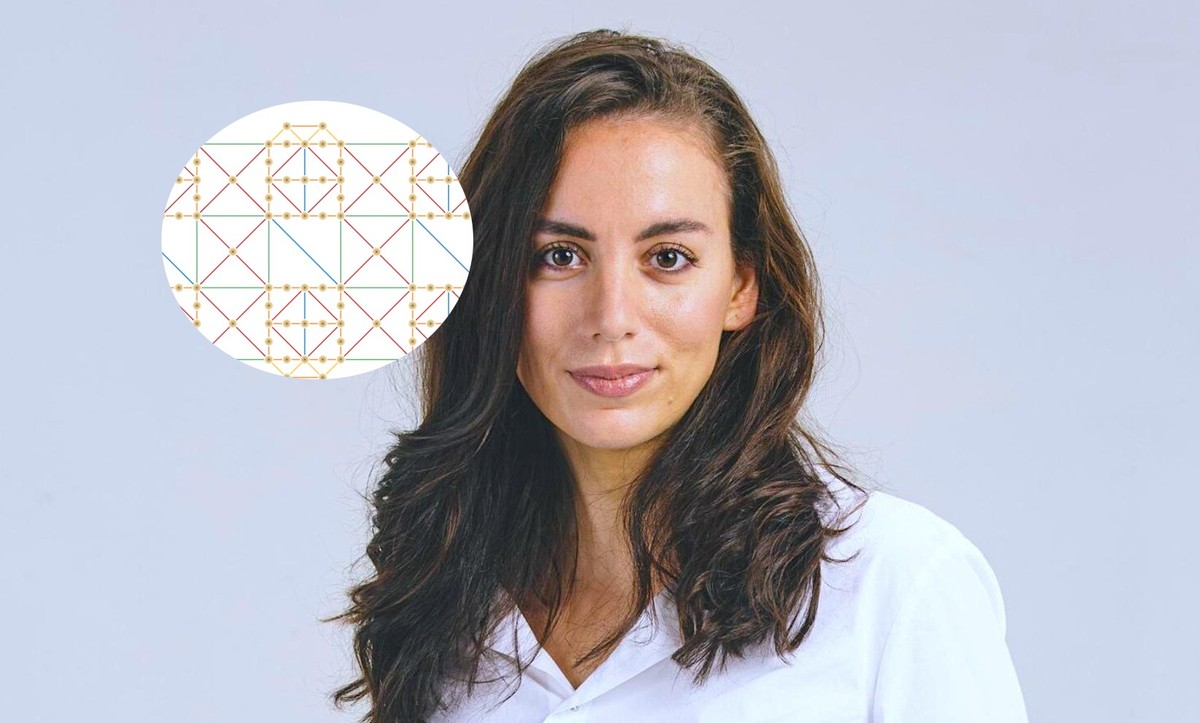
Mira Murati, was Cto OpenAI, announced the premiere of Tinker-API for training and fine-tuning of large AI models. API (Application Programming Interface) is a set of rules and “doors” for the program that allows another program to safely use its functions or data. Whereas Fine-tuning (tuning) is a further, short training of the finished AI model on our data so that it performs a specific type of task better.
Tinker is to conjure up the most tedious part of work with AI models. The tool gives researchers and developers to control over the training loop, and at the same time hides the entire logistics of the GPU clusters under the hood. At the start, he supports the open-wake families of Llam and Qwen models, enables both supervised fine-tuning (tuning the model on pairs “entrance-correct answer” to learn exactly on patterns), as well as reinforcement learning (learning through prizes and punishment in which the model chooses actions to maximize the total reward), and you can take a trained weight later) Start anywhere. The service starts in a private beta and For now, it is free.
Check also: Opeli introduces a voice assistant like from the Hollywood movie “Her”. You have to see it [WIDEO]
A strong team, a niche product
Behind the Thinking Machines is a team that the industry treats deadly seriously: Openai co -founder John Schulman, Barret Zoph (former Vice President for Research at OpenAI), Lilian Weng ((she dealt with Openai research on safety and robotics), Andrew Tulloch (he worked on training and pre -reason models) Luke Metz (further training specialist for AI models). The company has already attracted attention with a record funding round ($ 2 billion) with a valuation of $ 12 billion. This ensured her oxygen and credibility before she showed any product.
What does Tinker really offer? From the user's perspective, it is a simple loop in Python launched even on a computer without an efficient GPU system. API Thinking Machines performs identical calculations on distributed accelerators. Today, Tinker uses Lora adapters instead of full fine-tuning, but the team publishes its own results and arguments that in typical scenarios Lora matches the full tuning of AI models. The key distinguishing feature is too “Operational openness” – after training we export weight (files) and do not block on one supplier, to whom we have to pay the subscription.
This is not another system under the slogan “Upload the data, we will support something”. Test researchers praise, among others Training mathematical reasoning, computing chemistry or experiments with agents and tools. Among the early users are teams from Princeton, Stanford, Berkeley and Redwood Research, which shows that Tinker is targeted at ambitious, research workflow, and not only at simple tuning to prompts for the needs of everyday work (e.g. for a lawyer who wants to use AI fucked up on the basis of his data).
See also: Sora is to convince film studies to cooperate. Did the strikes in Hollywood do something?
Good foundations
Against the background of the market, Tinker focuses on controlling algorithms and training loops, while many competitors offer rather ready “assembly lines”. Together AI is developing a fine-tuning platform, including models support and various delivery modes, Databicks builds Mosaic AI Training and its own methods of improving quality without clean labels, and the Open-source ecosystem gives LLM libraries, such as Verl or Skyrl. Thinking Machines is therefore part of the growing wave of personalization of AI models for specific needsbut the scientist and engineer's workshop is positioned closer.
Murati and the company also play a wider game. It is a wide range of AI in favor of the research community. In a world where American companies are closing more and more models behind a paid API, this approach can gain additional meaning -Especially since open-wake models from China (Qwen, Deepseek, Kimi) in recent months give the pace to the open segment and incline to counter-region in the USA.
Tinker can become a practical bridge between what is happening in top labs and what smaller bands can do.
Who does this product make sense for today? For academic teams and independent researchers who want to experiment with reinforcement learning, preferences and their own environments, without building server infrastructure. Secondly, for start-ups and departments in companies creating agents, programming tools or symbolic-mattical reasoning models. The ability to export weight and transfer them between environments simplifies costs and compliance.
In addition, Tinker may be interesting for regulated organizations that require having their own weight and implementation paths, but want to speed up training itself. So we want to have good quality AI, but trained only on our data.
Read also: The first “actress AI” storms blood in Hollywood
There is no rose without spikes
At the start, Tinker does not offer full-tuning of whole weight-which in some applications is still necessary, although the company announces the addition of this option. GPU costs on the supplier's side will remain important, and the commercialization “from below” (first researchers, then companies) requires patience and a good price list, which will turn curiosity into lasting income.
There are also risk of abuse. Thinking Machines verifies access and announces automatic security, but Already today, researchers are testing controversial scenarios on Tinker, which is to be used to assess the risk of individual models. All this means that the security policy and customer selection will be as important as pure technology.
Does this have real chances for success? In a short term yes, but in your niche. There is no question of talking about a chance for the popularity that Opeli and her chatgpt gained. Tinker can become a first-choice tool only for laboratories and bands that want to quickly study new post-training algorithms and reinforcement learning without picking in IT infrastructure. In the medium horizon, the advantage depends on three things: the pace of bringing new functions, the quality of documentation and ready -made “recipes” to tuning AI and how Thinking Machines parameterizes fees for competitors.
The advantages are the band's brand, powerful capital and the fact that Tinker does not compete with every platform, but chooses the level of abstraction attractive to ambitious users. If the market maintains a course for the personalization of models, Tinker has arguments to grow to the role of the industry standard in “AI training as a service” for companies.
At this moment, Thinking Machines is not trying to break through the new AI model, but suggests a better way to work with those we already have. In the world of increasingly stronger polarization between closed API and open scales, such a “French key” for AI models can be what you need to realistically create value in the artificial intelligence sector, and not only send queries to someone else's servers.
Author: Grzegorz Kubera, Business Insider Polska journalist