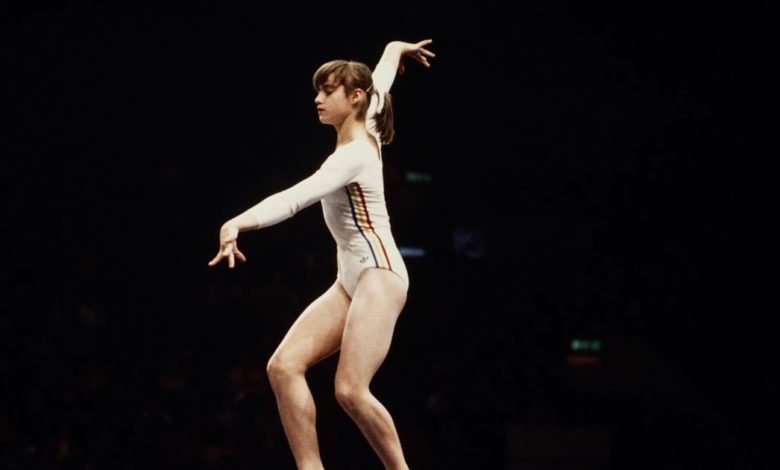
There are rare moments when an individual biography goes far beyond the confines of a career and becomes, almost effortlessly, a collective symbol. The story Nadia Comaneci is one of those cases. Fifty years since the “perfect 10” at the 1976 Summer Olympicsperformance is no longer just a sporting milestone, but a cultural landmark, identity and – increasingly visible – a tool for public projection of Romania in the world.
Statement of the year 2026 justice “The Year of Nadia Comăneci” it is not just about the commemorative reflex. It marks, in fact, the institutionalization of a legacy. In a profound sense, “The legacy of Nadia” is not reduced to the seven marks out of 10 or the Olympic medals, but to a set of values that, over time, have become recognizable beyond sports: discipline, rigor, dignity, the ability to carry perfection to its visible and invisible end. “If it were easy, everyone would be an Olympic champion” – this simple formula perhaps best concentrates the essence of a career that has functioned, for half a century, as an informal pedagogical model for entire generations.
The event held recently at European Parliament staged exactly this double dimension: commemoration and symbolic instrumentalization. It was not just a tribute to a champion, but a carefully calibrated construction of the image. In the same hall were found Olympic champions who, cumulatively, brought Romania dozens of gold medals – from Mihai Covaliu to Ana-Maria Brânza, Andreea Răducan or Cătălina Ponor. with them, young gymnasts from Onești and athletes from the Special Olympics program they completed the picture of a symbolic continuity: the glorious past legitimizes the present and promises the future.
This staging is no accident. In a political space like the European Parliament, where each state negotiates its visibility and relevance not only through votes, but also through narratives, the figure of Nadia functions as an almost ideal “soft power” vector. He is a universally recognizable personality, devoid of political ambiguities, associated exclusively with excellence. In an often tense European context, dominated by crises and fractures, the invocation of such a figure creates an area of consensus: sport as a universal language, performance as a shared value.
In this sense, the initiative of the Romanian MEPs goes beyond the level of a simple celebration. It becomes a country branding exercise. Romania does not present itself here through sensitive files or political conflicts, but through a success story that cannot be disputed. It is, if you will, one of the few situations where the symbolic capital accumulated over decades is directly converted into image capital at the European level.
Beyond the festive register, some essential ideas emerge for the understanding of this symbolic construction. First, the idea of continuity: “the 50 years” is not just a distance in time, but a route where the initial performance generated a ripple effect, extended over generations. Then, the emphasis on community: performance is never exclusively individual, but rests on a discreet but decisive infrastructure – family, coaches, teams. Finally, perhaps most importantly, the inspirational dimension: the true strength of a champion lies not in medals, but in the ability to ignite dreams and change mindsets.
This force also explains the persistence of Nadia's relevance half a century after the Montreal moment. We are not talking about a nostalgic symbol, fixed in a vintage photograph, but about an active model that continues to produce meaning. Whole generations have grown up with this benchmark, and thousands of children have tried, even imperfectly, to reproduce an ideal of perfection. In a society where models are quickly consumed, this continuity becomes a form of cultural stability.
But there is also an inevitable tension between the force of the symbol and concrete reality. Invoking performance and the values associated with it brings to the fore a legitimate question: to what extent Is the “Legacy of Nadia” supported by public policies and adequate infrastructure? Examples of projects left at the intention stage, such as a multi-purpose hall that should have been named after him, suggest that this symbolic capital is not always fully exploited. Soft power works effectively on the outside, but it needs a solid internal foundation so that it does not remain a mere image exercise.
However, the moment in Brussels remains a significant one. He managed to place Romania in a rare light: that of undeniable excellence. In an age where states compete not only economically or politically, but also at the level of symbols and narratives, such moments become strategic resources. And Nadia Comăneci offers this resource in a pure, coherent and hard-to-erode form, transforming a sporting performance into a lasting tool of representation.