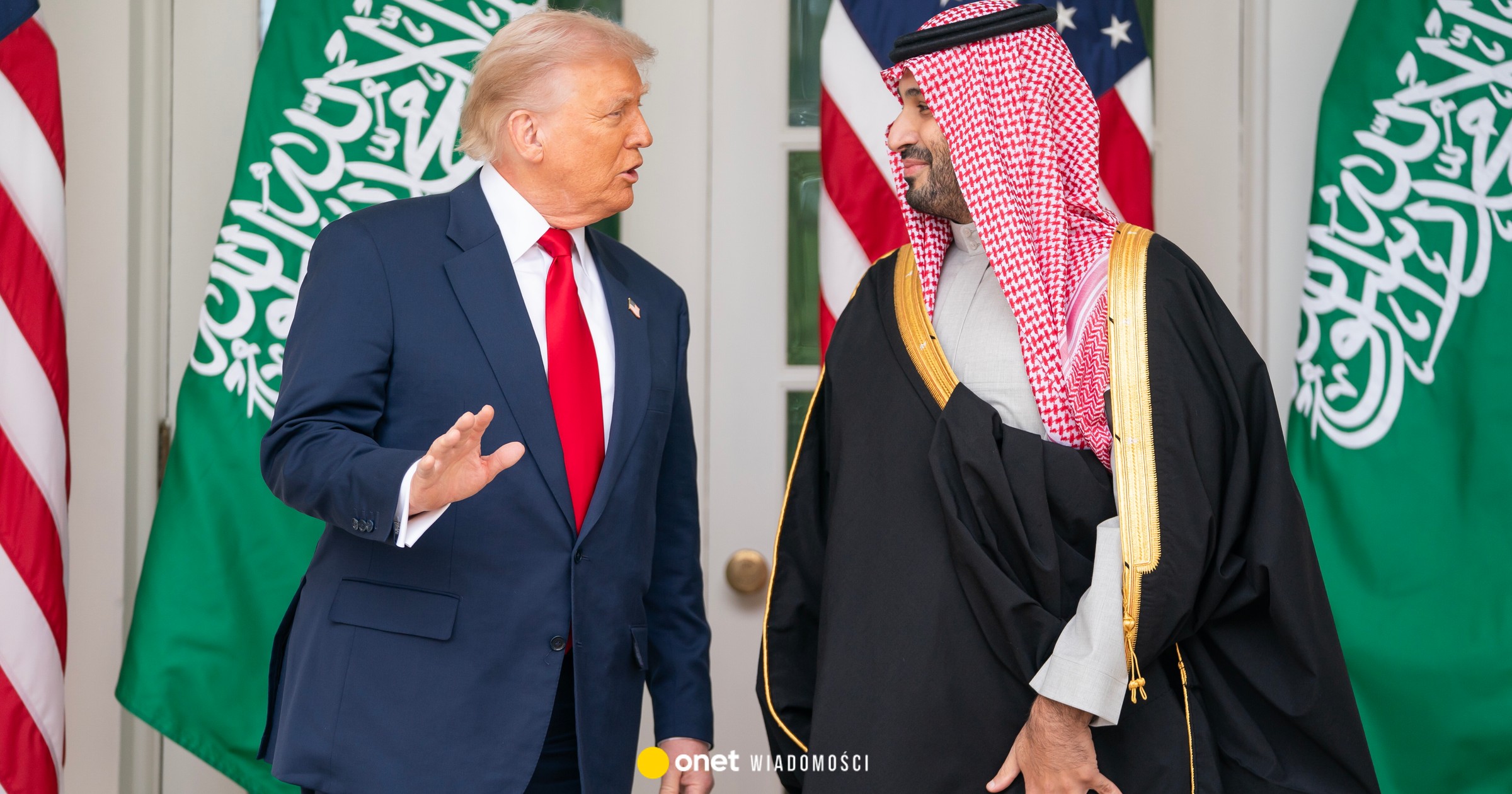
Shortly before the visit of Mohammed bin Salman, the Crown Prince of Saudi Arabia, to US President Donald Trump, nervousness was palpable in Jerusalem. If Trump were to provide the Saudis with F-35 fighters, it would be a “dangerous step”warned a representative of the Israeli Ministry of Defense in the Haaretz newspaper on the eve of the visit.
He further praised the kingdom for its long-standing partnership with the US.
Therefore, Donald Trump's deal is also a break with a long-standing principle of US security policy – namely that Israel's strategic advantage in supplying weapons to other partners in the Middle East is never questioned. After all, this advantage is part of Israel's security doctrine. But after Trump's meeting with Mohammed bin Salman, Israel may lose even more than just air superiority in the Middle East.
A strategic problem for Israel
According to the Financial Times, during the highest-level meeting, the leaders discuss economic issues and cooperation in the field of artificial intelligence, as well as the defense alliance. This would include F-35 jets, but also basic American security guarantees for the Saudis — which are expected to be even more comprehensive than those Trump recently granted to Qatar.
After Israel tried to kill Hamas commanders in the Qatari capital, Doha, in September, the US president made far-reaching assurances to the mediating state. The United States will defend Qatar, home to the largest US base in the region, from any future attacks. They will use any “lawful and appropriate measures – including diplomatic, economic and, if necessary, military”as Trump stated.
The commitment to help Qatar formulated in this way is very close to the one in force within NATO. However, according to the Financial Times, the Saudis are expected to negotiate even more. From Israel's perspective, there is a strategic problem: the prospect of peace between Israel and Saudi Arabia – a key goal of Israeli foreign policy in recent decades – may end up moving even further away.
This is a paradox because in recent years politicians, strategists and scientists have repeatedly conjured up the image of a “Middle Eastern NATO”. The main reason: the shared security interests of Israelis, Americans and Gulf Arabs in their long-term conflict with Iran. The basic condition for such an alliance would be the recognition of Israel by Western-oriented Arab states, primarily Saudi Arabia, which, as the most powerful state in the region and home to the holy places of Mecca and Medina, plays a leading role in the Muslim world.
The Abraham Accords recognizing Israel, which the Jewish state has concluded in recent years with the United Arab Emirates, Bahrain and Morocco, have also been seen as a precursor to a great general peace with the Saudis. Joe Biden and Donald Trump tried to broker such an Israeli-Saudi peace during their first term. However, at the heart of negotiations there have always been two constants – one incentive and one problem.
The problem was, on the one hand, the Saudi demand for Israel to pursue a two-state solution with the Palestinians — and, on the other hand, the refusal of Israeli Prime Minister Binyamin Netanyahu to commit to it. This problem still exists, and after the devastation caused by the war in Gaza, the Saudis can afford to be even less lenient on this issue. This would ultimately turn their own population and much of the Muslim world against the monarchy.
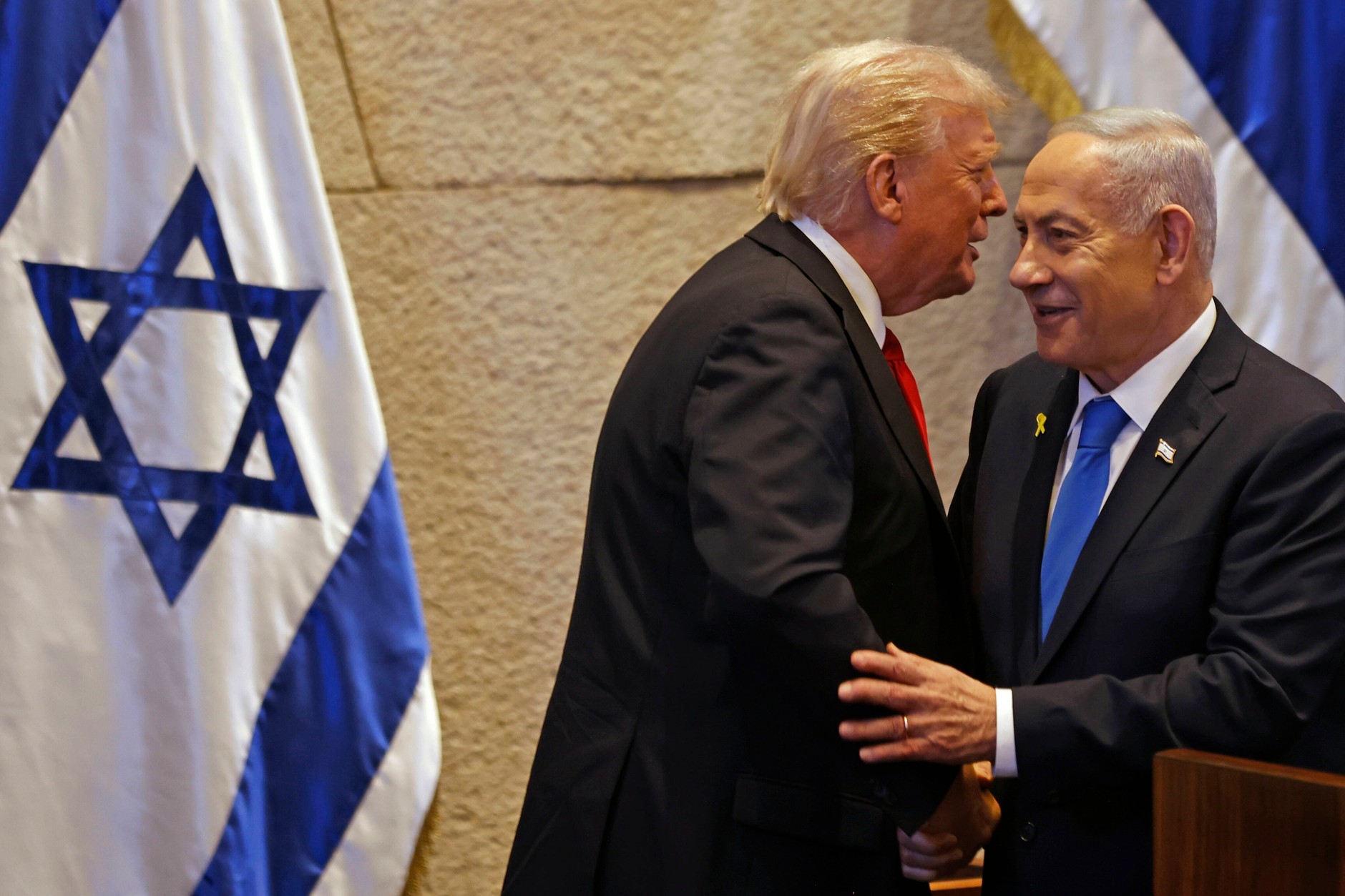
Donald Trump, President of the United States, and Binyamin Netanyahu, Prime Minister of Israel, in the Knesset Jerusalem, October 13, 2025.PAP/EPA/JALAA MAREY / POOL / PAP
In turn, under pressure from their right-wing coalition partners in the Jewish settlement movement Netanyahu has only once again ruled out a two-state solution. Ahead of the prince's visit, Saudi journalist Ali Shehabi, who has close ties to the royal family, warned in the New York Times that peace with Israel would certainly not be announced during the visit. However, the F-35 agreement is born the question is whether Israeli-Saudi peace can be expected at all in the foreseeable future.
US rapprochement with Saudi Arabia. This is not how Israel imagined it
After all, for the Saudis, the incentive to enter into the Abraham Accords has always been the American awards that Trump could award—namely comprehensive security guarantees and cooperation in the field of civil nuclear technologies.
The aircraft deal isn't the full package yet, but Trump's decision clearly shows that he is not adapting his policy towards the Persian Gulf to Israel's wishes. He may want to put pressure on Israel to make Netanyahu implement his Gaza peace plan, which also includes steps toward a two-state solution. However, if the Saudis get everything they have always wanted, step by step, they will have fewer and fewer reasons to sign a treaty with Israel.
If you talk to people with access to the Saudi court and security advisers from other Gulf states, almost no one seems to expect a Saudi-Israeli agreement. After all, negotiating a compromise with Netanyahu and his coalition government is clearly hopeless — and the Trump administration is already eager to do so. The US has an interest in strengthening security cooperation with the Arabs of the Persian Gulf — not only because of the threat of an Iranian nuclear bomb, but also because of competition with China, which is vigorously seeking influence in the Middle East.
Trump himself is also very active in the Persian Gulf. Both in the first term and in the second, his first presidential trip abroad was to Saudi Arabia. Trump is also a successful businessman in the Persian Gulf. According to the Financial Times, he has just negotiated another real estate deal in the Saudi business metropolis of Jeddah, this time worth $1 billion. [ok. 3,66 mld zł].
The prospect of peace between Saudi Arabia and Israel is therefore not completely ruled out. However, in the light of the latest reports, the situation of the Saudis depends less and less on this peace.