The fuel refund was supposed to help Ukrainians, but it caused a storm. Drivers turn up their noses. “Grandma and soldier will cover BMW owner's bill”

From Friday, March 20, Ukrainians began to receive compensation for high fuel costs. In the war-torn country, the state will partially reimburse drivers who fill up with traditional types of fuel to help offset soaring prices.
However, not all Ukrainians welcomed this initiative. The government's decision to introduce fuel refunds has been met with resistance and criticism from experts and drivers alike – even though most of them say they still plan to use the program.
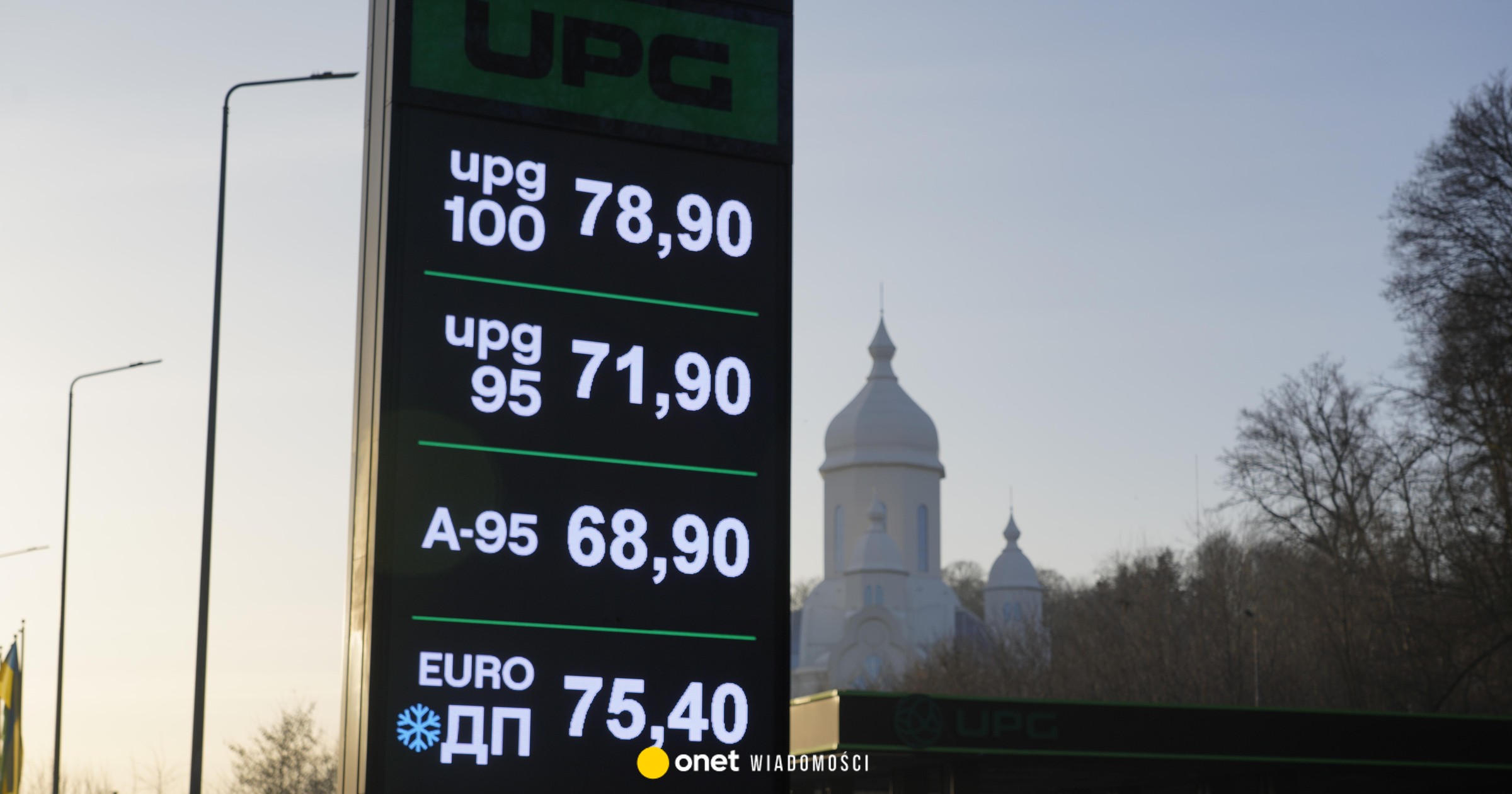
At most gas stations, prices have increased by more than 10%. At standard stations offering basic gasoline and diesel oil without additional services, the price of a liter of 95-octane gasoline has increased over the last two weeks from UAH 60 to UAH 69 (from PLN 5.06 to PLN 5.82).
Premium stations – which offer restaurants, a wider selection of fuels and additional services – saw an increase of up to UAH 10 (84 groszy) per liter.
Diesel prices have increased even more. The spring farming season usually brings a surge in demand for diesel fuel in itself – and this year, the war in the Middle East has added to that pressure.
For Ukrainians, these prices constitute a serious burden. Due to the closure of airspace, Russian attacks disrupting railway lines, and power outages that periodically halt urban electric transport, the car has become the main means of transport for both people and goods.
During power outages, vehicles also serve as heating points, charging stations and power sources for small appliances.
Prices at one of the gas stations in Kiev are currently increasing day by daySerhiy Kostezh / Kyiv Post
Fuel demand has also increased for another reason: Businesses are increasingly relying on generators during power outages, which experts say now account for as much as 20%. total fuel consumption in Ukraine.
Gasoline and diesel have become the lifeblood of both the Ukrainian economy and civilians' daily lives – which is why rising prices are hitting so hard, especially as many Ukrainians continue to struggle with reduced incomes and high inflation.
“Grandma and soldier will cover BMW owner's bill”
The fuel cashback program is an extension of the existing “National Cashback” initiative, which offers cashback of up to 10%. value of purchases of goods produced in the country. Customers purchase a Ukrainian-made product covered by the program, pay with a bank card associated with the program, and receive a percentage of the purchase price refunded to their designated account at the beginning of the following month.
The same mechanism will now apply to fuel. Drivers pay at a participating station using their associated card, the transaction is automatically recorded and the cashback is transferred the following month.
The refund rates are: 15%. per liter of diesel fuel, 10 percent per liter of gasoline and 5 percent per liter of car gas. There is a monthly limit of UAH 1,000 (approx. PLN 84), regardless of how much the driver spends.
Importantly, funds from the program cannot be spent arbitrarily. They can only be used for medicines, utility bills, essential groceries, books or donations to the Armed Forces of Ukraine.
The initiative was met with severe criticism — just like the broader “National Cashback” program that preceded it. The most common objection is a question of fairness. Critics say the program amounts to distributing public funds during wartime to people who are not among the most vulnerable groups.
The total budget allocated to the “National Cashback” program has not been disclosed, but experts estimate that it amounts to several billion hryvnias – tens of millions of dollars. In the context of the overall budget this may be a relatively modest sum, but in times of war each allocation of funds is subject to detailed analysis.
“In Ukraine, drivers are usually not poor,” wrote soldier, businessman and popular blogger Serhiy Marchenko on Facebook. “Of course, there are different situations. Pensioners with old Soviet Volga cars who drive once a year… and unemployed people who can't afford to refuel. But I don't think I'm lying when I say that 99 percent of Ukrainian drivers live better than retirees. So why does the Ukrainian state support people who are not poor instead of supporting retirees?”
“In this way, the grandmother and the soldier will cover the bill for a slightly fuller tank of some BMW X5 owner,” added parliamentarian Jarosław Żelezniak, one of the most outspoken critics of the program in parliament.
The second strand of criticism concerns the impact on imports. Since Ukrainian oil refineries were largely destroyed by Russia, petrol and diesel are now almost entirely imported. Critics say that stimulating consumption — rather than curbing it — will increase imports, put pressure on the hryvnia and fuel inflation that disproportionately hits lower-income Ukrainians.
“No restrictions on private consumption as at the beginning of the war, no more flexible excise tax, no targeted subsidies – just pumping money from the state budget to gas stations for a 100 percent imported product,” said economist Volodymyr Vakhitov. “This increases pressure on the hryvnia and ignores the volume of consumption, which makes it in practice a regressive measure: prices are rising and fuel costs constitute a larger share of the budget of a poor household than a wealthy one.”
Opposition MPs also point out that the program excludes businesseswhich limits its economic impact. “The cashback does not apply to businesses and therefore will not reduce logistics costs or prices on store shelves,” wrote MP Julia Sirko on Facebook.
Drivers grateful, but not delighted
Even among drivers, enthusiasm is moderate.
For example, the author of this article fills up with 150 to 180 liters a month – which currently costs from PLN 11,000. up to 13 thousand hryvnias (from PLN 928 to PLN 1,097). Compared to this amount, the monthly cashback of 1,000 hryvnia (approx. PLN 84) seems modest at best.
This reflects a broader reality: many Ukrainians drive a lot, especially those who commute from the suburbs to Kiev or visit multiple places during the working day. For drivers traveling long distances, this limit seriously reduces the importance of this relief.
There is also a behavioral dimension. Ukrainian drivers have historically responded better to immediate discounts at the point of sale than to deferred cash refunds. Gas station loyalty programs previously offered UAH 1 to UAH 5 (8 PLN to 42 PLN) discounts per liter at the pump – but many of these discounts have since been reduced or abolished. The new cash refund likely won't make up for what drivers have already lost.