Bulgarian officials last week asked the EU's diplomatic service to help detect — and ultimately stop — campaigns by foreign entities to manipulate public opinion through social media and propaganda websites. They want Brussels to use methods developed in response to threats from Russia and China.
Bulgaria's request, which is rare for an EU country, is part of a wider government effort. Last week, the Ministry of Foreign Affairs in Sofia established a temporary unit to coordinate actions in response to foreign interference and hired investigative journalist Hristo Grozev, known for his previous work with the online investigative group Bellingcat, as an adviser to the unit.
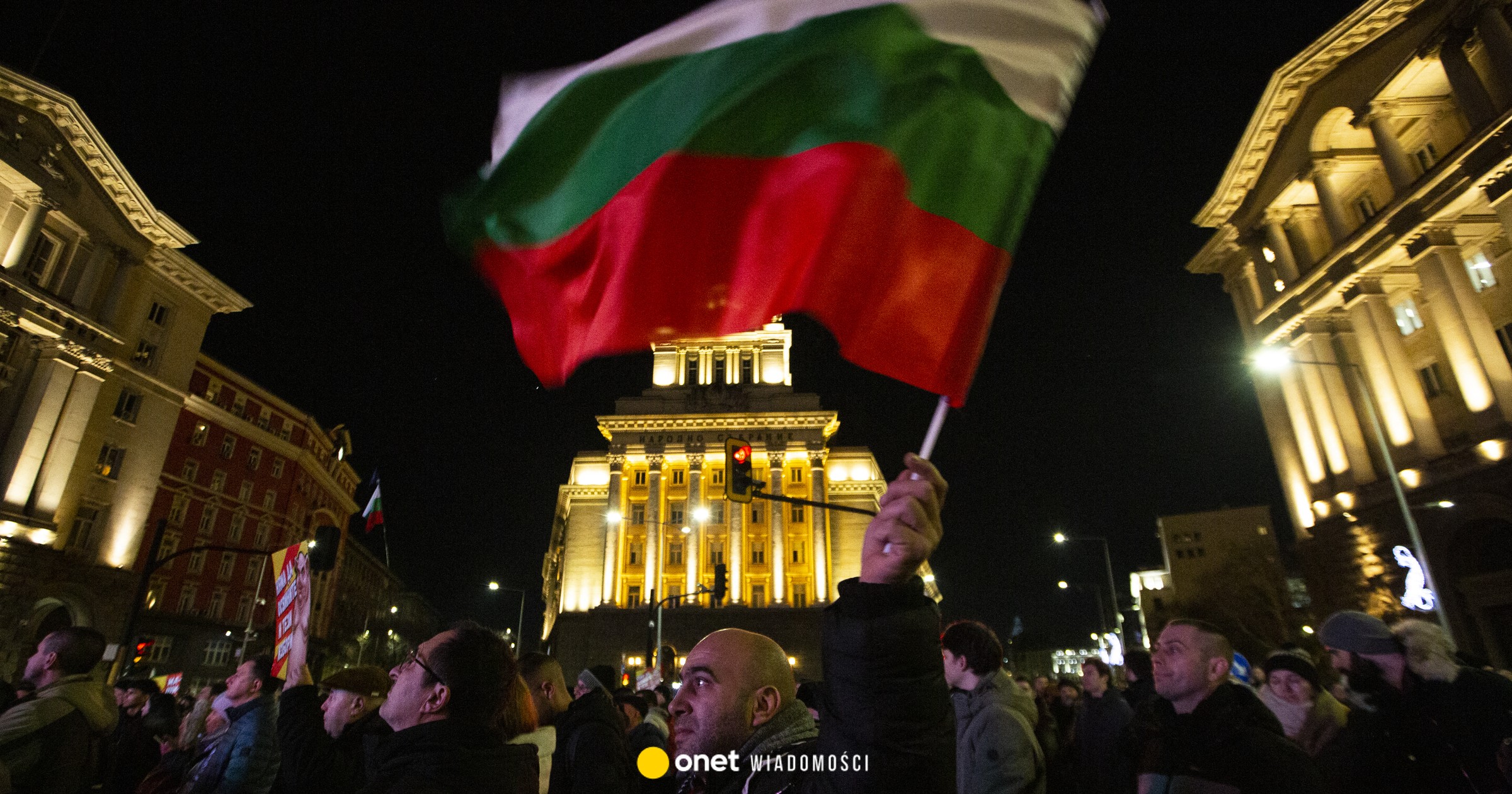
The government is preparing for a possible influence operation before the parliamentary vote, which will take place on April 19. These are the eighth elections in the country in five years. The left-wing former president Rumen Radev, who is leading in the polls, and the experienced center-right leader Boyko Borissov will face each other.
The latest report by the Bulgarian Center for the Study of Democracy states that Bulgaria “has one of the most favorable information environments for undemocratic, malicious manipulation across the EU and one of the least prepared institutional responses.” Its authors warned against networks of Russian bots that seek to sow division.
Sofia's request included a request for assistance from the European External Action Service (EEAS), which coordinates the activities of European security services to detect and analyze campaigns carried out by foreign entities to manipulate public opinion. He started the mechanism, which was most often used to protect neighboring countriessuch as Moldova, from Moscow's interference.
The correspondence shows that Sofia has also asked the EU to launch a process called the Rapid Response System under the Digital Services Act (DSA) to engage in discussions with representatives of social media platforms such as Meta, Google, TikTok and others to detect and stop disinformation campaigns as they develop. The Commission confirmed last week that it had started this process.
The article continues below the video
Bulgaria asked for EU support “due to the increased risk of coordinated disinformation campaigns and foreign interference that may undermine the integrity of the electoral process,” the government said in a letter addressed to the European Commission and the External Action Service.
One official familiar with the request, who was granted anonymity, said Bulgaria “has always remained silent on these matters and denied any interference.” — Currently the Ministry of Foreign Affairs it is much more sensitive and considered this issue a priority, he added.
“Dangerous trend”
The European External Action Service (EEAS) uses its Foreign Information Manipulation and Interference (FIMI) toolkit to exchange information between relevant national and EU authorities and coordinate actions in response to undesirable phenomena. It could also lead to governments publicly shaming foreign adversaries for hybrid interference campaigns, and even support EU decisions to impose sanctions on foreign disinformation groups.
In mid-March, the government also met with representatives of TikTok to discuss the issue of disinformation during the election campaign.
— The Bulgarian electoral code contains strict rules on political campaigns, but they only apply to traditional media, notes Georgi Angelov, senior analyst at Sensika Technology, a company that monitors online content. – Manydisinformation has moved online, he adds.
Calin Georgescu arrives surrounded by journalists at a court in Bucharest, Romania, March 26, 2026.ROBERT GHEMENT / PAP
— After what we saw in Romania, this is a very dangerous trend — says Angelov, referring to the unexpected victory in the first round of the later canceled 2024 presidential elections of ultranationalist and pro-Russian candidate Calin Georgescu. Much of the concern has focused on how a coordinated campaign on TikTok managed to promote a previously almost unknown candidate.
The EU's diplomatic service said it was ready to support member states in the fight against disinformation, “in particular through a rapid alert system for the exchange of information in real time.” It triggers alerts when security services detect disinformation campaigns and is part of the FIMI toolkit.
“Elections are a national competence. Their organization and course are fully the responsibility of the member states,” the service emphasized.
I’m Ashley Davis as an editor, I’m committed to upholding the highest standards of integrity and accuracy in every piece we publish. My work is driven by curiosity, a passion for truth, and a belief that journalism plays a crucial role in shaping public discourse. I strive to tell stories that not only inform but also inspire action and conversation.