The culinary delights that brighten up Lent. Three delicious Balkan recipes made with beans


Beans are the main ally of Romanians who want to fast on Easter. It is a nutritious, filling and delicious food. Plus, it can be prepared in a multitude of ways. There are some absolutely delicious bean meal recipes that are worth trying at least once in your life.

Fasolada, a Greek bean soup PHOTO mygreekdish.com
The Easter fast is the longest in the Orthodox church calendar. It lasts 40 days and has few days with release to fish. In other words, it is strictly and extremely important, spiritually preparing the Easter season. Without meat, cheese or eggs, Romanians who fast rely more on vegetables, beans being among their favorite vegetables. This is an extremely nutritious food, considered an essential source of vegetable protein, fiber, vitamins and minerals, a real pillar of a balanced diet. It is a satiating food (very important during fasting), has a low fat content and a low glycemic index, which makes it ideal for maintaining metabolic health. In addition, it contains significant amounts of iron, magnesium, potassium and folate. Not to mention molybdenum, an ideal substance for detoxification. Experts say beans are also very important for heart health, with fiber and nutrients helping to lower cholesterol. It is also good for blood sugar control. The nutritional benefits of beans have been recognized since ancient times, with gladiators being big consumers of beans, as recent studies show. Beans are an excellent alternative to meat, rich in essential amino acids. In the Balkan Orthodox world there are several representative fasting recipes with beans.
Moldovan bean borscht, the sweetest temptation
We can't start the discussion about Lent bean dishes without a native delicacy. Basically, it is the staple food of the Moldovan during Lent. It is about the Moldavian bean borscht. It is prepared in the whole area of Moldova, but mainly in the north, with variants established in Botoșani, Neamț, Iași, Vaslui or in Bucovina. Overall, the recipe is the same with slight variations and differences. This bean borscht is actually a traditional soup that is characterized by the addition of borscht, the abundance of vegetables and even the presence of noodles (in certain areas). The main ingredient of Moldovan borscht is beans or “beans” as they say in the northern areas.
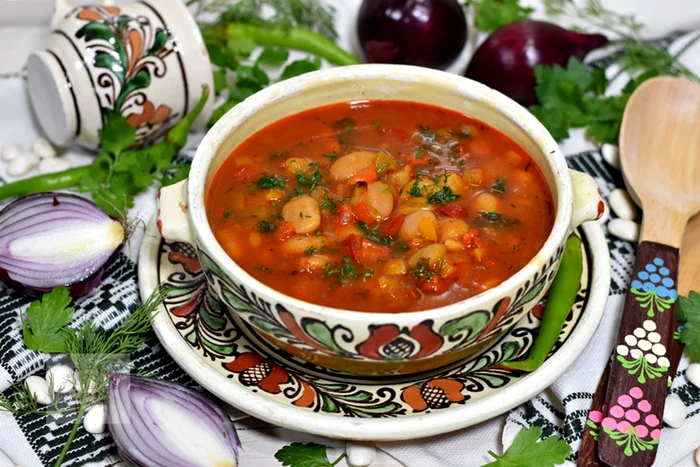
Moldavian bean borscht PHOTO caietulcuretete.com
Beans with white, large, fleshy beans are usually used. The preparation process starts the night before. It is soaked in water to rehydrate, which significantly shortens the cooking time and ensures even cooking of the beans. This process also helps eliminate oligosaccharides (complex sugars) that cause bloating and gas. The next day, the beans are boiled in a pot of water. In the meantime, we take care of the vegetables. We need onions, carrots, parsnips, celery and bell pepper. Cut them into cubes and add them when the beans are almost completely cooked. In many areas, onions are sautéed in vegetable oil alongside carrots. The wave is “extinguished” in the pan with good homemade broth. We also add this mixture to the draft pot. Finally, when all the beans and other vegetables have been cooked, we add the borscht. Attention, the borscht is brought to a separate boil in a jug and then poured into the pot. Finally, dill and green parsley can be used for flavoring. In Bucovina, for example, a spoonful of ghebe sauce is also added to the bean borscht, for flavor. In other areas of Moldova, noodles are also added for extra satiety. It must be eaten with onions cut into quarters, with salt sprinkled on top.
Black Lent on Good Friday. What time can you eat?
The national soup of the Homeric lands during Lent
We can't talk about Lenten bean recipes without taking a virtual culinary journey to the heart of Balkan Orthodoxy – Greece. The Greeks have a special bean soup for Lent. They call it fasolada and it is often called the national soup of Greece. It is a hearty white bean dish cooked with tomatoes, carrots, celery and lots of olive oil. To prepare it, you need half a cup of white beans (as in the case of Moldovan borscht, the beans must be soaked in water overnight), onions, carrots, celery, crushed tomatoes, half a glass of olive oil, bay leaf, salt and pepper to taste. It is prepared simply.
Boil the beans for 30 minutes, then drain the water. In another pot, sauté the finely chopped onion in olive oil until soft. Add the diced carrots, diced celery and crushed tomatoes. Mix well, wave healthily, adding a bay leaf. Add the beans on top of the mixture, cover with water and leave on a low heat for 60 minutes. The beans should be tender. Don't forget to season with salt, pepper and drizzle with a little olive oil. The beans are eaten with fresh bread, with the addition of olive oil and sprinkled with lemon juice. An incredible Mediterranean delicacy.
A filling meal
Also in the Balkans we will find another fasting recipe that is worth trying at least once in your life. It is about Prebranac, a Serbian recipe with beans. Unlike Moldovan borscht and fasolada, prebranac is a kind of low, thick, hearty bean stew.
It is one of the staple dishes of Serbian, Bosnian and Macedonian cuisine. Prebranac used to be cooked by Balkan farmers during the long winters, because it is nutritious, healthy and cheap. It is served at room temperature with warm, crusty bread. In the Balkans, each family has its own way of preparing it.
There is, however, an established recipe, a standard, on which every chef allows himself to embroider culinary improvisations here and there. For the prebanac you need half a kilogram of white or red kidney beans, five yellow onions, sweet paprika, two cloves of garlic, bay leaves, salt and pepper. The beans are hydrated overnight, in warm water. The next day, when we start cooking, we put the beans in fresh water. We put it to boil, on a low heat (after initially giving it a boost to boil), until the grain becomes soft. Drain the water in which the beans were boiled and set aside. Heat the oven, ideally around 180-190 degrees. In a wide pot or casserole, mix the onion cut into thin rounds or strips with oil. Add a few drops of water to prevent the onion from drying out.
The Sunday of the Awful Judgment and the leave of the age of flesh. White Week begins, the period of transition to Easter Lent
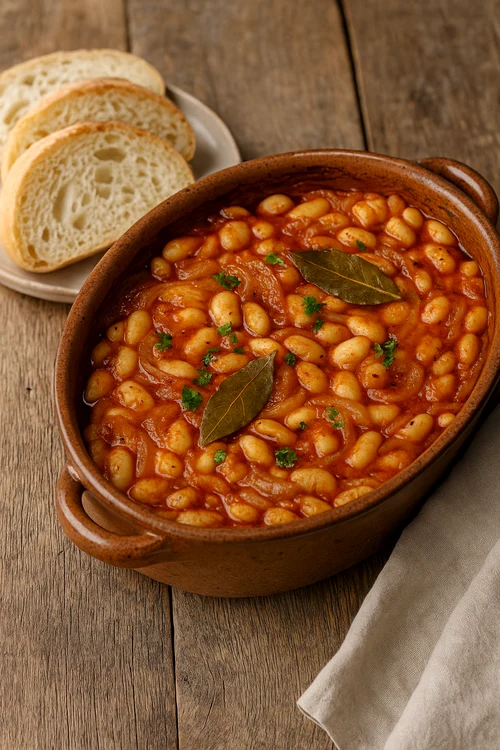
Serbian Prebranac PHOTO grannyzen.com
We leave it on low heat, in the oven, for about half an hour, until it turns yellow and very soft. Afterwards, we add the beans, garlic, paprika and bay leaves. Season with salt and pepper. We also add a few cups of water, enough to cover the beans. Leave it in the oven for an hour, adding water if needed, so that we don't burn it. We know it's ready when the top layer of beans is slightly caramelized and the water has reduced to reveal a creamy, onion-covered composition. The pre-branac is then removed from the oven. Leave to cool completely. Ideally, let it cool for a day before consuming. It is only the next day that it is removed and left at room temperature (not cold) and eaten with crusty bread.