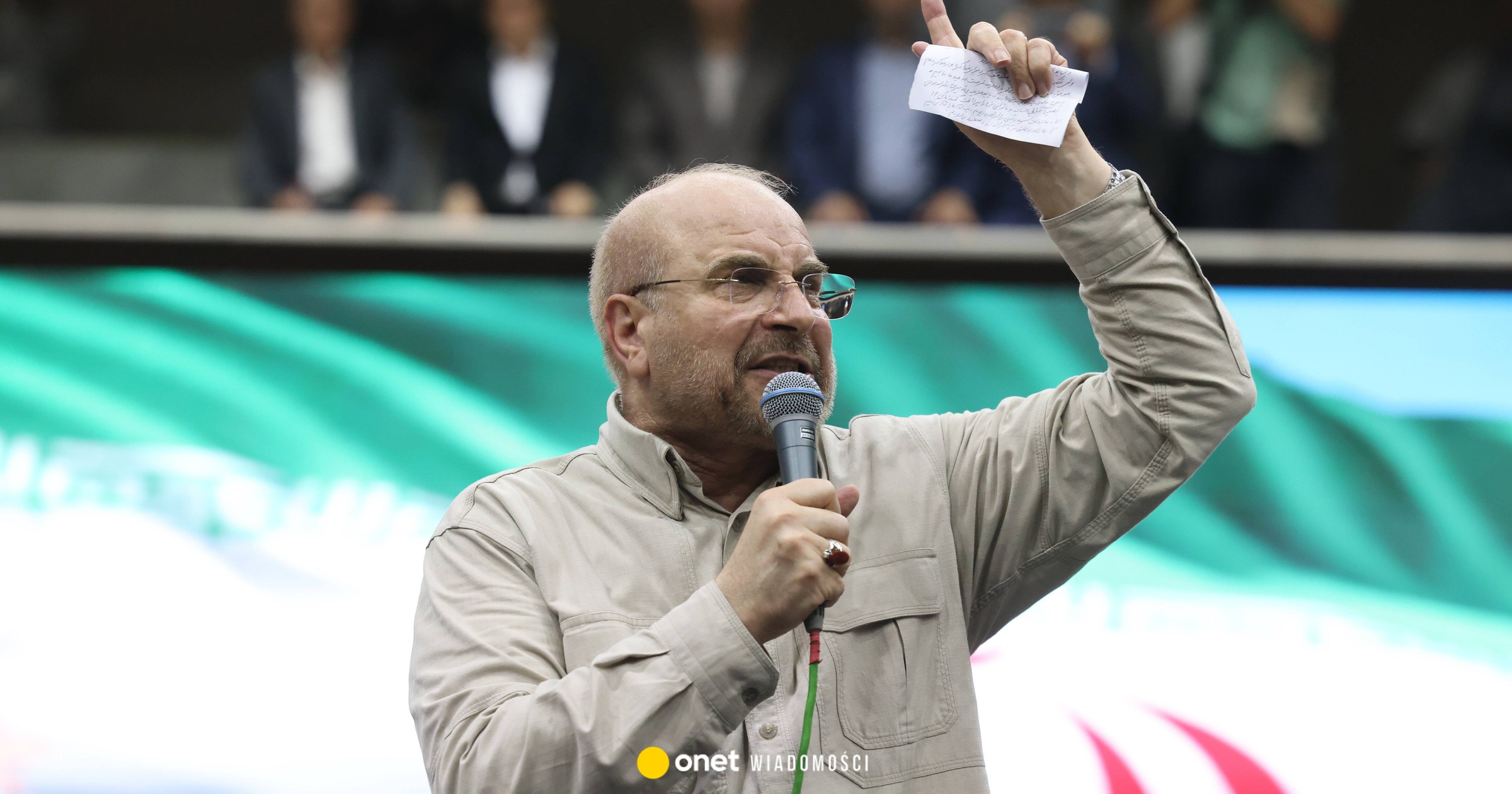

US President Donald Trump threatened on Saturday evening to destroy Iranian power plants if Tehran does not unblock the Strait of Hormuz within 48 hours. Iranian Parliament Speaker Mohammad Bagher Ghalibaf then announced that critical infrastructure across the region, including energy facilities and desalination plants, would become “legitimate targets” of retaliation.
The threat to desalination plants is crucial because Gulf states have some of the world's smallest water resources. Without this technology, approximately 100 million inhabitants of the region would not have regular access to drinking water.
Attacks on water infrastructure. “Dependency on desalination is high”
The dependence of individual Gulf Cooperation Council (GCC) countries on desalination is very high: in Qatar it is approximately 99%. demand for drinking water, in Kuwait and Bahrain approximately 90 percent, in Oman 86 percent and in Saudi Arabia approximately 70 percent. In the United Arab Emirates (UAE) this share is approximately 42%.
Shortly after the U.S. and Israel began bombing Iran on February 28 — and Iranian retaliatory attacks on targets in the Gulf countries — the first attacks on water infrastructure were reported. Iran accused the US of striking a facility on the island of Keshm on March 7, which disrupted water supplies to 30 villages. A day later, Bahrain reported damage to a desalination plant following a drone attack. Kuwait and the UAE also reported minor damage to water infrastructure.
There are over 400 desalination plants in the region, most of them located on the Persian Gulf. Over 90 percent However, desalinated water production comes from only 56 plants. This concentration, as well as their proximity to Iran, make desalination infrastructure particularly vulnerable to the effects of escalating missile and drone attacks.
Vision of a humanitarian crisis. “The destruction of infrastructure will deprive people of drinking water in a few days.”
The Atlantic Council has warned that systematic strikes against desalination plants could lead to a large-scale humanitarian and economic crisis. Due to the connection of these plants with energy networks, their failure may cause extensive power failures in cities, experts emphasize.
In turn, a 2010 CIA report stated that the destruction of key infrastructure could deprive the GCC countries of most of their drinking water within days, and the crisis could last for months. The lack of water would also affect food production, the hotel sector and industry.
Since 2006, Gulf states have invested over $53 billion. in the development of desalination infrastructure, Anatolia Agency reported in March. In parallel, they prepared installation protection plans, covering pipeline networks, large storage tanks and securing water intakes. Saudi Arabia and the UAE have the best infrastructure security, while Bahrain, Qatar and Kuwait have minimal reserves. In the UAE, water supplies are enough for approximately 45 days.
Water desalination has become the foundation for the development of the Gulf countries, enabling the construction of modern cities and economies in conditions of extreme freshwater shortage. Experts point out, however, that the most urgent needs currently include investments in anti-drone systems and decentralization of water production through the development of smaller installations powered by renewable energy.