Man on the Moon during Trump's presidency? NASA's ambitious plan


The Trump administration has set an extremely specific and ambitious timeline for the Artemis program. NASA head Jared Isaacman, who took over at the end of last year, publicly declared that the agency would complete all lunar missions before the end of the president's second term (which ends in January 2029). Isaacman emphasized in an interview with Fox News that it is not about speeding up at any cost, but about returning to a proven method of operation. Thanks to this, Artemis II is scheduled to launch in a few weeks and orbit the Moon with a four-person crew on board. Artemis III is scheduled for mid-2027 as a key risk reduction test, with two subsequent missions – Artemis IV and V – are expected to bring humans to the surface of the Silver Globe as early as 2028.
For the first time since December 1972, when the Apollo 17 astronauts left the Moon, Americans have a real chance to set foot on its surface again. The Artemis program is no longer just a continuation of an old dream about space, it has become a political priority of Trump's second term. Isaacman openly points out that the previous administration did not make key decisions for four years, performing only one unmanned test in 2022.
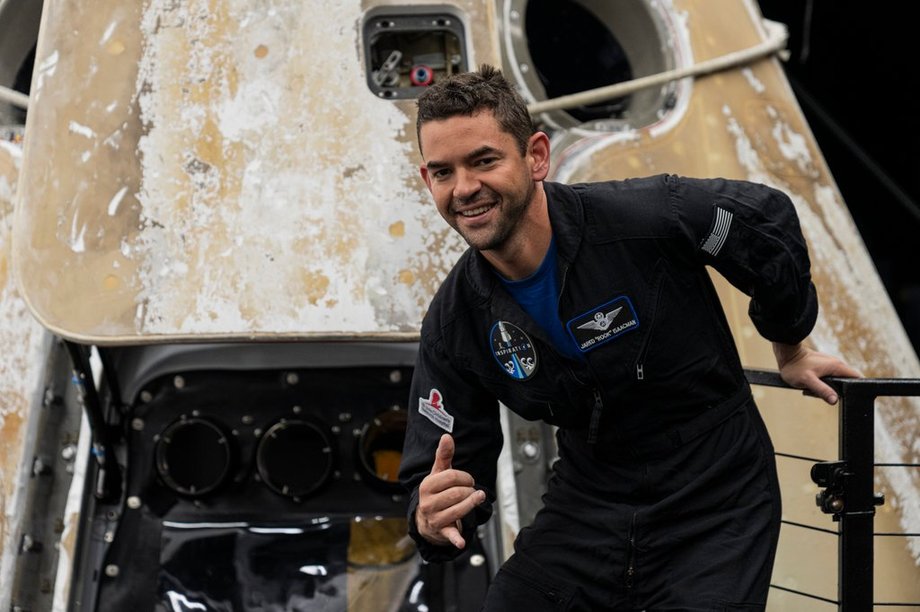
Jared Isaacman
- Read also: POLITICO editor-in-chief: Trump will get his third term. And this without violating the Constitution [KOMENTARZ]
In the face of the President of the United States' insults regarding the Nobel Peace Prize and his building international alliances “for peace” it seems that NASA's new goals clearly result from the ambitions of Donald Trump, who wants to go down in history as the US president who sent a man to the Moon again.
The beginnings of the Artemis program — during Trump's first term
The Artemis program is not the idea of the new administration. Its foundations were laid precisely during Donald Trump's first presidency. On December 11, 2017, the president signed Space Policy Directive-1, the document that officially directed NASA back to the Moon. The directive ordered “conducting an integrated program of manned and unmanned exploration, with a landing on the Moon in the coming years” and the construction of a permanent human presence on the surface of the Silver Globe as a preparatory stage for the mission to Mars.
Read also in BUSINESS INSIDER
It was then that the name Artemis appeared for the first time, referring to the Greek goddess of hunting and Apollo's sister, which was to symbolize the continuation, but also a new opening after the Apollo era. In 2019, the Trump administration announced that the first landing involving a woman and another man would occur by 2024 — an ambitious deadline but quickly deemed unrealistic.
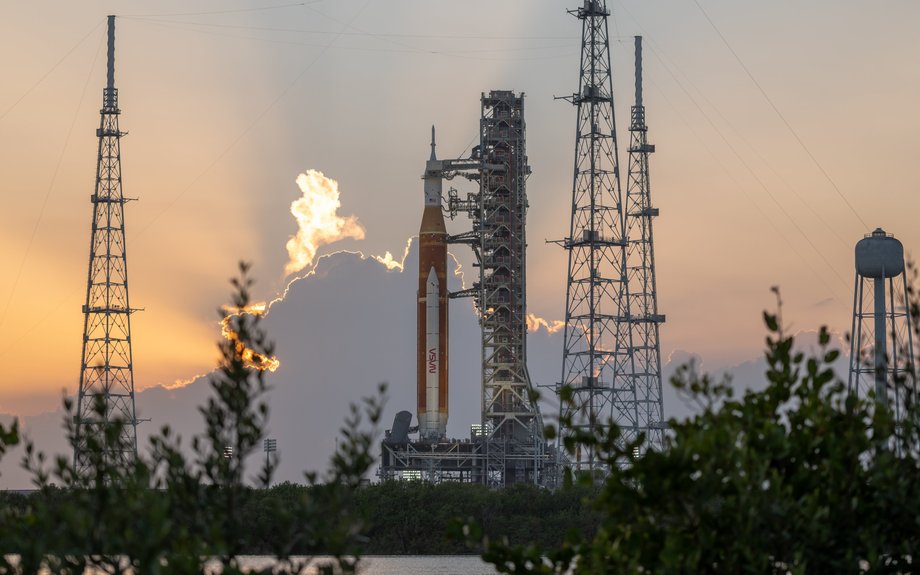
Artemis I
|
NASA/x.com
Key elements of the program's architecture were also developed during this period. The Space Launch System (SLS) rocket, the most powerful launch vehicle ever built, was already in an advanced stage of development, although its first launch had been delayed several times. The Orion capsule, designed to fly beyond low Earth orbit, also had its roots in the Constellation program, which Obama canceled in 2010, but elements of Orion survived and were developed.
In 2020, the Artemis Accords were signed, an international agreement on the principles of peaceful exploration of the Moon, which has been signed by over 50 countries to date. This document was intended to ensure that a future presence on the Moon would be consistent with the 1967 Outer Space Treaty, while giving the United States a significant role in shaping standards. That same year, NASA selected SpaceX to provide the Human Landing System (HLS) lander, which will take astronauts from lunar orbit to the surface and back.
- Read also: Artemis II mission postponed. A problem with helium delays the launch
However, the first big step was taken only after the change of administration. Artemis I – an unmanned test flight of the SLS rocket with an Orion capsule – launched on November 16, 2022, and was a success. This mission passed the Moon, tested the thermal, communication and propulsion systems, and returned the capsule safely to the ocean. It was a moment NASA had been waiting for over a decade – the first time SLS and Orion flew on a real mission beyond low Earth orbit. Despite this spectacular success, further progress almost completely stopped for the following years.
Stagnation during the Biden presidency
After the successful Artemis I flight in November-December 2022, the Artemis program entered a phase that many experts and former NASA employees referred to as “decision paralysis.” For the next three years – from the end of 2022 to the end of 2025 – the agency did not conduct another mission under this program. Neither Artemis II (the first manned flight around the Moon), nor Artemis III (the planned first landing), nor any other significant technology demonstration took place.
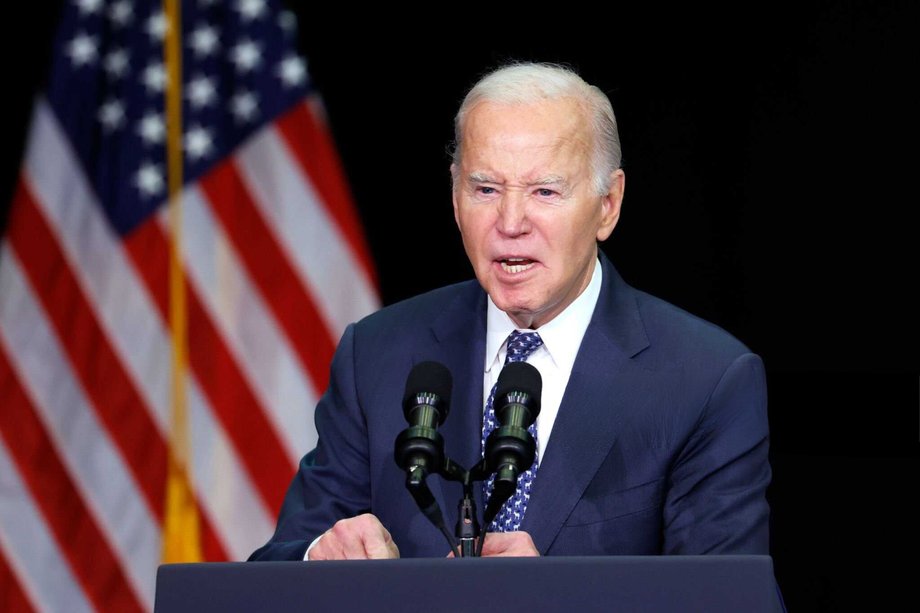
The Biden administration did not prioritize the Artemis program
|
Anna Moneymaker / Shutterstock
The main causes of this stagnation were multiple and mutually reinforcing. First of all, the SLS rocket and the Orion capsule turned out to be much more expensive and more complicated to produce than expected. Each SLS launch required the construction of new elements, and these were produced at a rate of one every few years. The program's costs have already exceeded $40 billion, and the schedules have been repeatedly postponed.
Secondly, key elements of landing systems, primarily SpaceX's Human Landing System, have encountered serious delays. The third major bottleneck turned out to be the new lunar suits (xEMU and Axiom Extravehicular Mobility Unit). They were originally supposed to be ready in 2024, but problems with cooling systems, mobility and protection against lunar dust meant that in 2025 NASA still did not have a fully tested suit capable of operating on the lunar surface.
The new administration is back to an ambitious pace
With Donald Trump's return to the White House, the Artemis program received new support and a new leader. Jared Isaacman, an experienced commercial astronaut and billionaire associated with SpaceX, was sworn in as NASA administrator in December 2024. From the first days of his office, he has openly declared a return to the philosophy of regular, repeatable flights, which NASA successfully used during the Apollo program.
- Read also: Donald Trump's mistake will go down in history. The “mad king” destroys his own empire. Allies are already flirting with his greatest enemies [OPINIA]
The current plan is a clear shift towards an ambitious pace. Artemis II, the first manned flight around the Moon with a crew of four, is scheduled to launch in early April 2026. The launch was already pushed back once from February due to a minor helium leak in the SLS rocket, but the problems were fixed and the mission remains on track. The next one, Artemis III, is scheduled for mid-2027 and is primarily intended to reduce risk before the actual landings – it may be of a test or limited nature. The most important, however, are Artemis IV and V: both are expected to bring the first manned landings on the lunar surface as early as 2028, i.e. during Trump's second term.
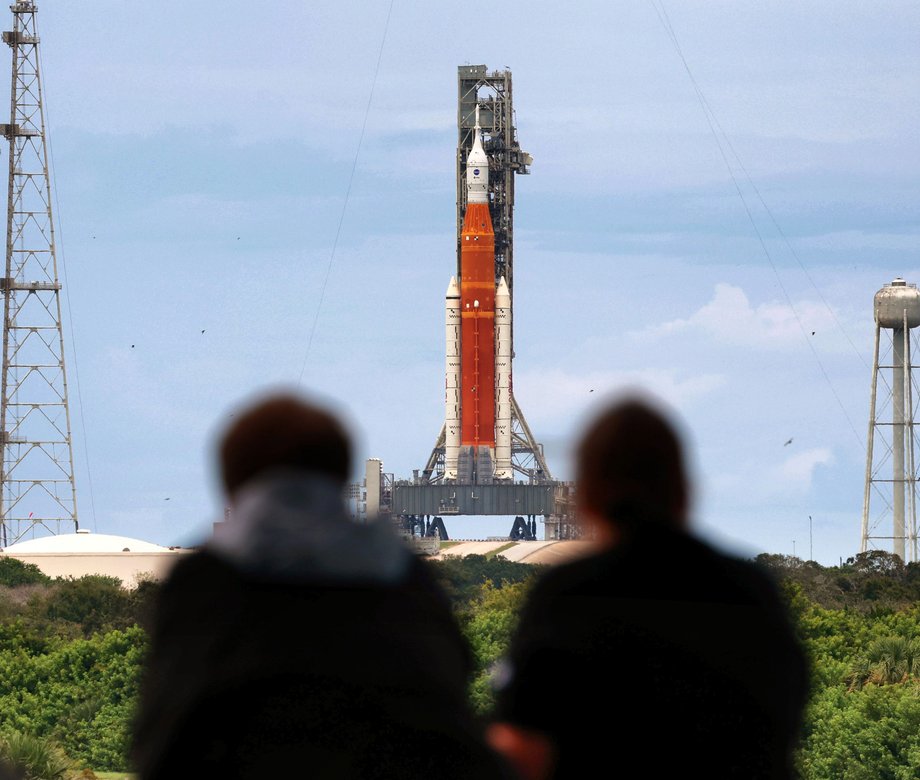
Artemis I, a NASA Space Launch System rocket, carrying the Orion spacecraft. August 28, 2022
|
Red Huber/Getty Images/Getty Images
Isaacman explains that the key to success lies in rhythm. Apollo 11 didn't appear immediately, he reminds us. Regular starts and tests were crucial. Thanks to this, flight controller teams, engineers and manufacturers (SpaceX, Blue Origin, Boeing, Lockheed Martin) will be able to regularly train and correct errors. Both contractors and Congress leaders responsible for the space budget declare their full support.
This returns NASA to the model that once allowed America to reach the Moon in less than a decade. Whether it will be possible to maintain this pace without compromising safety – the coming months will show. For now, however, the declaration of four Artemis missions before the end of Trump's term in January 2029 sounds like a clear signal: America wants to be number one in space again.
Symbolism of “man on the moon under Trump”
Additionally, the Artemis program has a geopolitical dimension. China is planning its own manned landing on the Moon around 2030 and is already building the Tiangong space station and developing Long March rockets. The United States wants to be the first and prove that the democratic system, based on cooperation with private companies such as SpaceX or Blue Origin, still wins over the state programs of authoritarian rivals. The Artemis Accords, signed by more than 50 countries, strengthen this position by creating an international framework for cooperation under U.S. leadership.
- Read also: The American dream. Donald Trump took the opportunity to put on a show. “Our country wins again”
As a result the declaration of four missions before the end of the term is not just a technical plan. This is a political deadline that is supposed to bring Trump tangible success — something that will be showcased on television, on social media and in history as the great achievement of his second presidency. For the average American, it's not all rockets and astronauts. This is proof that America can still dream and make those dreams come true.
The Risks of Acceleration – A Lesson from the History of the Apollo and Shuttle Programs
However, the history of American space exploration shows that combining ambitious political deadlines with very complicated technology and limited resources often leads to tragic consequences. The most famous examples are two Space Shuttle disasters and one from the Apollo era, each of which involved varying degrees of time and political pressure.
- Apollo 1 – ground fire in January 1967 (three fatalities),
- Challenger – disaster on January 28, 1986 (7 victims),
- Columbia – Shuttle disintegration February 1, 2003 (7 casualties).
Jared Isaacman repeatedly says that the priority is safety and learning from mistakes, not blind acceleration. At the same time, the political deadline – four missions before the end of Trump's term – puts real pressure. If this pressure translates into shortening tests, ignoring minor anomalies, or pushing for launch despite unresolved issues, the risk of a major failure increases dramatically.
Trump needs bright spots in his term
Landing a man on the Moon more than 56 years after the last Apollo 17 mission in December 1972 would be an event of historic proportions. Millions of viewers around the world could watch live as American astronauts descend the landing ladder and set foot on the surface of the Silver Globe. For Trump, it is the perfect symbol of the return to the greatness he promised during the election campaign: America is first again, America is again the most powerful. The slogan “man on the moon for Trump” has already appeared in the media and among his supporters as a kind of political trophy.
- Read also: Americans will build nuclear reactors on the Moon. They have a clear goal
NASA faces a classic dilemma that has accompanied every major space program since Kennedy: how to reconcile political pressure for quick, spectacular success with the imperative need to maintain the highest safety standards. The Artemis program is no longer just a technical challenge. Thanks to the declaration of four missions before the end of Donald Trump's term in January 2029, it has also become a political project of enormous symbolic importance.
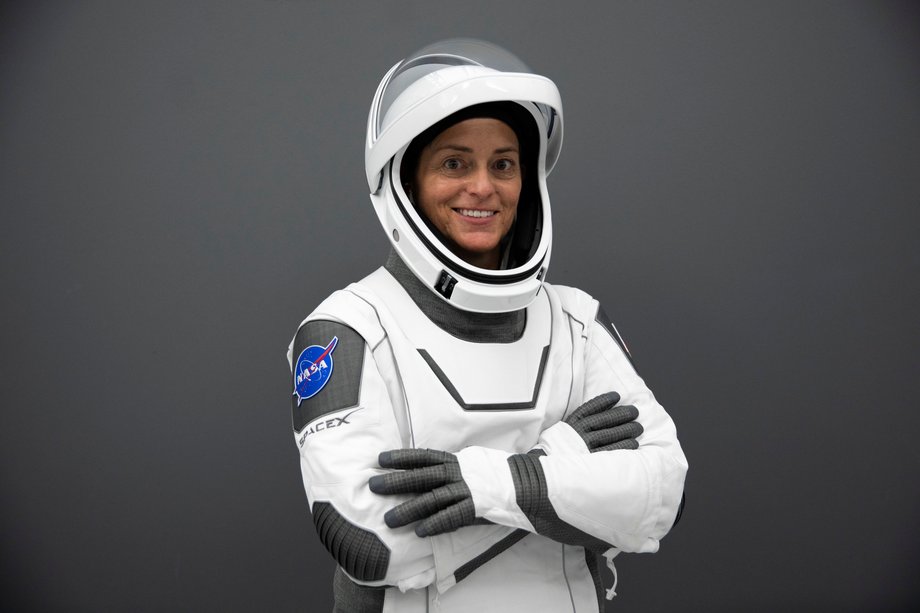
NASA still doesn't have completed lunar suits
|
SpaceX/NASA
If NASA maintains its balance and lands on the Moon in 2028, it will be a triumph of American determination and private-public cooperation, but also a huge success attributed to Donald Trump himself. However, if the rush leads to a major failure, the political, financial and, most importantly, human costs will be enormous. However, the current president of the United States seems ready for this.