Toilet disaster on the USS Gerald R. Ford. Suspicion fell on the sailors

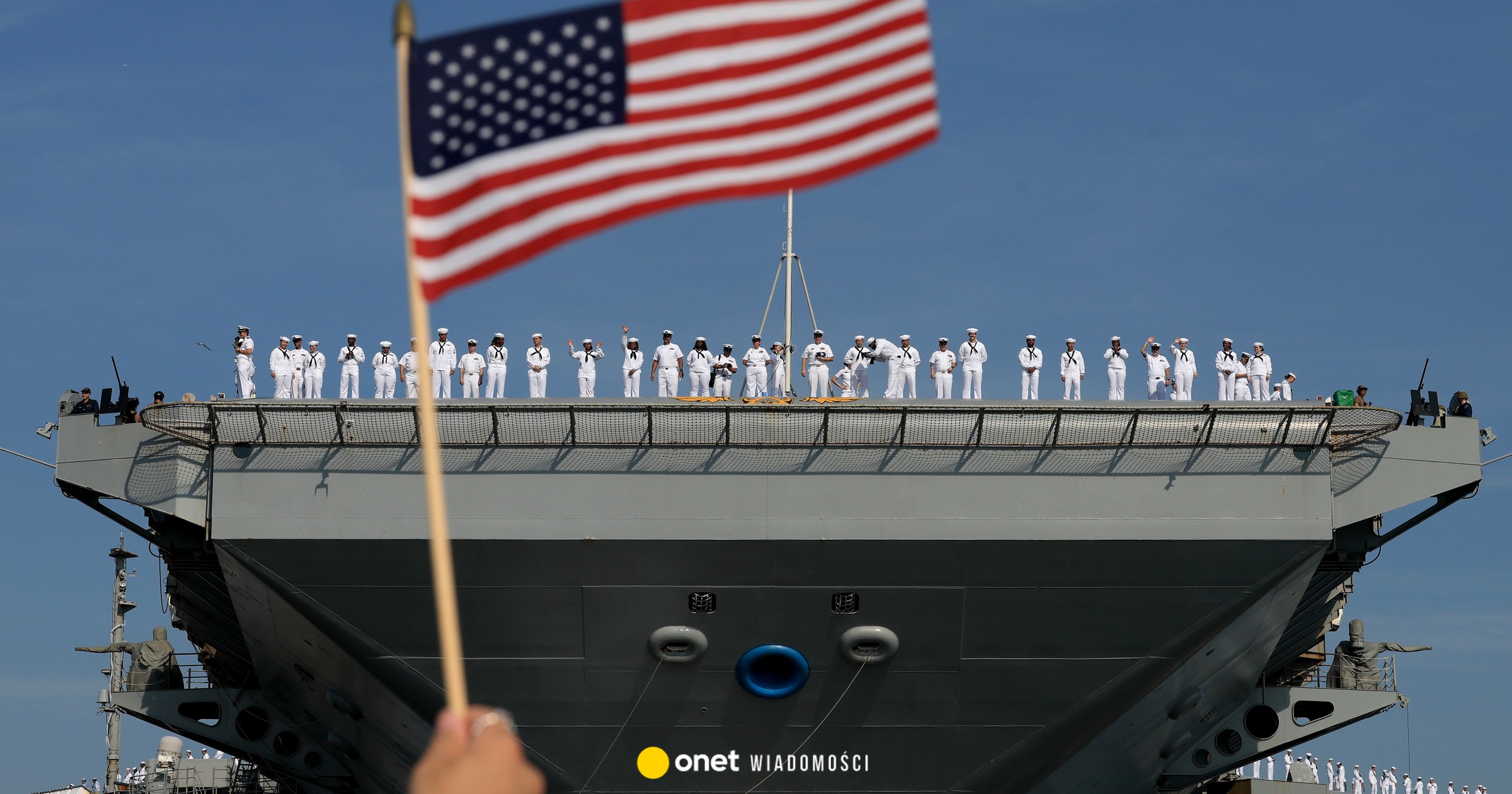
According to Tuesday's Navy announcement, the aircraft carrier is to sail from the Red Sea through the Suez Canal back to the Mediterranean Sea and dock at the NATO base in Crete. There, the Navy also intends to further investigate the causes of the fire. The decommissioning of the largest US warship in the region creates a serious gap in the US president's plans to ensure safe ship traffic in the Strait of Hormuz.
According to the first report by the US Navy, the fire broke out last Thursday in the ventilation shaft of a linen dryer in the onboard laundry room and was not caused by hostilities. Since passing south through the Suez Canal, the aircraft carrier has been operating in the Red Sea, away from Iranian missiles. Two sailors were injured as a result of the fire, and several dozen others suffered minor smoke inhalation. Such a fire can usually be brought under control quickly, and large U.S. Navy aircraft carriers carry firefighting equipment with a capacity comparable to that of a medium-sized city. According to initial reports, flights are not affected.
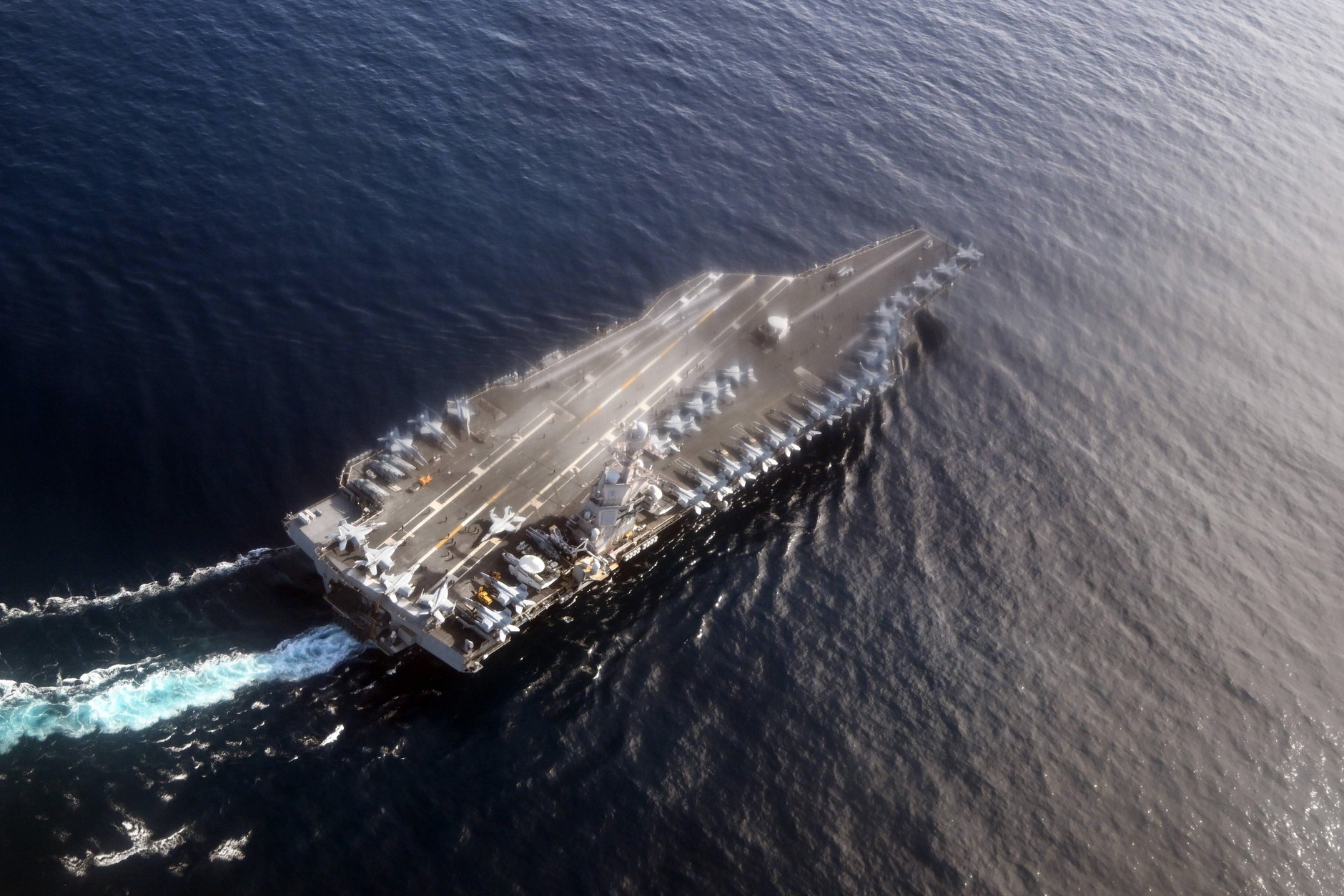
The aircraft carrier USS Gerald R. Ford in the North Sea, Norway, September 24, 2025.FEDERICO GAMBARINI / PAP
But now the New York Times quotes crew sources as saying: the fire was much more serious than previously reported. Much of the quarters were damaged by smoke. Fire and smoke therefore spread through the ventilation system, and the smoke removal system did not work properly. Currently, according to New York Times sources, hundreds of crew members are having to share beds or sleep on tables and benches in mess halls because smoke-damaged living quarters are no longer usable.
After the fire, the laundry room also stopped working, so the crew can only wash their clothes in a makeshift way. Under these circumstances return to Crete is inevitable, but it will mean a significant loss for the air defense of Saudi Arabia and Israel. The aircraft carrier USS George HW Bush from the US east coast was sent to the area as a replacement, but the transfer to the Red Sea is expected to take at least two weeks.
It is surprising that such a modern ship as the USS Ford was so seriously affected by the fire in the laundry room. This new Ford-class prototype and the largest aircraft carrier in the world is relatively new, having only entered service in 2017.
Toilet disaster on board
A nuclear-powered aircraft carrier can theoretically remain at sea indefinitely. It depends only on regular supplies of food, ammunition and aviation fuel. During missions, this is typically done via supply ships and cargo planes. However, the U.S. Navy typically limits the duration of such missions to about six months. The reason is the increasing burden on the crew and equipment. Even a warship wears out during continuous service and is used intensively for months at a time. Former Pentagon spokesman and Rear Adm. John Kirby said it's impossible to operate a ship under heavy loads for so long and still expect the crew and equipment to consistently perform at peak performance.
This was already obvious: Meanwhile, up to 80 percent of the equipment on board the USS Gerald R. Ford failed. toilets. The reason is the newly developed vacuum sewer system for the Ford class with relatively thin pipes, which saves space but is prone to failure in practice. Research by National Public Radio (NPR) in the US based on internal Navy documents shows that since the fall repairs were necessary almost daily. The internal report, which NPR obtained through a FOIA-Request, mentions daily reports of outages. Since 2023, the ship has requested external assistance more than 40 times, most of them in 2025 during the current mission.
Internal emails report extreme workloads, hundreds of repairs in a matter of days, and technicians working 19-hour days. According to an NPR report, outages have often been caused recently by blockages caused by T-shirts, other clothing, entire rolls of toilet paper and even three-foot pieces of rope. So the toilets didn't break accidentally, but were apparently sabotaged with “inappropriate materials,” according to the Navy report. “Our sewage system is being destroyed every day by seafarers,” reads a report from the ship.
This is confirmed by reports that morale on board is very low: crew members, due to the constant extension of their mission, miss planned family celebrations, funerals, the birth of their children, cannot visit terminally ill family members, and have not seen their loved ones for over half a year. In addition, the aircraft carrier maintains radio silence in operational conditions and even video calls with loved ones are no longer allowed.
However, even if the USS Gerald R. Ford returns to the Red Sea after stopping in Crete, the damage has already been done. This incident shows how vulnerable the US Navy's state-of-the-art vessels are under constant stress. And it is precisely in the phase in which Washington needs a military presence as the main means of putting pressure on Iran and to secure its sea routes that one of its most important tools is at least temporarily out of play. This raises a fundamental question that goes far beyond this single fire: How resilient is the U.S. global operational strategy if a fire in the laundry room is enough to derail it?