The most expensive vegetable in the world grows here behind the fences. Shoots that in the West are sold for 1,000 euros per kilogram

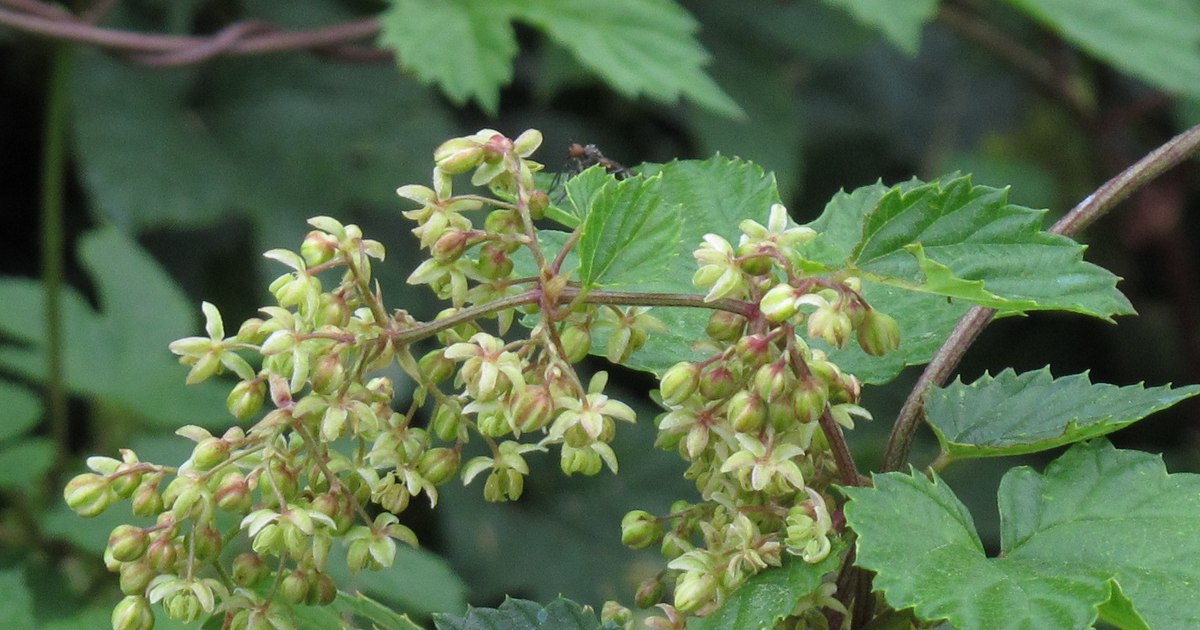
The most expensive vegetable in the world is the hop bud! It is often sold for 1000 euros per kilogram, being the main ingredient of some gastronomic delicacies from French and Belgian restaurants. Culmea, in Romania it is found in the bushes next to the fences.
Hops PHOTO wikipedia
There are very famous luxury foods in the world. Everyone knows them, but few have tasted them. Some of them exceed, at the price per kilogram, an average net monthly salary earned by an employee in Romania. On this list, everyone imagines caviar, truffles or Japanese beef. Well, there are foods that are even more expensive than this. For example, the most expensive vegetable in the world is the hop sprout, a delicacy that can cost up to 1000 euros per kilogram. The reasons why a net of green sprouts ended up costing as much as twice the minimum wage in the economy (net) are multiple and are also related to demand and the way they are prepared.
Culmea, in Romania, this vegetable that leaves holes in your pockets grows along fences and through ditches, but no one wants it.
The plant related to the famous cannabis
Hop buds grow at the end of hop plants. They are those plants famous for beer production. Basically, hop buds are small, white shoots that look like asparagus stalks. That is precisely why they are called “white gold”.
From a scientific point of view, hops are a flowering plant in the hemp family, i.e. in the Cannabaceae family. That is, it is related to the plants from which marijuana is made. Hops is a perennial, herbaceous, climbing plant that produces new shoots in early spring and retires in the fall into a cold-hardy rhizome.
The plant is native to Western Asia, Europe and North America. The cone-shaped flowers, i.e. the female ones, are used to preserve and flavor beer. Hops is a plant that can reach up to 10 meters in height and can live up to 20 years. Hop buds only appear in spring, in March and April. Only then can they be harvested and utilized. Indeed, hop buds are young, white shoots that grow underground. When the hops are cleaned, these buds are removed, precisely so that the plant can grow stronger and taller to produce more hop “cones”.
“White gold” and a unique taste
Many farmers in the West, but especially in Belgium, France and Holland, harvest these buds with great care. And that's because they are a top ingredient for luxury restaurants in Western Europe. These hop shoots have a unique taste: it is smooth, slightly bitter and nutty. They cook the same way as asparagus. The lower, harder part must be removed, and before boiling they must be washed very well. Most of the time, they are sauteed in butter, salt and lemon juice.
Their delicate flavor goes very well with potatoes, fish or chicken. They are often compared by chefs to premium white asparagus, spring truffles or rare micro herbs. Hop sprouts are not only tasty, but also rich in nutrients and obviously have health benefits. That is, they are rich in fiber, vitamins and minerals. They are also rich in antioxidants and have anti-inflammatory properties that can support health. In addition, compounds in hops, such as xanthohumol, can induce relaxation and help improve sleep quality.
Why hop sprouts are the most expensive vegetable in the world
In the Belgian markets, for example, where there are more hop producers and implicitly more supply, the price exceeds 160 euros per kilogram. When the hop shoot is of premium quality and is demanded by luxury restaurants or over longer distances, the costs already reach 1000 euros per kilogram and even more. Why so expensive? Well, there are several explanations. First of all, it is a rare plant. That is, it only appears in a two-month “window” when it can be harvested. In addition, as the Belgian farmers, the most titled collectors of hop shoots, testify, this delicacy is very difficult to harvest.
It is painstaking and hard work. “Calculate about two hours of work per kilo though”says grower Benedikte Coutigny from “Hoppecruyt” in Belgium for the publication “Vilt”. Harvesting operations are difficult and the rush is very high to manage to harvest as much as possible in a short time.
Hop shoots PHOTO suigenerisbrewing.com
Beer is the new spinach. Effects on force and speed. Study
“They have to be pulled out of the ground and cut, all by hand. A single bud weighs only one to two grams. With five people we can never harvest more than ten kilos a day”states Coutigny for Vilt.
Only 200 kilograms of buds are harvested in six weeks. In addition, the preparation and care of the plants, when it is desired to harvest the hop buds, is much greater. A special soil is chosen, i.e. a sandy-clay soil, which drains water well. And that's because excess moisture can lead to bud rot. Hop sprouts, to be accepted by restaurants and at the same time to have that premium product price, must be crisp and cut correctly. “So that the cook has almost nothing left to do”adds the Belgian farmer for the same publication.
“White gold” grows in Romania through bushes
While in Europe this plant can reach astronomical prices, in Romania nobody really cares about it. Wild hops are quite widespread in our country, especially in wet areas and on the edges of forests. In the past, young shoots were consumed mostly in rural households in the spring, similar to nettles or stevia.
Romanian botanical sources describe hops as a spontaneous plant that grows on the edge of forests, in meadows and meadows, next to running water, through bushes and on the edge of old fences. We find it everywhere, from plains to hilly and even submontane areas. I mean, you can find it almost everywhere in the country.
Hops in the spontaneous flora PHOTO wikipedia
Mead with hops, the oldest alcoholic drink in the world. The alternative created by beekeepers for beer drinkers
However, it has a preference for moist, calcium-rich soils. Hops, being a climbing plant, you can find it hanging on willows, alders or on fences with thick vegetation. Actually, hop buds were consumed by Romanians since ancient times, but they were forgotten with the advent of modern cuisine in the middle of the 20th century. In the Romanian peasant kitchen, these hop shoots were scalded like nettles, in hot water, and used in soups or stews. There is a very interesting recipe with eggs. Here's how it's prepared: first of all, the shoots are scalded, then lightly roasted with garlic, and finally beaten eggs are added. Mix and eat warm, with polenta, sheep's cheese or condensed milk.
A luxurious world of vegetables
In addition to hop shoots, matsutake mushrooms from Japan, Bonnotte potatoes from France and wasabi root, obviously also from Japan, are also very expensive. Matsutake mushrooms are in great rivalry with hop sprouts when it comes to economic value. There are also those who say that, in fact, these Japanese mushrooms would be more expensive. Actually, it costs around $100 per hundred grams. And that's because they are highly valued in Asian cuisine for their flavor. They are also rare and difficult to grow.
In turn, Bonnotte potatoes cost between 50 and 90 euros per kilogram. They are grown exclusively on the island of Noirmoutier in France. What makes them very rare is that they are fertilized with seaweed and harvested by hand. Finally, wasabi root, much better known, reaches 250 dollars per kilogram. This is understandable considering that it takes 24 months to reach maturity and grows naturally only in cold and very clean mountain streams.