In recent years, digital smile planning has begun to change the way aesthetic dental treatments are prepared. If in the past doctors and patients discussed the desired result mainly based on examples or models, today specialized software allows the doctor to simulate the future smile before treatment begins.
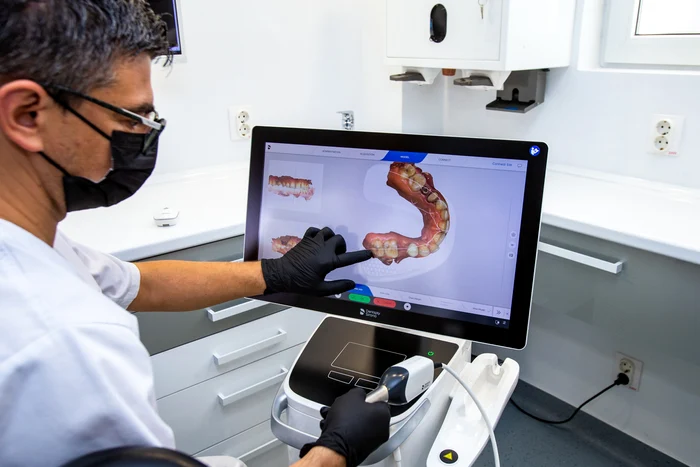
The process is known as Digital Smile Design (DSD) and involves analyzing the smile in relation to the patient's physiognomy. Photographs of the face, digital scans of the teeth and measurements of dental proportions are integrated into a virtual model that allows the evaluation of several aesthetic options.
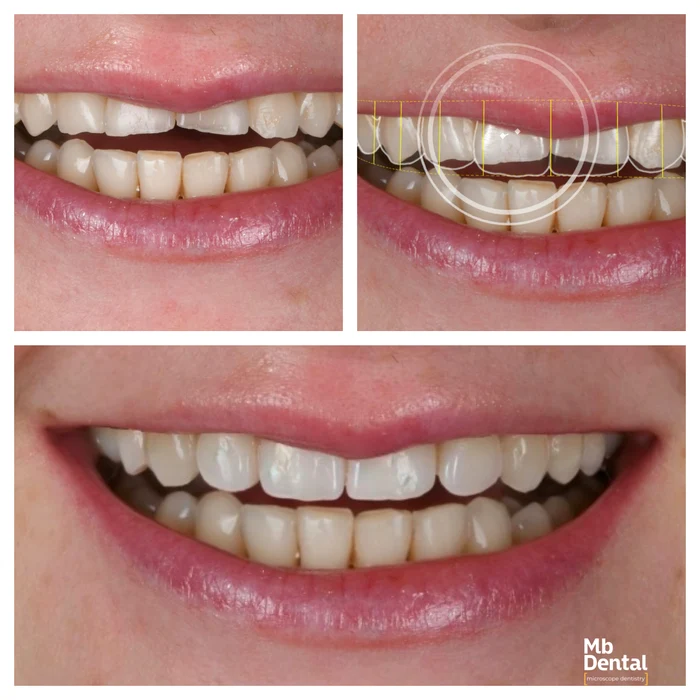
The first image associated with this article shows the initial situation of the patient, before any simulation or intervention. This type of documentation is the basis of the aesthetic and functional analysis.
In short: what you need to know about digital smile planning
What is Digital Smile Design (Digital Smile Design)
Digital smile planning is a modern method of aesthetic analysis in dentistry. Through photographs, digital scans and specialized software, the doctor can analyze the dental proportions and the relationship between the teeth, lips and face before carrying out the treatment.
How artificial intelligence helps in smile simulation
Platforms like SmileCloud use artificial intelligence to generate simulations of the future smile. Starting from photos and digital scans, the software can create images or animations that show what the teeth might look like after treatment, including when speaking or smiling.
Why digital planning increases the predictability of aesthetic dental treatments
Digital analysis allows more accurate assessment of dental proportions and the relationship between the patient's smile and physiognomy. By simulating the result before the treatment, the doctor and the patient can discuss the therapeutic options and anticipate the aesthetic result in a clearer and more predictable way.
How the smile is analyzed before aesthetic treatment
In the planning stage, the doctor analyzes the dental proportions and the relationship between the teeth, lips and gums. Reference lines and aesthetic ratios are used to assess the symmetry of the smile and how the teeth fit into the patient's physiognomy.
“Digital planning helps us turn the discussion about aesthetics into a more objective analysis. We can evaluate the proportions, the position of the teeth and the relationship with the patient's face before making a therapeutic decision”, explains Marius Bud, dentist, founder of the MB Dental clinic in Cluj-Napoca and Târgu-Mureș and head of works at the “Iuliu Hațieganu” University of Medicine and Pharmacy in Cluj-Napoca.
In modern clinical practice, this stage is used especially in the planning of treatments with dental veneers, ceramic crowns or complex aesthetic rehabilitations, where the changes must be harmoniously integrated into the patient's physiognomy.
From photography to simulation in motion
In addition to static images, some digital platforms today allow more advanced simulations of the aesthetic result. The software can generate animations from the patient's photo and integrate the projected smile into a motion sequence.
This way, the patient can see how the teeth might look when they speak or smile, not just in a photo.
“It is easier for the patient to understand the result when he sees it in the context of the facial expression. Dynamic simulations provide a more realistic picture of how the smile integrates into the physiognomy,” says Marius Bud.
A communication tool between doctor and patient
Digital simulations are not only a technological tool, but also a clearer way of communication between doctor and patient. Before starting the treatment, the patient can see the proposed aesthetic option and discuss possible adjustments.
Doctors emphasize, however, that digital simulations are primarily planning and communication tools, not absolute guarantees of the final result. Biological factors, dental structure and the particularities of each patient influence how the digital plan can be clinically translated.
In some modern clinics, these technologies are already part of the initial evaluation of aesthetic treatments. For example, at MB Dental in Cluj-Napoca, digital planning is used to analyze dental proportions and to discuss therapeutic options with the patient.