Reverse Exodus. The surprising statistics of Romanians who permanently return to the country

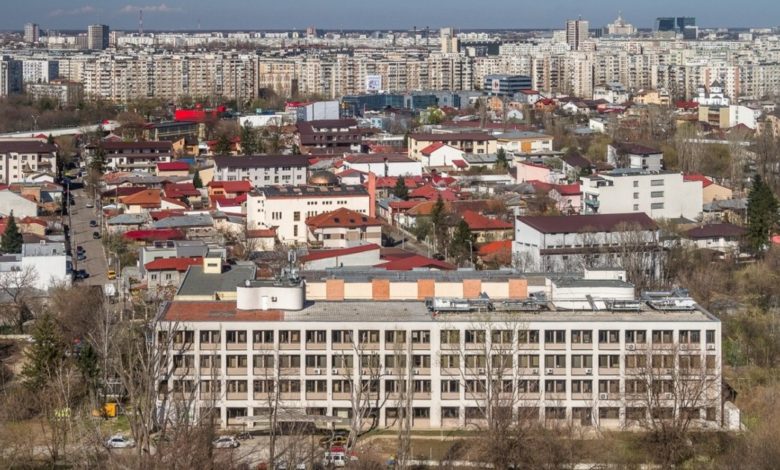
International migration is starting to play an increasingly visible role in the dynamics of the real estate market in Romania. Recent data show that, in recent years, more and more Romanians choose to return to the country, either permanently or temporarily, and this phenomenon contributes to the increase in housing demand in large urban centers and in counties with accelerated economic development.
73,000 Romanians returned to Bucharest and two other counties. Archive photo
According to data from the National Institute of Statistics (INS), Bucharest and the country's nine most important counties, which concentrate most of the real estate development, together gained approximately 73,000 inhabitants in the period 2020–2024 from temporary external migration. Along with the birth rate and internal migration, the movement of the population in and out of the country is one of the factors that influence the demand for housing in a certain locality.
Romania is starting to recover its population from the diaspora
Traditionally, Romania has been a country from which more citizens went abroad than returned. The phenomenon intensified after the 90s and especially after the accession to the European Union in 2007, when labor mobility increased considerably.
In the last decade, however, the economic development of some regions of the country – especially Bucharest-Ilfov and some important urban centers – has begun to change this trend. INS data show that, in the period 2020–2024, the number of Romanians who returned from abroad in the main regions of the country was higher than those who chose to leave.
“INS data indicate a clear tendency for Romanians to return to the country, at least temporarily, for a minimum period of 12 months. The trend is most pronounced in Bucharest, as a result of the economic development of the capital, but it is also easy to notice in the main counties of the country from a real estate point of view. Over time, this trend can influence the dynamics of the real estate market in Romania, especially in the short- and medium-term rental segment“, said Monica Dudău, representative of a real estate platform.
Bucharest attracts the most Romanians returning from abroad
The capital is where this change is most clearly seen. Approximately 9% of Romania's population lives in Bucharest, according to data from the 2021 Population and Housing Census, and the city continues to be the country's main economic hub.
In the period 2020–2024, over 31,500 Bucharest residents permanently moved abroad. In the same period, however, approximately 39,000 Romanians returned from other countries and settled in Bucharest. Therefore, the Capital registered an increase of about 7,500 inhabitants in the segment of permanent external migration.
However, the analysis of the annual evolution shows a change in recent years. The number of Bucharest residents who emigrated increased constantly, from almost 3,300 in 2020 to over 8,600 in 2024. In parallel, the number of those who came from abroad and settled permanently in Bucharest decreased from approximately 13,600 in 2020 to almost 2,900 in 2024.
In addition to permanent migration, there is also temporary migration, defined by the INS as relocation for at least 12 months and which also includes citizens of other nationalities. From this perspective, the Capital also recorded an increase in population.
In the analyzed interval, almost 89,000 inhabitants of Bucharest went abroad temporarily, while almost 104,000 people came to the city temporarily after living outside the country. Thus, the surplus resulting from temporary migration was approximately 15,000 people.
Interestingly, the annual trend differs from permanent migration: the number of Bucharesters who temporarily left the country varied between 15,000 and 20,000 per year, but the number of those who settled temporarily in the Capital doubled, from approximately 12,000 in 2020 to 24,000 in 2024.
In total, taking into account both permanent and temporary migration, Bucharest gained approximately 22,500 inhabitants from external migration in the period 2020–2024. However, the annual analysis shows that this surplus has decreased in recent years: if in 2022 the difference between entries and exits was around 11,000 people, in 2024 it fell to less than 300.
Ilfov is becoming an increasingly attractive alternative
On a smaller scale, but increasingly visible, the same trend appears in Ilfov county, which benefits from its proximity to the capital and the accelerated development of the residential areas around Bucharest.
In the period 2020–2024, approximately 2,500 inhabitants of the county moved permanently abroad, while almost 3,800 Romanians returned from the diaspora chose to settle in one of the Ilfov localities. Thus, the county gained approximately 1,300 inhabitants from permanent external migration.
The regrets of Romanians returning home from the West: “I have an even greater hatred now than when I first left”
And temporary migration generated a surplus. Approximately 21,000 residents of Ilfov County temporarily went abroad, but almost 25,000 people moved temporarily to the county after living abroad. The result was an increase of approximately 4,000 inhabitants.
In total, Ilfovul gained approximately 5,300 inhabitants from external migration during the analyzed period. Unlike Bucharest, here the increase in the annual surplus was spectacular: from just over 100 inhabitants in 2021 to approximately 2,000 people in each of the years 2022, 2023 and 2024.
Large counties attract population from temporary migration
INS data show that the phenomenon is not limited to the Bucharest-Ilfov area. The other large counties of the country recorded, in turn, population gains from temporary external migration.
On the other hand, the situation is different in the county seat cities: permanent departures abroad were more numerous than arrivals.
For example, in Cluj-Napoca – the city with the highest house prices in Romania – about 2,300 residents have gone abroad in the last five years, while only about 1,600 have moved here from other countries, which means a minus of about 700 people.
At the level of Cluj county, however, the incomes from abroad exceeded the departures. In the period 2020–2024, more than 36,100 inhabitants emigrated, but almost 43,600 came from abroad, which generated a surplus of about 7,500 inhabitants.
A similar situation can be found in Brașov County. Although the city of Brașov lost almost 1,500 inhabitants due to permanent departures abroad, at the county level, temporary incomes brought an increase of over 5,800 inhabitants.
In Timișoara, the city lost more than 2,800 inhabitants through permanent external migration, but Timiș County gained almost 7,300 inhabitants from temporary arrivals from abroad.
Another example is Dolj county. Although Craiova lost approximately 1,400 inhabitants through permanent external migration, the county gained almost 7,200 inhabitants from temporary arrivals from abroad.
In Iași, the city registered a minus of approximately 600 inhabitants from permanent departures abroad, but the county gained over 6,900 inhabitants from temporary arrivals.
Constanța is the county with the largest positive increase in temporary external migration, with more than 10,000 more inhabitants, although the municipality of Constanța lost almost 1,600 inhabitants through permanent migration.
Similar trends also appear in cities such as Oradea and Sibiu. Oradea lost more than 750 inhabitants through permanent departures, but Bihor county gained almost 5,300 inhabitants from temporary arrivals. At the same time, the city of Sibiu registered a deficit of almost 1,400 inhabitants through permanent external migration, while the county gained over 3,900 inhabitants from temporary arrivals.
In total, Bucharest and the most important nine counties of the country registered a positive increase of over 73,000 inhabitants from temporary external migration. In addition, the Capital also gained more than 7,500 inhabitants from permanent external migration, while the eight analyzed county seat cities together lost almost 10,700 inhabitants through permanent external migration.
Romanians from the diaspora sent to the country, between 2013 and 2025, more than the “initial agreed value of PNRR”
Romanians from the diaspora are looking for housing in Romania
The return of Romanians from the diaspora is also reflected in the interest in real estate ads. The statistics of the Storia platform show that, between January 2025 and February 2026, most users outside Romania came from Germany.
According to Eurostat data, over 770,000 Romanians live in Germany, and German is the fifth most used language for searching ads on Storia, after Romanian, English, Italian and Hungarian.
In the next places are the users from Great Britain, where almost 558,000 Romanians live, according to the 2021 census, and those from Italy, the country with the largest community of Romanians abroad, of over one million people.
The list of countries where users of the platform come from continues with Spain, France and the United States, but also includes Austria, the Republic of Moldova and the Netherlands.
Migration of workers from outside the European Union
In recent years, migration to Romania has also been influenced by the increase in the number of employees from outside the European Union, attracted by the demand for labor in certain economic sectors.
For example, the Bucharest office of the General Inspectorate for Immigration (IGI) handled applications from over 102,000 people from outside the European Union in 2025. The most requests came from Nepal (almost 15,000 people), Turkey (almost 10,000) and Sri Lanka (about 8,400).
In comparison, in the same year, IGI handled applications from more than 42,000 people in the European Union and Switzerland, with the majority coming from Italy, Sweden and France.
In November 2025, in Romania there were over 145,000 people from outside the European Union with the right of residence for the purpose of employment. The most numerous communities come from Nepal, Sri Lanka, Syria, Turkey and Bangladesh.