Special Forces and Landings: What a US Operation to Capture Kharg Oil Island Could Look Like


Tensions in the Middle East have reached new levels of intensity after US President Donald Trump threatened to attack Kharg Island, the strategic center of Iran's oil infrastructure and a vital artery for Iran's economy. According to experts quoted by The Sun, an eventual intervention could include US special forces, attack submarines and stealth helicopters, in a mission considered extremely risky.
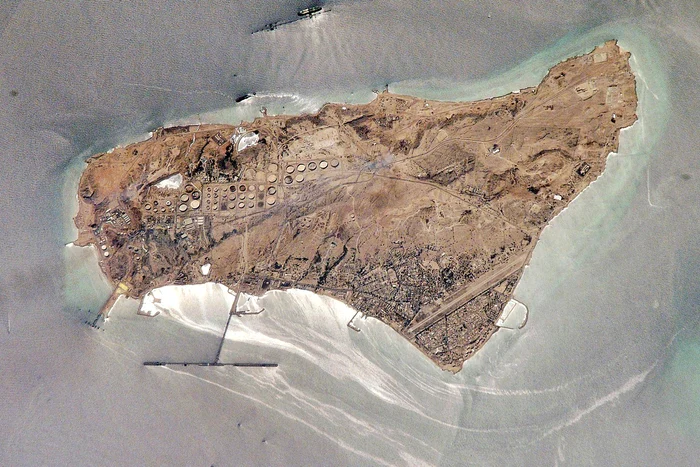
Kharg Island PHOTO: Pprofimedia
Trump announced on Saturday that US aircraft had destroyed all military targets on Kharg Island, describing the operation as “one of the most powerful air strikes in the history of the Middle East”.
“We have completely destroyed every military target in Iran's crown jewel,” the US president wrote, threatening that the next strikes would be on oil infrastructure should Iran or other actors continue to disrupt maritime traffic in the Strait of Hormuz.
However, the island's oil infrastructure – vital to Iran's economy – has so far been deliberately avoided. Military sources say the US would most likely conduct an operation to capture the facilities rather than destroy them.
The island that supports Iran's economy
The stakes are huge for Iran.
Kharg is responsible for about 90 percent of Iran's oil exports, and oil revenues account for nearly 40 percent of the state budget. For this reason, control of this small island, only eight kilometers long, could seriously affect the ability of the regime in Tehran to finance military operations and allied groups in the region.
Analysts say that a possible capture of the island could limit the financing of organizations such as Hezbollah or the Houthi rebels, but also the Iranian nuclear programs.
Despite Trump's warning, US Marine Corps veteran Jonathan Hackett told The Sun that an airstrike on the crucial installation would likely not be considered by Washington.
“I don't think destroying the infrastructure would be an option presented to the president, given the importance of this hub to the global oil and gas industry, especially after the end of the conflict,” he said.
“Instead, the mission would consist of a capture.”
Kenneth Katzman, a Middle East analyst who has advised the US Congress for more than three decades, explained that the island could become an instrument of political pressure.
“The kharg could be used as a bargaining chip with what would be left of the Iranian regime. Basically, the message would be: you will get the island back when our demands are met,” he explained.
Possible intervention of special forces
According to former US military officials, the scenario considered in Washington would initially involve special forces raids.
A Navy amphibious warfare task force headed for the Persian Gulf with 2,500 Marines as airstrikes bore down on the island,
Reserve Colonel Ron MacCammon, a former member of the US special forces, explained that the elite troops would have a decisive role.
“Navy SEAL teams would lead the assault, capturing key control centers and terminals to seize control of Iran's only port deep enough for oil tankers,” he said.
The operation could include nighttime infiltration by SEAL teams launched from submarines, paratroopers dropped in via HALO jumps, and commando troops flown in by stealth helicopters. Later, larger units of Marines could land to consolidate control of the island.
SEAL Team Six would neutralize the remaining IRGC command bunkers, crushing any resistance with bursts of 800 rounds per minute fired from HK416 assault rifles equipped with lethal grenade launchers.
The Army's elite Rangers could take over the airfield at the northern end of Kharg Island in a tactical airborne operation.
C-130s with lights off would make a forced landing to disembark between 50 and 100 heavily armed shock troops equipped with four-lens night vision goggles that provide side visibility.
Trump refuses to say whether he wants to seize Iranian oil island: 'I can't answer a question like that'
Snipers would be dropped by SOAR MH-60 Blackhawk helicopters on the towers, where they would mount .50 caliber Barrett sniper rifles, while MH-6 “Little Bird” gunship helicopters would fire 30mm cannons and rockets at IRGC missile and artillery positions.
Helicopter-mounted sonic weapons could cripple troop concentrations, while laser beams fired from sensor cones would disable the infrared guidance and heat-tracking systems of Russian surface-to-air missiles that might be launched against them.
Reaper drones, equipped with AI-enabled Hellfire missiles, would provide an additional layer of air cover, looking for launch signals from altitudes of about 15,240 meters.
Possible military scenarios
Jonathan Hackett, a Marine Corps veteran and special operations specialist, explained that the US military would have four options for capturing Kharg Island.
The objectives would be the same: prepare the area, attack the island, capture the infrastructure, maintain control and then hand it over to other forces, he said.
Options include the use of special units Maritime Raid Forces, the involvement of the 75th Ranger Regiment, a joint operation under the command of SOCOM or a combined intervention with allies, including Israel.
In the latter scenario, Israeli special forces such as Flotilla 13 or Sayeret Matkal could participate in the operation, while Israeli intelligence services would contribute data and aerial reconnaissance.
Trump may wait until the Iranian navy is completely destroyed before launching an operation on Kharg Island.
According to the Pentagon, at least 70 Iranian warships – including drone carriers, frigates, submarines and mine-laying craft – have already been sunk by US aircraft.
Island capture exercises were conducted throughout preparations for Operation Epic Fury.
Amphibious landings of 3,000 US Marines, alongside Israeli and even some Saudi units, could follow the special forces intervention.
“It may be necessary to mobilize a substantial anti-aircraft defense,” commented MacCammon.
A possible but extremely risky operation
Although experts say such an operation is militarily feasible, maintaining control of the island could become a major challenge.
Professor Evan Ellis, of the US Army War College, highlighted this difficulty:
“There are a thousand ways we could capture Kharg. The real problem is how you maintain it.”
“Kharg Island would quickly become a magnet for drones.
Also, Professor Greg Kennedy, a specialist in strategic foreign policy, warns that such an intervention could turn an aerial conflict into a lasting military occupation.
The US bombed Kharg Island, Iran's oil heartland. The military infrastructure has been “shattered”, Trump announces
“It's certainly possible militarily, but once you do that you commit yourself to a static position. You go from the idea of regime change through airstrikes to occupation. It's a dangerous move,” he said.
“If you're trying to conduct a relatively bloodless and casualty-free campaign, the last thing you want is to conduct the most dangerous military operation there is—an amphibious operation against an enemy stronghold.”
An idea almost four decades old
Interestingly, Donald Trump first mentioned Kharg Island as a strategic target back in 1988, when he was a businessman in New York.
“If one bullet was fired at one of our men or ships, I would hit Kharg Island. I would go in there and take control,” he declared at the time.
Today, in the context of rising tensions in the Middle East, the scenario that Trump evoked almost 40 years ago seems closer than ever to reality.